
China’s car manufacturers are urged by regulators to prioritize quality improvements rather than simply adding new features.
Four ministries in China have initiated a yearlong campaign focused on vehicle quality, prohibiting car manufacturers from altering technical specifications through over-the-air updates once test samples are sealed. Penalties for non-compliance include removal from the product catalogue. Additionally, there is a mandatory standard that will mandate physical controls for 19 functions starting in July 2027.
This campaign, which began on August 27, also examines intelligent connected vehicles with an emphasis on build quality and compliance rather than innovative technology.
One noteworthy provision relates to software, stating that automakers cannot modify a vehicle's technical parameters via over-the-air updates once the test samples have been sealed, as reported by CnEVPost. This regulation closes a loophole where a car could be approved in one configuration but delivered in another without retesting.
The penalties involved are administrative, not financial, including public disclosure, removal from the product list, and restrictions on submitting new models. This initiative follows a challenging period, during which China's market regulator oversaw the recall of four million vehicles due to issues with difficult-to-locate interior emergency door releases.
Inspectors will evaluate aspects such as structures, crash safety, battery packs, and electrical security, and some samples will be cross-checked against documentation submitted by manufacturers.
There is also a distinct regulation that sets more rigorous hardware standards. GB 4094-2026 requires physical controls for 19 functions, including gear selection, wipers, hazard lights, and the switch for disabling driver assistance.
These requirements are particularly detailed, stipulating that each control must have a surface area of at least 10mm square, be in a fixed location, and remain functional even when the power is off. New model applications must meet these standards starting July 2027, while existing approved models must comply from January 2028.
Europe previously established a similar standard but with less stringent requirements. Euro NCAP's 2026 protocol mandates physical controls for five functions: indicators, hazard lights, horn, wipers, and emergency call.
The consequences of non-compliance differ significantly. In Europe, a manufacturer may lose a star rating; in China, the manufacturer could forfeit the right to sell the model.
Furthermore, Europe's enforceable regulations, including general safety and UN software update rules, apply to all cars registered in the EU, without addressing button requirements.
Regarding updates, the two regions are increasingly diverging. European rules require manufacturers to evaluate whether an update changes previously approved elements, while the Chinese campaign unequivocally forbids any alterations.
This represents a significant shift, illustrating how a market that has historically developed its industry around screens is now legislating their return, while Europe continues to adopt a more lenient approach.
Other articles
 Meta claims that its glasses can no longer record you secretly, at least not in this manner.
Meta is addressing a privacy issue that permitted users of smart glasses to turn off the recording indicator while still recording video.
Meta claims that its glasses can no longer record you secretly, at least not in this manner.
Meta is addressing a privacy issue that permitted users of smart glasses to turn off the recording indicator while still recording video.
 A two-step AI technique can finally address the challenges of low-light photography in smartphone cameras.
Researchers have created a two-step AI system that improves ultra-high-definition images taken in low light while maintaining fine textures, edges, and scene details.
A two-step AI technique can finally address the challenges of low-light photography in smartphone cameras.
Researchers have created a two-step AI system that improves ultra-high-definition images taken in low light while maintaining fine textures, edges, and scene details.
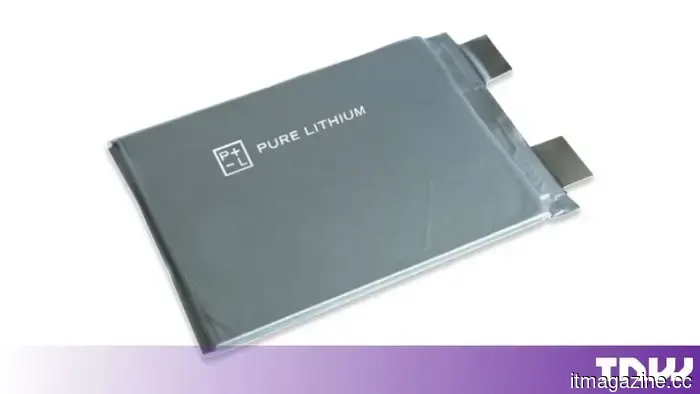 This battery, which does not use graphite, has the potential to disrupt China's dominance in the electric vehicle supply chain.
Pure Lithium reports that its graphite-free cell completed 9,315 cycles. By 2030, Europe aims to process 40% of its own graphite, while China processes more than 90% of it.
This battery, which does not use graphite, has the potential to disrupt China's dominance in the electric vehicle supply chain.
Pure Lithium reports that its graphite-free cell completed 9,315 cycles. By 2030, Europe aims to process 40% of its own graphite, while China processes more than 90% of it.
 A snug compression might resolve the most significant challenge facing solid-state batteries for vehicles and electronic devices.
Solid-state batteries offer the potential for safer and quicker charging power, but tiny dendrites often cause short circuits. Researchers at Stanford found that by applying constant mechanical pressure, dendrites can grow laterally in a non-harmful way, providing a straightforward engineering solution to advance the development of next-generation batteries for electric vehicles and portable devices.
A snug compression might resolve the most significant challenge facing solid-state batteries for vehicles and electronic devices.
Solid-state batteries offer the potential for safer and quicker charging power, but tiny dendrites often cause short circuits. Researchers at Stanford found that by applying constant mechanical pressure, dendrites can grow laterally in a non-harmful way, providing a straightforward engineering solution to advance the development of next-generation batteries for electric vehicles and portable devices.
 Apple TV secures the highly praised drama series "Small Prophets."
Apple TV has obtained the worldwide streaming rights for the popular British comedy-drama series "Small Prophets," which will be available for viewing starting October 7.
Apple TV secures the highly praised drama series "Small Prophets."
Apple TV has obtained the worldwide streaming rights for the popular British comedy-drama series "Small Prophets," which will be available for viewing starting October 7.
 The trend of banning Meta smart glasses is gaining momentum in the US, with a nightclub in New York taking the initiative.
A nightclub in New York City has prohibited smart glasses due to growing concerns over covert recordings, echoing similar measures implemented in the UK.
The trend of banning Meta smart glasses is gaining momentum in the US, with a nightclub in New York taking the initiative.
A nightclub in New York City has prohibited smart glasses due to growing concerns over covert recordings, echoing similar measures implemented in the UK.
China’s car manufacturers are urged by regulators to prioritize quality improvements rather than simply adding new features.
Four Chinese ministries launched a yearlong initiative focused on automobile quality that prohibits manufacturers from altering vehicle specifications through over-the-air updates without prior approval.