

Meta claims that its glasses can no longer record you secretly, at least not in this manner.
It seems that Meta did not intend for users to cover the small recording light as a privacy measure.
Meta is working to address one of the major concerns surrounding its smart glasses: the unsettling possibility that the person wearing them could record you without your awareness.
The company is introducing a privacy update aimed at closing a loophole that previously allowed users to continue recording even after hiding the glasses’ front-facing capture LED. This change comes as Meta’s AI-driven glasses face increasing scrutiny regarding privacy, harassment, and the blurred lines between wearable tech and covert surveillance.
Meta closes a loophole that permitted continued recording
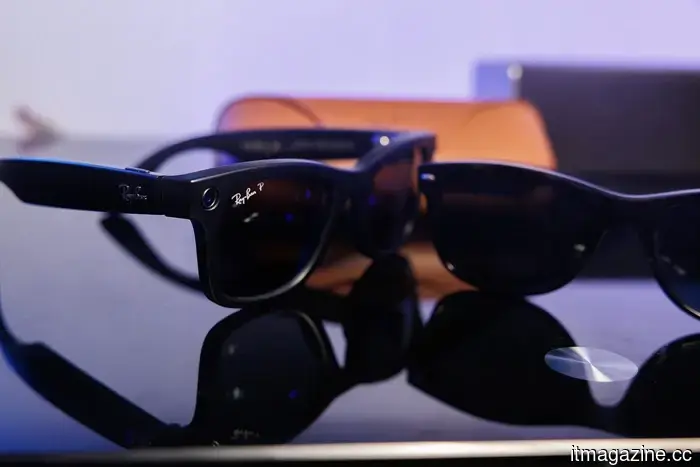
Meta’s smart glasses are equipped with a built-in capture LED that blinks when a photo is taken or video is recorded. The idea is straightforward: nearby individuals should have a visible alert indicating that the camera is operational.
However, some users found a way to circumvent this precaution by covering the LED after recording had begun. Thus, the glasses were able to keep recording while the visual alert was concealed.
Meta’s vice president of augmented reality, Alex Himel, announced that the company is changing the functionality of the system. If the capture light is obscured during recording, the camera will deactivate instead of continuing to capture footage. Previously, Meta had implemented protections that turned off the camera if users physically interfered with the capture light, but this update specifically addresses the loophole where users covered the LED after initiating recording.
Himel noted that Meta intends to keep updating the system to ensure that the capture LED consistently informs bystanders when photos or videos are being taken. He also mentioned that the small number of users attempting to circumvent the system indicates that the company’s existing protections were working, although they clearly needed enhancement.
The privacy issue is increasingly difficult for Meta to overlook
This update is significant because smart glasses are no longer just a niche experiment. As cameras become more easily wearable and harder to detect, the concern extends beyond the capabilities of the technology to whether those around it know it is in use.
Meta’s glasses have already raised privacy and harassment concerns, particularly following reports of wearers recording strangers without consent and using the glasses in ways critics argue could facilitate unwanted surveillance. This controversy has contributed to a larger backlash against the devices, including a global campaign criticizing Meta’s smart glasses.
Meta is also attempting to shift public perception of the product. A new marketing campaign highlighted in the report emphasizes that the glasses are “designed for everyone,” while specifically informing individuals who encounter the devices that the camera allows them to “capture the moment.”
For users, the update should make it more challenging to bypass the privacy indicator. For others, it acknowledges that a small LED is performing an important function.
What lies ahead will be a more significant challenge for Meta. Closing one loophole may provide some relief, but as smart glasses become more prevalent, the company will need to demonstrate that its privacy measures can adapt to individuals finding new ways to evade them.






Other articles
 Apple TV secures the highly praised drama series “Small Prophets.”
Apple TV has secured the worldwide streaming rights for the popular British comedy-drama series "Small Prophets," and it will be available for viewing starting October 7.
Apple TV secures the highly praised drama series “Small Prophets.”
Apple TV has secured the worldwide streaming rights for the popular British comedy-drama series "Small Prophets," and it will be available for viewing starting October 7.
 Nvidia has delivered its initial H200 chips to China, but anticipates that it will not generate any revenue from data centers as a result.
Nvidia has sent its initial H200 shipments to China but continues to anticipate no data center revenue from that market. In response, Europe plans to invest €30 billion in gigafactories, which are largely without funding.
Nvidia has delivered its initial H200 chips to China, but anticipates that it will not generate any revenue from data centers as a result.
Nvidia has sent its initial H200 shipments to China but continues to anticipate no data center revenue from that market. In response, Europe plans to invest €30 billion in gigafactories, which are largely without funding.
 Apple TV secures the highly praised drama series "Small Prophets."
Apple TV has obtained the worldwide streaming rights for the popular British comedy-drama series "Small Prophets," which will be available for viewing starting October 7.
Apple TV secures the highly praised drama series "Small Prophets."
Apple TV has obtained the worldwide streaming rights for the popular British comedy-drama series "Small Prophets," which will be available for viewing starting October 7.
 The trend of banning Meta smart glasses is gaining momentum in the US, with a nightclub in New York taking the initiative.
A nightclub in New York City has prohibited smart glasses due to growing concerns over covert recordings, echoing similar measures implemented in the UK.
The trend of banning Meta smart glasses is gaining momentum in the US, with a nightclub in New York taking the initiative.
A nightclub in New York City has prohibited smart glasses due to growing concerns over covert recordings, echoing similar measures implemented in the UK.
 The growth of data centers will not fulfill its potential if safety and workforce development do not keep pace.
Investment in U.S. data centers is expected to increase by 116% to reach $118.4 billion by 2027 (PwC). Patrick Doyle asserts that without regulated onboarding, mentoring, and the power to halt work, the growth of the workforce is likely to result in injuries prior to the development of infrastructure.
The growth of data centers will not fulfill its potential if safety and workforce development do not keep pace.
Investment in U.S. data centers is expected to increase by 116% to reach $118.4 billion by 2027 (PwC). Patrick Doyle asserts that without regulated onboarding, mentoring, and the power to halt work, the growth of the workforce is likely to result in injuries prior to the development of infrastructure.
 A snug compression might resolve the main challenge for solid-state batteries in vehicles and electronic devices.
Solid-state batteries promised increased safety and quicker charging capabilities, but microscopic dendrites continue to cause short circuits. Researchers at Stanford found that applying continuous mechanical pressure encourages dendrites to grow in a harmless sideways manner, providing a straightforward engineering solution to advance next-generation batteries for electric vehicles and portable devices.
A snug compression might resolve the main challenge for solid-state batteries in vehicles and electronic devices.
Solid-state batteries promised increased safety and quicker charging capabilities, but microscopic dendrites continue to cause short circuits. Researchers at Stanford found that applying continuous mechanical pressure encourages dendrites to grow in a harmless sideways manner, providing a straightforward engineering solution to advance next-generation batteries for electric vehicles and portable devices.
Meta claims that its glasses can no longer record you secretly, at least not in this manner.
Meta is addressing a privacy issue that permitted users of smart glasses to turn off the recording indicator while still recording video.