

A two-step AI technique can finally address the challenges of low-light photography in smartphone cameras.
Smartphone cameras have significantly improved at capturing details in challenging scenes; however, one persistent issue remains: low light. In dark conditions, even high-end phones can produce images that are grainy, with unclear shadows and blurred fine details. A novel AI-driven image enhancement method may provide a new solution.
Researchers from Wuhan University in China have created LL-Refiner, a two-step machine learning system aimed at enhancing ultra-high-definition low-light images while retaining the intricate details that give photographs a natural appearance. This research was highlighted by Tech Xplore and published in the IEEE/CAA Journal of Automatica Sinica on July 3, 2026.
Rather than addressing everything in a single step, the AI processes the image in two phases.
The challenge intensifies with the increase in camera resolutions. UHD images hold vast amounts of data, which means an AI must brighten the image while also preserving colors, lighting, edges, textures, and the overall composition of the scene.
LL-Refiner addresses this issue by dividing the process into two parts.
Initially, a Transformer-based neural network operates on a lower-resolution version of the image. Instead of trying to enhance every pixel at once, it generates a rough enhancement that focuses on global features like illumination, color distribution, and the overall scene's composition.
This result is then sent to a second adaptive refinement network. Utilizing cross-attention modules, the system gradually sharpens edges, textures, and fine details at various scales until it achieves the image's full resolution.
This method is significant as it could lessen the computational demands associated with enhancing large high-resolution images while still keeping the essential details that are often lost in low light.
The implications extend beyond just improving night photography.
The researchers evaluated LL-Refiner against several top image enhancement techniques using real-world low-light photographs, including those taken with smartphones under varying conditions from the training set.
The team reported that LL-Refiner consistently delivered superior results, especially in retaining the clarity of textured areas and the intricate structure of patterns.
However, the researchers did not stop at merely assessing whether the images looked better. They evaluated the enhanced images in a separate computer vision task: depth estimation.
This is important because cameras are increasingly utilized to provide visual data to systems like robots and autonomous navigation technologies. The researchers discovered that images processed with LL-Refiner yielded more accurate depth predictions. Professor Jiayi Ma noted that this system was the only method tested that achieved reasonably accurate background depth estimation under the studied conditions.
For smartphone users, this does not indicate that a software update will soon revolutionize their night photography. The research remains a demonstration of a new enhancement technique rather than a feature available in commercial phone cameras.
Nonetheless, the outlook is encouraging. As smartphone cameras continue to advance toward higher resolutions, simply increasing pixel count will not address the challenges of low-light photography. Approaches like LL-Refiner indicate that future smartphones could increasingly depend on AI to intelligently reconstruct difficult images while striving to avoid creating photographs that do not accurately reflect reality.
Other articles
 Apple TV secures the highly praised drama series "Small Prophets."
Apple TV has obtained the worldwide streaming rights for the popular British comedy-drama series "Small Prophets," which will be available for viewing starting October 7.
Apple TV secures the highly praised drama series "Small Prophets."
Apple TV has obtained the worldwide streaming rights for the popular British comedy-drama series "Small Prophets," which will be available for viewing starting October 7.
 A snug compression might resolve the most significant challenge facing solid-state batteries for vehicles and electronic devices.
Solid-state batteries offer the potential for safer and quicker charging power, but tiny dendrites often cause short circuits. Researchers at Stanford found that by applying constant mechanical pressure, dendrites can grow laterally in a non-harmful way, providing a straightforward engineering solution to advance the development of next-generation batteries for electric vehicles and portable devices.
A snug compression might resolve the most significant challenge facing solid-state batteries for vehicles and electronic devices.
Solid-state batteries offer the potential for safer and quicker charging power, but tiny dendrites often cause short circuits. Researchers at Stanford found that by applying constant mechanical pressure, dendrites can grow laterally in a non-harmful way, providing a straightforward engineering solution to advance the development of next-generation batteries for electric vehicles and portable devices.
 The trend of banning Meta smart glasses is gaining momentum in the US, with a nightclub in New York taking the initiative.
A nightclub in New York City has prohibited smart glasses due to growing concerns over covert recordings, echoing similar measures implemented in the UK.
The trend of banning Meta smart glasses is gaining momentum in the US, with a nightclub in New York taking the initiative.
A nightclub in New York City has prohibited smart glasses due to growing concerns over covert recordings, echoing similar measures implemented in the UK.
 A snug compression might resolve the main challenge for solid-state batteries in vehicles and electronic devices.
Solid-state batteries promised increased safety and quicker charging capabilities, but microscopic dendrites continue to cause short circuits. Researchers at Stanford found that applying continuous mechanical pressure encourages dendrites to grow in a harmless sideways manner, providing a straightforward engineering solution to advance next-generation batteries for electric vehicles and portable devices.
A snug compression might resolve the main challenge for solid-state batteries in vehicles and electronic devices.
Solid-state batteries promised increased safety and quicker charging capabilities, but microscopic dendrites continue to cause short circuits. Researchers at Stanford found that applying continuous mechanical pressure encourages dendrites to grow in a harmless sideways manner, providing a straightforward engineering solution to advance next-generation batteries for electric vehicles and portable devices.
 China’s car manufacturers are urged by regulators to prioritize quality improvements rather than simply adding new features.
Four Chinese ministries launched a yearlong initiative focused on automobile quality that prohibits manufacturers from altering vehicle specifications through over-the-air updates without prior approval.
China’s car manufacturers are urged by regulators to prioritize quality improvements rather than simply adding new features.
Four Chinese ministries launched a yearlong initiative focused on automobile quality that prohibits manufacturers from altering vehicle specifications through over-the-air updates without prior approval.
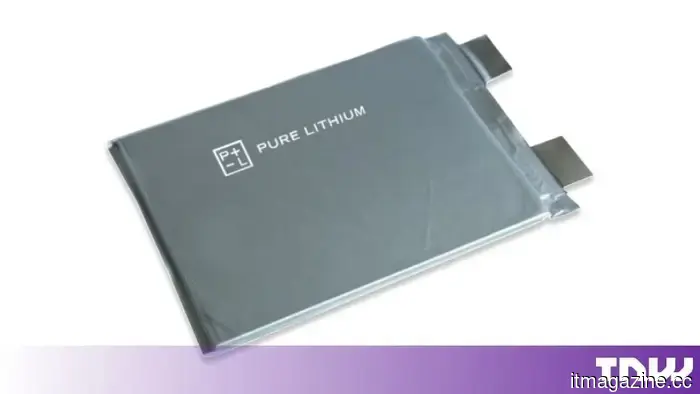
 This battery, which does not use graphite, has the potential to disrupt China's dominance in the electric vehicle supply chain.
Pure Lithium reports that its graphite-free cell completed 9,315 cycles. By 2030, Europe aims to process 40% of its own graphite, while China processes more than 90% of it.
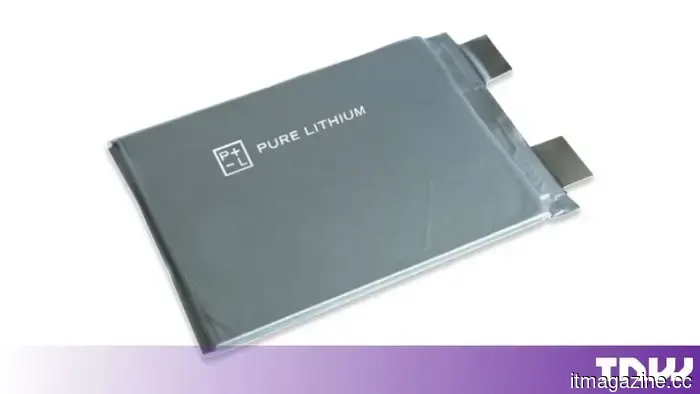
This battery, which does not use graphite, has the potential to disrupt China's dominance in the electric vehicle supply chain.
Pure Lithium reports that its graphite-free cell completed 9,315 cycles. By 2030, Europe aims to process 40% of its own graphite, while China processes more than 90% of it.
A two-step AI technique can finally address the challenges of low-light photography in smartphone cameras.
Researchers have created a two-step AI system that improves ultra-high-definition images taken in low light while maintaining fine textures, edges, and scene details.