
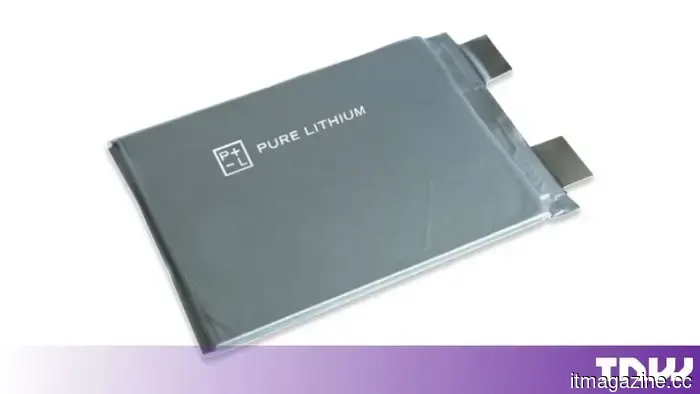
This battery, which does not use graphite, has the potential to disrupt China's dominance in the electric vehicle supply chain.
Pure Lithium reports that a laboratory cell without a graphite anode achieved 9,315 charge and discharge cycles with nearly no capacity loss, a result that remains unverified by third parties. The European Union aims to process 40% of its own strategic raw materials by 2030 and limit any single country to 65%, while China handles over 90% of the world’s graphite.
A startup in Chicago claims its battery underwent 9,315 charge and discharge cycles with minimal capacity loss, as announced by Pure Lithium on August 27. This cell does not contain graphite.
However, there are significant caveats. It is a laboratory cell, has not been validated by any third party, and the energy density of the tested cell has not been shared, according to InsideEVs.
The company has eliminated the anode material by depositing lithium metal directly onto a copper current collector during manufacturing, which forms the anode.
The company's subsequent statement is commercially oriented. “It’s half the weight and double the energy density of the battery that we’re all using today,” said chief executive Emilie Bodoin to Bloomberg in June.
Graphite does not perform any electrochemical tasks; rather, it serves as a host that holds lithium ions between charges, taking up space and adding weight in the process.
Additionally, it represents the most concentrated segment of the supply chain. According to US government data, over 90% of the world’s graphite is processed in China.
Europe has been aware of this situation for years, recognizing both natural and synthetic graphite as strategic raw materials on the EU's list.
The targets associated with that list are precise. By 2030, the bloc intends to process 40% of its annual needs and ensure that no more than 65% of any strategic material originates from a single third country.
When it comes to graphite, the arithmetic challenge remains unresolved. The gap between 90% and 65% is just four years away.
In response, Europe has embarked on producing its own graphite. Talga is working on developing a graphite mine in Swedish Lapland, Vianode is synthesizing it in Norway, and CarbonX in Delft is creating a substitute anode material.
Pure Lithium is proposing an alternative: a battery that entirely eliminates the need for graphite.
This approach isn't limited to Chicago. LionVolt in the Netherlands is also developing lithium metal anodes, part of the innovative chemistries that Europe is exploring following the collapse of Northvolt.
That situation can be summarized honestly: one company has a promising laboratory result and a pilot line still under construction, while a continent faces a pressing deadline.
Other articles
 Apple TV secures the highly praised drama series “Small Prophets.”
Apple TV has secured the worldwide streaming rights for the popular British comedy-drama series "Small Prophets," and it will be available for viewing starting October 7.
Apple TV secures the highly praised drama series “Small Prophets.”
Apple TV has secured the worldwide streaming rights for the popular British comedy-drama series "Small Prophets," and it will be available for viewing starting October 7.
 OpenAI will cease providing models to Cursor following the acquisition by SpaceX.
OpenAI will cease providing models to Cursor on November 12, following SpaceX's acquisition of the company. Cursor has already shipped Grok 4.5, which was developed by SpaceXAI in July.
OpenAI will cease providing models to Cursor following the acquisition by SpaceX.
OpenAI will cease providing models to Cursor on November 12, following SpaceX's acquisition of the company. Cursor has already shipped Grok 4.5, which was developed by SpaceXAI in July.
 The trend of banning Meta smart glasses is gaining momentum in the US, with a nightclub in New York taking the initiative.
A nightclub in New York City has prohibited smart glasses due to growing concerns over covert recordings, echoing similar measures implemented in the UK.
The trend of banning Meta smart glasses is gaining momentum in the US, with a nightclub in New York taking the initiative.
A nightclub in New York City has prohibited smart glasses due to growing concerns over covert recordings, echoing similar measures implemented in the UK.
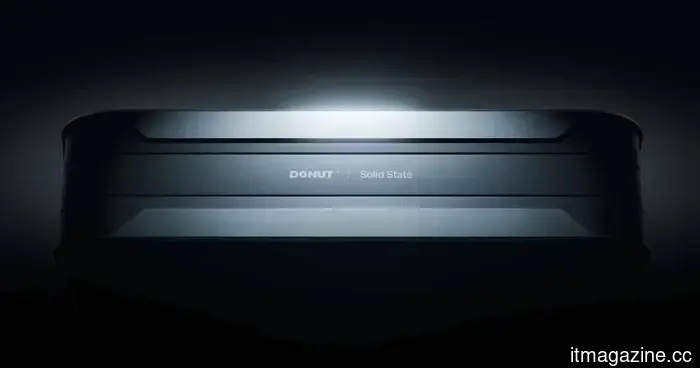 A snug compression might resolve the most significant challenge facing solid-state batteries for vehicles and electronic devices.
Solid-state batteries offer the potential for safer and quicker charging power, but tiny dendrites often cause short circuits. Researchers at Stanford found that by applying constant mechanical pressure, dendrites can grow laterally in a non-harmful way, providing a straightforward engineering solution to advance the development of next-generation batteries for electric vehicles and portable devices.
A snug compression might resolve the most significant challenge facing solid-state batteries for vehicles and electronic devices.
Solid-state batteries offer the potential for safer and quicker charging power, but tiny dendrites often cause short circuits. Researchers at Stanford found that by applying constant mechanical pressure, dendrites can grow laterally in a non-harmful way, providing a straightforward engineering solution to advance the development of next-generation batteries for electric vehicles and portable devices.
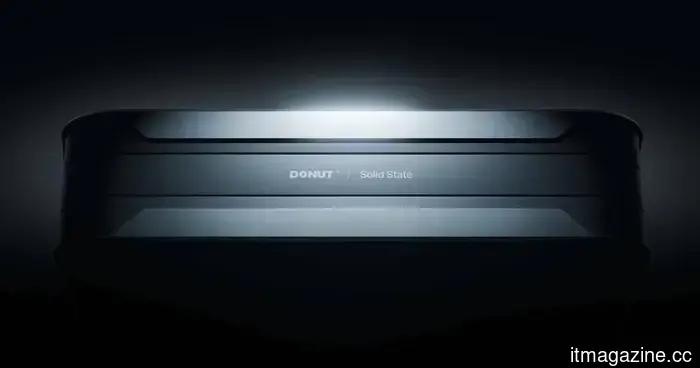 A snug compression might resolve the main challenge for solid-state batteries in vehicles and electronic devices.
Solid-state batteries promised increased safety and quicker charging capabilities, but microscopic dendrites continue to cause short circuits. Researchers at Stanford found that applying continuous mechanical pressure encourages dendrites to grow in a harmless sideways manner, providing a straightforward engineering solution to advance next-generation batteries for electric vehicles and portable devices.
A snug compression might resolve the main challenge for solid-state batteries in vehicles and electronic devices.
Solid-state batteries promised increased safety and quicker charging capabilities, but microscopic dendrites continue to cause short circuits. Researchers at Stanford found that applying continuous mechanical pressure encourages dendrites to grow in a harmless sideways manner, providing a straightforward engineering solution to advance next-generation batteries for electric vehicles and portable devices.
 Apple TV secures the highly praised drama series "Small Prophets."
Apple TV has obtained the worldwide streaming rights for the popular British comedy-drama series "Small Prophets," which will be available for viewing starting October 7.
Apple TV secures the highly praised drama series "Small Prophets."
Apple TV has obtained the worldwide streaming rights for the popular British comedy-drama series "Small Prophets," which will be available for viewing starting October 7.
This battery, which does not use graphite, has the potential to disrupt China's dominance in the electric vehicle supply chain.
Pure Lithium reports that its graphite-free cell completed 9,315 cycles. By 2030, Europe aims to process 40% of its own graphite, while China processes more than 90% of it.