
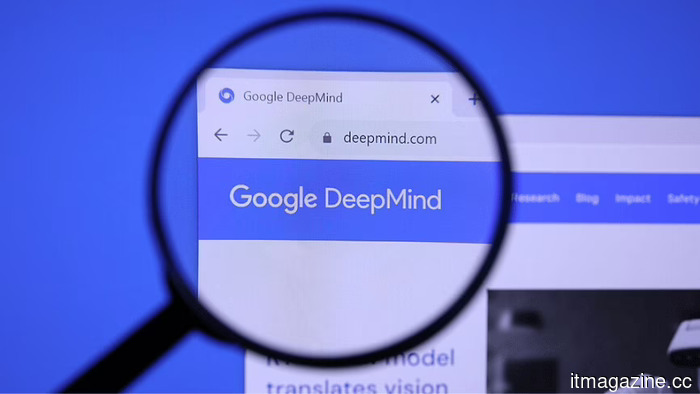
DeepMind disbands its Nobel Prize-winning AlphaFold team.
Less than a year ago, AlphaFold earned Google DeepMind a Nobel Prize. Now, DeepMind has disbanded the team that developed it. According to the Financial Times, the lab has reassigned most of the authors of the original AlphaFold paper over the past year, with nearly a quarter leaving the company entirely. DeepMind has confirmed these changes and is integrating the work into a broader initiative surrounding Gemini.
From tackling a grand challenge to becoming the ‘AI scientist’
AlphaFold represented the clearest manifestation of DeepMind’s previous approach: dedicate a team to a significant challenge and resolve it. As noted by Engadget, it solved the 50-year protein-folding dilemma, accurately predicting 3D protein structures in minutes. Its technology now supports drug discovery and disease research globally.
That approach is now being phased out. DeepMind's research VP, Pushmeet Kohli, told the FT, “Our strategy over the last nine years has been to focus on grand challenges. The strategy has evolved.” Instead of having one team for each problem, the lab is creating Gemini-powered systems designed to aid scientists and automate aspects of research itself.
Former AlphaFold team members have dispersed. Some have transitioned to Gemini projects, while others have moved into areas such as enzyme design, nuclear fusion, and genomics, as reported by The Decoder. A few have joined Isomorphic Labs, the Alphabet subsidiary in drug discovery inspired by AlphaFold.
Major departures to Anthropic
The most significant losses have departed entirely. John Jumper, who shared the 2024 Nobel Prize with DeepMind chief Demis Hassabis, transitioned to Anthropic in June. Two principal AlphaFold researchers, Jonas Adler and Alexander Pritzel, followed him.
A DeepMind employee mentioned to the FT that these three were “instrumental, important, core members” whose departures “caught the team by surprise.” They are now at a competitor that recently launched Claude Science, a platform tailored for the very biology and drug-discovery tasks pioneered by AlphaFold.
The significance of this shift
One optimistic interpretation is that AlphaFold simply fulfilled its purpose. It solved its problem, led to the creation of a startup, and allowed its team to pursue new endeavors. DeepMind expresses continued pride in the work.
However, a more concerning perspective is what this transition indicates. The lab, once characterized by profound scientific exploration, is reorganizing to compete in the same language model race as its peers. Moreover, it is losing the talent that established its reputation to rivals advancing that competition. Betting on an “AI scientist” is a broader, less defined goal compared to solving a protein-folding issue. Whether this will yield results similar to those of AlphaFold remains uncertain.
Other articles
 The need for verification in the trust crisis of recruitment
The use of AI-generated resumes has increased by 239% since the introduction of chatbots, and 67% of HR leaders indicate that this trend is delaying the hiring process. Ramu Donikana, founder of Invent Artificial, contends that what recruitment truly requires at this moment is verification, rather than improved screening methods.
The need for verification in the trust crisis of recruitment
The use of AI-generated resumes has increased by 239% since the introduction of chatbots, and 67% of HR leaders indicate that this trend is delaying the hiring process. Ramu Donikana, founder of Invent Artificial, contends that what recruitment truly requires at this moment is verification, rather than improved screening methods.
 Students are opting for AI chatbots over human counselors for college guidance.
Free AI chatbots from Alibaba, ByteDance, Tencent, and Baidu are transforming China's expensive college counseling sector, assisting millions of gaokao students in selecting universities and majors without the need for paid consultants.
Students are opting for AI chatbots over human counselors for college guidance.
Free AI chatbots from Alibaba, ByteDance, Tencent, and Baidu are transforming China's expensive college counseling sector, assisting millions of gaokao students in selecting universities and majors without the need for paid consultants.
 The necessity of verification amid the trust crisis in recruitment
The creation of AI-generated resumes has increased by 239% since the introduction of chatbots, with 67% of HR executives stating that it has hindered the hiring process. Ramu Donikana, the founder of Invent Artificial, contends that what recruitment truly requires now is verification rather than improved screening.
The necessity of verification amid the trust crisis in recruitment
The creation of AI-generated resumes has increased by 239% since the introduction of chatbots, with 67% of HR executives stating that it has hindered the hiring process. Ramu Donikana, the founder of Invent Artificial, contends that what recruitment truly requires now is verification rather than improved screening.
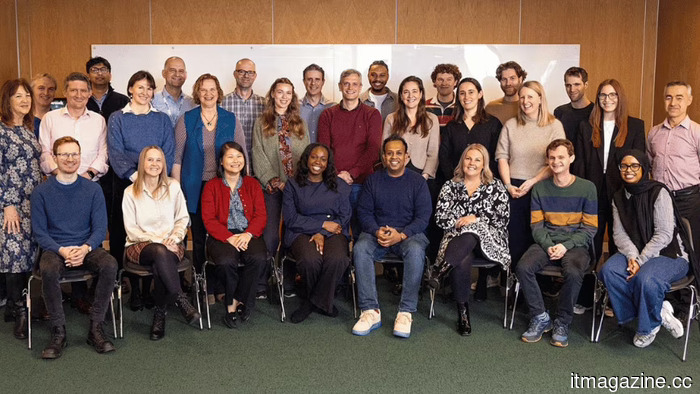 Qureight secures $20 million for an AI technology focused on chest conditions to accelerate drug trials.
Cambridge's Qureight secured $20 million in Series B funding to develop an AI "foundation model" for the chest, aimed at accelerating drug trials for lung and heart conditions.
Qureight secures $20 million for an AI technology focused on chest conditions to accelerate drug trials.
Cambridge's Qureight secured $20 million in Series B funding to develop an AI "foundation model" for the chest, aimed at accelerating drug trials for lung and heart conditions.
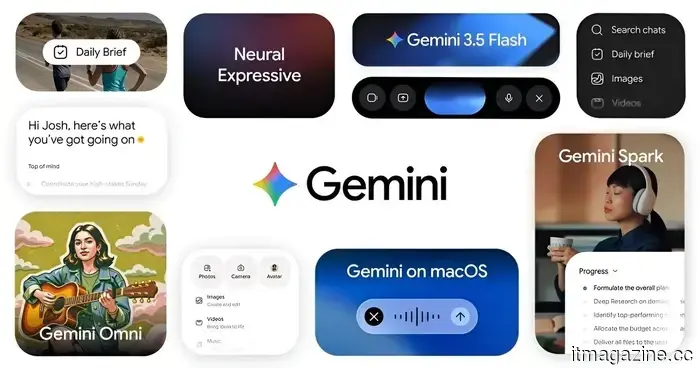 Gemini can now condense the most chaotic comment threads in Google Docs.
Gemini is now able to organize extensive comments in Google Docs by reviewer or topic, highlight unresolved queries, draft replies, and propose edits, although access is contingent upon having the appropriate plan, settings, and document permissions.
Gemini can now condense the most chaotic comment threads in Google Docs.
Gemini is now able to organize extensive comments in Google Docs by reviewer or topic, highlight unresolved queries, draft replies, and propose edits, although access is contingent upon having the appropriate plan, settings, and document permissions.
 As AI produces an increasing number of messages, the ability for humans to recognize them becomes more important.
AI has accelerated internal communication but has also made it more challenging to trust. Motivosity suggests that incorporating company updates into recognition platforms, where employees are already engaged, is the way for organizations to break through the clutter.
As AI produces an increasing number of messages, the ability for humans to recognize them becomes more important.
AI has accelerated internal communication but has also made it more challenging to trust. Motivosity suggests that incorporating company updates into recognition platforms, where employees are already engaged, is the way for organizations to break through the clutter.
DeepMind disbands its Nobel Prize-winning AlphaFold team.
Google DeepMind has disbanded its Nobel Prize-winning AlphaFold team, reallocating the majority of its members to the Gemini project as key contributors depart for Anthropic.