

Students are opting for AI chatbots over human counselors for college guidance.
China's college counseling sector has built a $160 million industry on student anxiety, which is now threatened by free AI tools.
Every summer, around 10 million students in China confront a daunting deadline. After enduring the challenging Gaokao college entrance exam, they have only a few weeks to select their universities and fields of study—a choice that can significantly impact their future careers. Previously, families would pay substantial fees for professional assistance in this process. However, free AI chatbots are now starting to take over that market.
How are AI chatbots taking the place of paid college advisors?
Chinese high schools generally do not provide career counseling, leading families to rely on guidance books, social media influencers, and paid consultants for help. Today, major companies like Alibaba, ByteDance, Tencent, and Baidu have introduced AI solutions designed specifically for college planning.
Students input their exam results, career aspirations, personality evaluations, and preferences such as budget and location. The chatbots then produce lists of potential programs, categorized into high, safe, and backup options based on eligibility criteria.
A report from Rest Of World highlights the immense scale of this transition. By early July, Alibaba’s Qwen had generated 23 million recommendation reports, while Tencent’s Yuanbao chatbot reported answering 200 million related inquiries.
These reports are vital, as Chinese universities typically do not permit students to change majors later, making this choice much more critical than it is for students in the United States.
What implications does this have for human counselors?
The emergence of AI is creating challenges for an industry centered on knowledge and experience. Some admissions consultants have begun using AI themselves to accelerate research and develop preliminary recommendations, while redirecting their efforts towards areas requiring human insight, like emotional support, family discussions, and long-term strategy.
However, experts warn that AI is not without flaws. Chatbots can err, misinterpret a student’s priorities, or fail to consider unique personal situations that influence significant life choices. Consequently, many believe that AI will transform college counseling rather than wholly replace it.
It is also important to note that access to this type of AI technology is not equitable. A separate study revealed that awareness and utilization of AI tools are heavily skewed towards more affluent and educated populations, indicating that free resources alone may not completely equalize opportunities.
For numerous students, the most significant shift is that admissions advice is no longer exclusively available to families who can afford costly consultants.




Other articles
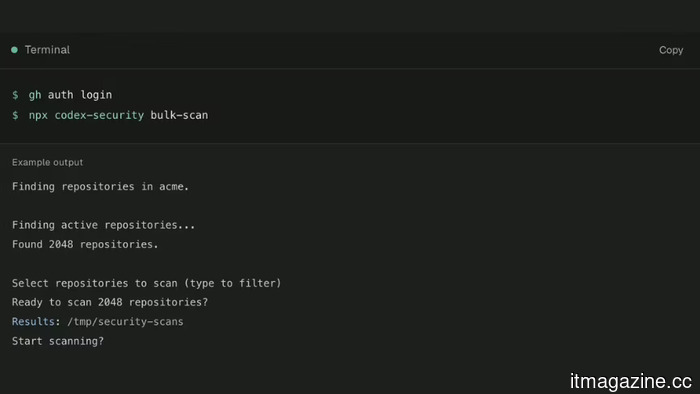 OpenAI has made Codex Security available as open source, but has restricted access to the scanner.
OpenAI has made its Codex Security CLI available as open-source to identify bugs in code, but the scanner remains restricted. This is seen as a strategic move in the AppSec domain and a challenge to Anthropic's Claude Security.
OpenAI has made Codex Security available as open source, but has restricted access to the scanner.
OpenAI has made its Codex Security CLI available as open-source to identify bugs in code, but the scanner remains restricted. This is seen as a strategic move in the AppSec domain and a challenge to Anthropic's Claude Security.
 The need for verification in the trust crisis of recruitment
The use of AI-generated resumes has increased by 239% since the introduction of chatbots, and 67% of HR leaders indicate that this trend is delaying the hiring process. Ramu Donikana, founder of Invent Artificial, contends that what recruitment truly requires at this moment is verification, rather than improved screening methods.
The need for verification in the trust crisis of recruitment
The use of AI-generated resumes has increased by 239% since the introduction of chatbots, and 67% of HR leaders indicate that this trend is delaying the hiring process. Ramu Donikana, founder of Invent Artificial, contends that what recruitment truly requires at this moment is verification, rather than improved screening methods.
 As AI produces an increasing number of messages, the ability for humans to recognize them becomes more valuable.
AI has accelerated internal communication, but it has also made it more difficult to trust. Motivosity suggests that integrating company updates into recognition platforms, where employees are already engaged, is the way for organizations to stand out amidst the clutter.
As AI produces an increasing number of messages, the ability for humans to recognize them becomes more valuable.
AI has accelerated internal communication, but it has also made it more difficult to trust. Motivosity suggests that integrating company updates into recognition platforms, where employees are already engaged, is the way for organizations to stand out amidst the clutter.
 As AI produces an increasing number of messages, the ability for humans to recognize them becomes more important.
AI has accelerated internal communication but has also made it more challenging to trust. Motivosity suggests that incorporating company updates into recognition platforms, where employees are already engaged, is the way for organizations to break through the clutter.
As AI produces an increasing number of messages, the ability for humans to recognize them becomes more important.
AI has accelerated internal communication but has also made it more challenging to trust. Motivosity suggests that incorporating company updates into recognition platforms, where employees are already engaged, is the way for organizations to break through the clutter.
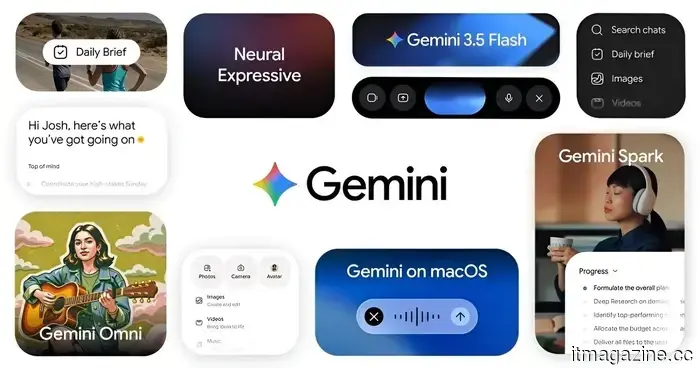 Gemini can now condense the most chaotic comment threads in Google Docs.
Gemini is now able to organize extensive comments in Google Docs by reviewer or topic, highlight unresolved queries, draft replies, and propose edits, although access is contingent upon having the appropriate plan, settings, and document permissions.
Gemini can now condense the most chaotic comment threads in Google Docs.
Gemini is now able to organize extensive comments in Google Docs by reviewer or topic, highlight unresolved queries, draft replies, and propose edits, although access is contingent upon having the appropriate plan, settings, and document permissions.
 BMW eliminates 8,000 positions and transfers its automotive computing to Qualcomm.
BMW plans to reduce approximately 8,000 jobs in Germany due to declining sales in China, coinciding with the announcement that Qualcomm will be the exclusive supplier of its vehicles' computing systems for the next ten years.
BMW eliminates 8,000 positions and transfers its automotive computing to Qualcomm.
BMW plans to reduce approximately 8,000 jobs in Germany due to declining sales in China, coinciding with the announcement that Qualcomm will be the exclusive supplier of its vehicles' computing systems for the next ten years.
Students are opting for AI chatbots over human counselors for college guidance.
Free AI chatbots from Alibaba, ByteDance, Tencent, and Baidu are transforming China's expensive college counseling sector, assisting millions of gaokao students in selecting universities and majors without the need for paid consultants.