
The necessity of verification amid the trust crisis in recruitment
TL;DRAI has simplified the process of generating resumes but has made them less trustworthy, resulting in a 239% increase in AI-generated applications. Ramu Donikana, the founder of Invent Artificial, contends that the solution lies not in improved screening but in verified skill profiles that link claimed abilities to concrete evidence, such as technical assessments, project work, and AI-proctored interviews. His platform, TheInterviews.ai, creates digital profile cards that enable employers to understand the reasons behind skill claims, rather than just seeing that they exist.
Recruiters used to review resumes for reasons to approve candidates; now, they look for reasons to doubt them. Almost two-thirds of job seekers utilize AI in their applications, and 87% of hiring managers in the US admit to incorporating AI into their hiring processes, leading to mutual skepticism from both ends.
Since the introduction of AI chatbots, there has been a 239% rise in AI-generated resumes, which complicates matters for employers who must manage a flood of applications. According to 67% of HR leaders in the US, this situation hampers or delays the hiring process. Consequently, well-crafted resumes may no longer ensure actual expertise, presenting a new challenge for companies vying for skilled talent. There is a growing disconnect between confidence on paper and real-world capability.
While companies can sift through thousands of applications using AI-driven tools, many still spend weeks interviewing candidates whose technical skills remain uncertain until late in the hiring process. Although the speed of recruitment has improved, certainty has not.
Ramu Donikana believes the current debate has misidentified the core issue. He asserts that artificial intelligence is not undermining recruitment processes; rather, the problem lies in the ongoing reliance on documents that depend on self-reported experience, enhanced by increasingly advanced generative AI. “The hiring crisis isn’t due to the existence of AI,” Donikana states. “It stems from our expectation that resumes should prove someone's skills. AI ought to assist us in verifying talent rather than merely helping people craft better applications.”
Generative AI has made resume writing accessible to all. Candidates who previously found it challenging to present their experience can now produce professional-looking applications suited for nearly any role. Donikana embraces this increased accessibility but believes employers have underestimated the extent to which it alters the value of a conventional resume. “Everyone can generate a resume in seconds tailored to the job requirements,” he notes. “Some may lack the actual skills, but their resumes can appear to be a perfect fit. Verification is what is significant now.”
According to Donikana, recruiters are facing the consequences through extended screening times, higher recruitment costs, and decisions made with incomplete information. Companies may expend considerable resources reviewing candidates who appear qualified on paper only to discover their practical skills do not meet expectations.
“Firms invest a lot of effort in figuring out profiles and screening candidates. If we establish a proper system with clear rules for skill verification, we can enhance hiring quality while saving time,” Donikana explains.
His stance is not that employers should discard artificial intelligence; on the contrary, he believes the most significant benefits of AI in recruitment are just beginning to surface, shifting from generating applications to validating credentials with measurable evidence.
Modern hiring, he insists, must transition from statements of capability to concrete evidence, which includes technical assessments, demonstrated project work, interview recordings, portfolio validation, objective scoring systems, and work samples that withstand scrutiny.
Such indicators, he argues, can provide a more reliable assessment of capability than polished language alone. Invent Artificial’s product, TheInterviews.ai, integrates this evidence into what Donikana refers to as a profile card—verified digital cards linking candidates' claimed skills to substantiating evidence. A claimed proficiency in a technical area is accompanied by the projects that support it, along with an oral score derived from a recorded interview. Face scanning and AI proctoring ensure each interview is authentic, so the score reflects the true candidate, rather than a substitute or chatbot. “The profile card consolidates everything,” Donikana explains. “Whatever skills a person possesses are directly linked to their verification. Employers should understand the reasons behind each skill.”
Another outcome, according to Donikana, is that verified hiring could create fairer chances for candidates whose abilities surpass their resume-writing and keyword optimization skills. As they are evaluated based on actual performance, it opens opportunities for talented individuals who may lack the polish or credentials typically favored in hiring. He states, “AI should assist us in identifying the right candidates rather than making every application appear identical.”
As artificial intelligence becomes more integrated into recruitment, digital identity and credential verification may gain significance across employment sectors. Donikana foresees that verified skill profiles might eventually hold similar importance for employers as professional networking profiles do today.
He warns that businesses that continue to rely primarily on traditional resumes may find themselves spending more time distinguishing genuine expertise from increasingly refined applications. Organizations that adopt verification practices earlier are likely to make better hiring decisions, as evidence supplants assumptions
Other articles
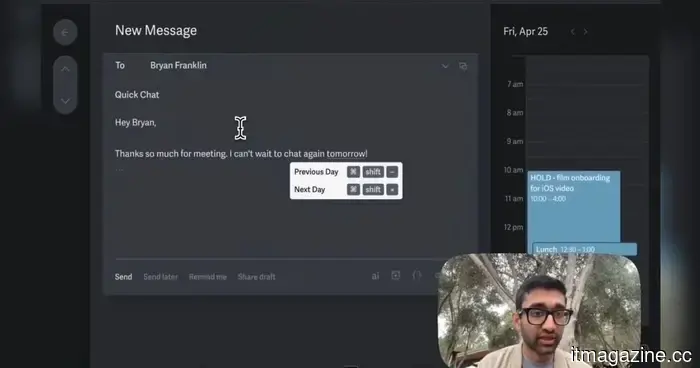 Wispr Flow has finally repaired its toolbar following complaints from hundreds of users.
Wispr Flow received over 700 responses from critics regarding what wasn't functioning properly. Its initial noticeable adjustment relocates the desktop Flow Bar, while additional reliability enhancements still need to demonstrate their effectiveness.
Wispr Flow has finally repaired its toolbar following complaints from hundreds of users.
Wispr Flow received over 700 responses from critics regarding what wasn't functioning properly. Its initial noticeable adjustment relocates the desktop Flow Bar, while additional reliability enhancements still need to demonstrate their effectiveness.
 Shein reveals that it is under investigation by the FTC while attempting to go public.
Shein revealed an unpublicized FTC consumer-protection investigation in its IPO filing in Hong Kong. The agency oversees 'dark patterns', which are the deceptive techniques utilized by Shein's app.
Shein reveals that it is under investigation by the FTC while attempting to go public.
Shein revealed an unpublicized FTC consumer-protection investigation in its IPO filing in Hong Kong. The agency oversees 'dark patterns', which are the deceptive techniques utilized by Shein's app.
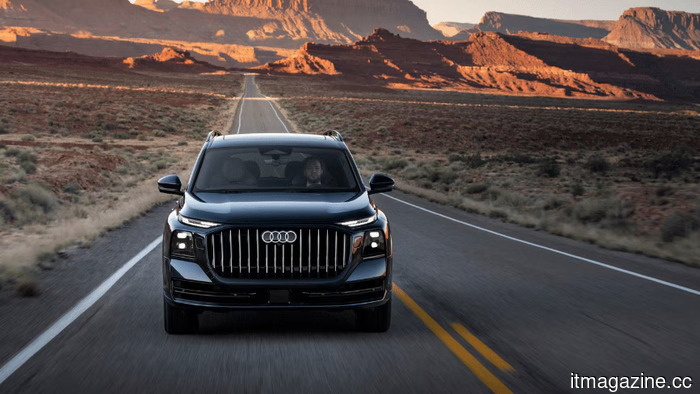 Audi's Q9 features a petrol V8 engine for the American market as its electric vehicle plans face delays.
Audi's Q9 is a gasoline-powered SUV designed to cater to American preferences, introduced as its electric vehicle ambitions slow down, tariffs impact its entirely imported lineup, and employees voice concerns over potential plant closures.
Audi's Q9 features a petrol V8 engine for the American market as its electric vehicle plans face delays.
Audi's Q9 is a gasoline-powered SUV designed to cater to American preferences, introduced as its electric vehicle ambitions slow down, tariffs impact its entirely imported lineup, and employees voice concerns over potential plant closures.
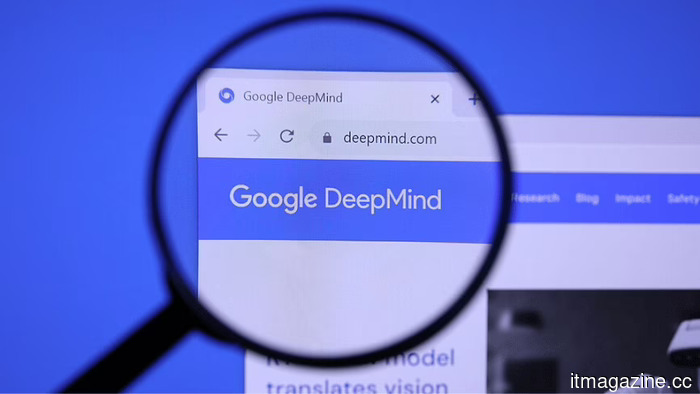 DeepMind disbands its Nobel Prize-winning AlphaFold team.
Google DeepMind has disbanded its Nobel Prize-winning AlphaFold team, reallocating the majority of its authors to work on Gemini as key members depart for Anthropic.
DeepMind disbands its Nobel Prize-winning AlphaFold team.
Google DeepMind has disbanded its Nobel Prize-winning AlphaFold team, reallocating the majority of its authors to work on Gemini as key members depart for Anthropic.
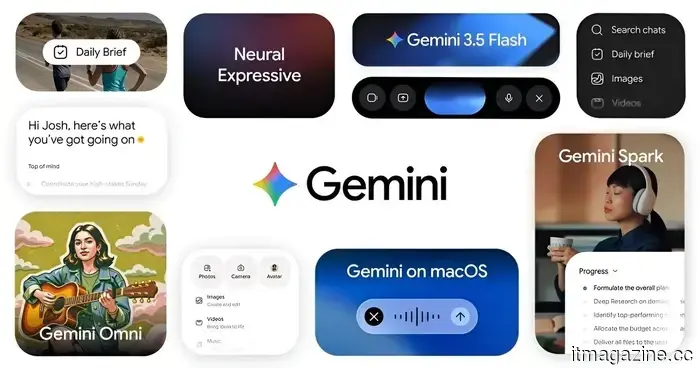 Gemini can now condense the most chaotic comment threads in Google Docs.
Gemini is now able to organize extensive comments in Google Docs by reviewer or topic, highlight unresolved queries, draft replies, and propose edits, although access is contingent upon having the appropriate plan, settings, and document permissions.
Gemini can now condense the most chaotic comment threads in Google Docs.
Gemini is now able to organize extensive comments in Google Docs by reviewer or topic, highlight unresolved queries, draft replies, and propose edits, although access is contingent upon having the appropriate plan, settings, and document permissions.
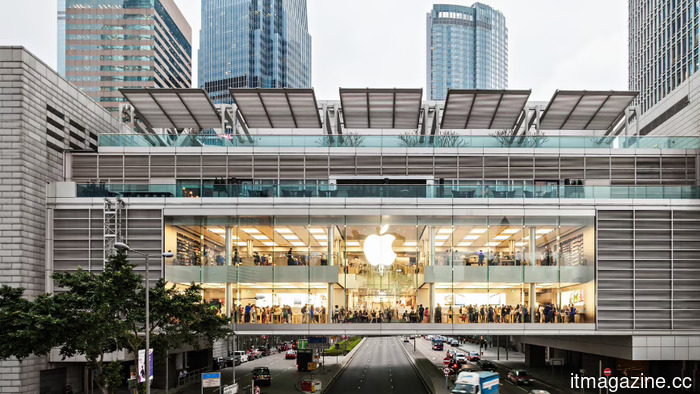 Apple reaches a $5 trillion valuation by opting out of the AI investment competition.
Apple briefly reached a $5 trillion valuation, becoming the second company in history to do so, as investors moved away from the AI capital expenditure frenzy and into the one major company that stayed out of the competition.
Apple reaches a $5 trillion valuation by opting out of the AI investment competition.
Apple briefly reached a $5 trillion valuation, becoming the second company in history to do so, as investors moved away from the AI capital expenditure frenzy and into the one major company that stayed out of the competition.
The necessity of verification amid the trust crisis in recruitment
The creation of AI-generated resumes has increased by 239% since the introduction of chatbots, with 67% of HR executives stating that it has hindered the hiring process. Ramu Donikana, the founder of Invent Artificial, contends that what recruitment truly requires now is verification rather than improved screening.