
The need for verification in the trust crisis of recruitment
TL;DRAI has simplified resume creation but increased doubts about their authenticity, leading to a 239% rise in AI-generated applications. Ramu Donikana, the founder of Invent Artificial, contends that the solution lies not in improved screening but in verified skill profiles, which link claimed competencies to supporting evidence such as technical tests, project contributions, and AI-monitored interviews. His platform, TheInterviews.ai, develops digital profile cards that inform employers about the basis of a skill claim rather than just its existence.
Previously, recruiters would open a resume to find a reason to say yes, but now they open it seeking grounds for skepticism. Approximately two-thirds of applicants utilize AI when preparing their submissions, while 87% of hiring managers in the U.S. acknowledge using AI in their recruitment processes, creating a scenario where both sides are viewed with similar suspicion.
Since the introduction of AI chatbots, AI-generated resumes have surged by 239%, challenging employers who grapple with overwhelming numbers of applications. This situation hinders and prolongs the hiring process, according to 67% of U.S. HR leaders. Consequently, professionally crafted resumes no longer necessarily imply actual expertise, presenting a fresh dilemma for companies striving to attract specialized talent. The confidence indicated on paper appears to be increasingly disconnected from actual skills.
Though companies can process thousands of applications using AI-driven software, many still spend weeks interviewing candidates, with their technical skills remaining uncertain until late in the hiring timeline. While speed has improved, certainty has not.
Within various sectors facing ongoing skill shortages, such as healthcare, manufacturing, and hospitality, recruitment is increasingly centering on identifying who can truly demonstrate the capabilities required for the role. The urgency to make this distinction is intensifying as AI transforms the workforce. By 2030, it is expected that 22% of jobs will be altered, with employers anticipating technology to take on a larger portion of workplace tasks in the coming five years.
Donikana argues that the ongoing discussion has misidentified the core issue. He believes that artificial intelligence is not undermining recruitment; rather, the problem lies in our continued reliance on documents that have always depended on self-reported experiences, now further complicated by advanced generative AI. "The hiring crisis isn’t due to the existence of AI," he states. "It's because we still count on a resume to validate skills. AI should assist in verifying talent, not merely in enhancing application writing."
Generative AI has made resume creation accessible. Candidates who previously faced challenges in showcasing their experiences can now produce professional-looking applications customized for various positions. While Donikana appreciates this ease of access, he argues that employers have not fully grasped how significantly this alters the value of a conventional resume. "Everyone can generate a resume in seconds to fit job requirements," he explains. "Some individuals may lack the necessary skills, but their resumes may still appear as an ideal match. Verification is now crucial."
Donikana notes that recruiters bear the consequences of extended screening periods, increased recruitment costs, and decisions made on incomplete information. Organizations often invest considerable effort in evaluating candidates who look qualified on paper, only to discover their actual abilities fall below expectations.
"Companies waste considerable time analyzing profiles and screening candidates. By implementing a proper system with clear rules to verify skills, we can enhance the quality of hiring while saving time," Donikana clarifies.
His assertion is not that employers should shun artificial intelligence; on the contrary, he believes that AI's most significant contribution to recruitment is just beginning to take shape. Its role is shifting from simply generating applications to confirming credentials through measurable proof.
Modern hiring, he suggests, must transition from claims to evidence. This evidence should encompass technical assessments, showcased project work, recorded interviews, validated portfolios, objective scoring systems, and work samples that withstand scrutiny.
These indicators could provide a more trustworthy depiction of capability than polished language alone. The product from Invent Artificial, TheInterviews.ai, compiles this evidence into what Donikana refers to as a profile card—verified digital cards that connect candidates' claimed skills to corroborating evidence. A claimed expertise in a technical area is paired with the projects that support it and includes an oral score derived from a recorded interview. Face scanning and AI oversight ensure the authenticity of interviews, presenting the score as reflective of the actual candidate, rather than a substitute or chatbot. "The profile card consolidates everything," Donikana states. "No matter what skills a candidate possesses, we link the verification directly to them. Employers should understand the reasons behind each skill's existence."
One additional benefit Donikana anticipates is that verified hiring could lead to fairer chances for candidates whose abilities surpass their resume-writing and keyword optimization skills. By being assessed on their actual capabilities, this creates opportunities for talented individuals who may lack the polish or credentials typically favored by hiring practices. He asserts, "AI should aid us in identifying the right candidates rather than making every application appear uniform."
As artificial intelligence continues to integrate into recruitment processes,
Other articles
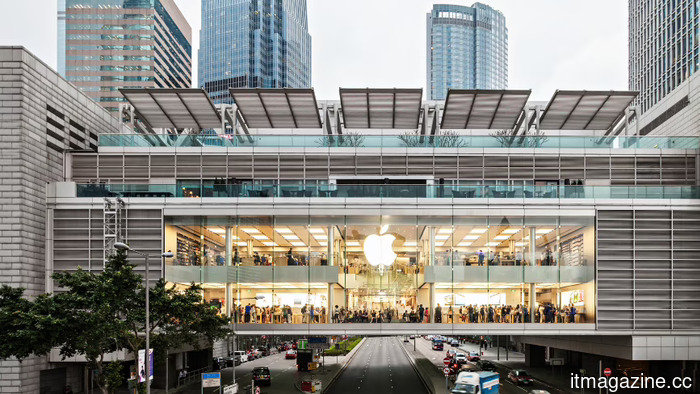 Apple reaches a $5 trillion valuation by avoiding the competition in AI spending.
Apple briefly reached a $5 trillion valuation, becoming only the second company to achieve this milestone, as investors moved away from the AI capital expenditure frenzy towards the one major player that remained on the sidelines.
Cyera acquires Oasis Security for $1 billion to monitor AI agents.
Cyera is acquiring Oasis Security for approximately $1 billion to manage the "non-human identities" that AI agents utilize to access company data, marking the largest deal in AI-agent security to date.
Apple reaches a $5 trillion valuation by avoiding the competition in AI spending.
Apple briefly reached a $5 trillion valuation, becoming only the second company to achieve this milestone, as investors moved away from the AI capital expenditure frenzy towards the one major player that remained on the sidelines.
Cyera acquires Oasis Security for $1 billion to monitor AI agents.
Cyera is acquiring Oasis Security for approximately $1 billion to manage the "non-human identities" that AI agents utilize to access company data, marking the largest deal in AI-agent security to date.
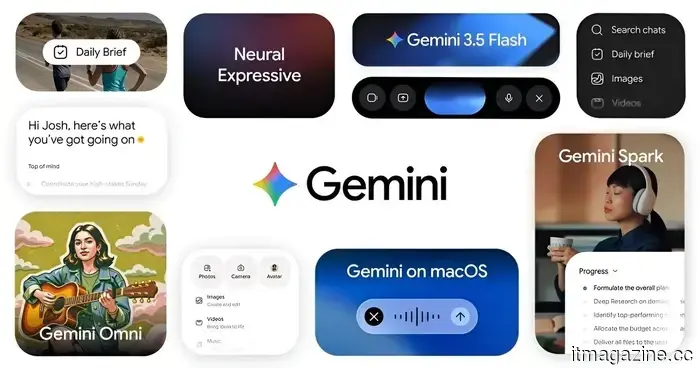 Gemini can now condense the most chaotic comment threads in Google Docs.
Gemini is now able to organize extensive comments in Google Docs by reviewer or topic, highlight unresolved queries, draft replies, and propose edits, although access is contingent upon having the appropriate plan, settings, and document permissions.
Gemini can now condense the most chaotic comment threads in Google Docs.
Gemini is now able to organize extensive comments in Google Docs by reviewer or topic, highlight unresolved queries, draft replies, and propose edits, although access is contingent upon having the appropriate plan, settings, and document permissions.
 DoorDash aims to deliver your food order using a drone in the future.
DoorDash received FAA clearance to launch DoorDash Air, an internal drone delivery service, positioning itself alongside Wing, Zipline, and Amazon as one of just eight certified drone operators in the US.
DoorDash aims to deliver your food order using a drone in the future.
DoorDash received FAA clearance to launch DoorDash Air, an internal drone delivery service, positioning itself alongside Wing, Zipline, and Amazon as one of just eight certified drone operators in the US.
 Lilian Weng departs from Thinking Machines and re-enters OpenAI within days.
Lilian Weng left Thinking Machines due to stress and health issues, only to rejoin OpenAI shortly after to focus on recursive self-improvement.
Lilian Weng departs from Thinking Machines and re-enters OpenAI within days.
Lilian Weng left Thinking Machines due to stress and health issues, only to rejoin OpenAI shortly after to focus on recursive self-improvement.
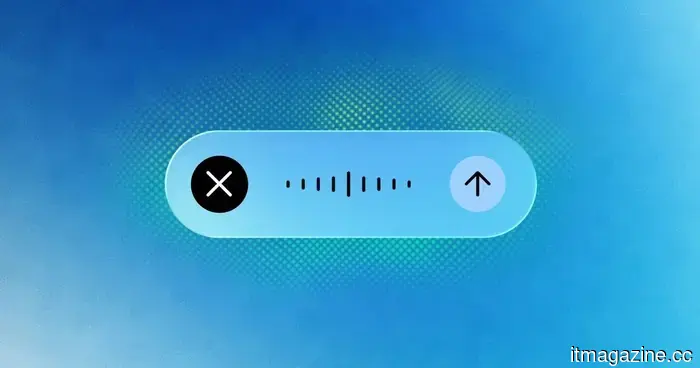 Gemini on Mac can now transcribe your speech and respond to what it observes.
Google is enhancing the Gemini application for Mac by introducing system-wide dictation activated by the Fn key, along with an optional mode that enables Gemini to gather context from the current display for more intricate tasks.
Gemini on Mac can now transcribe your speech and respond to what it observes.
Google is enhancing the Gemini application for Mac by introducing system-wide dictation activated by the Fn key, along with an optional mode that enables Gemini to gather context from the current display for more intricate tasks.
The need for verification in the trust crisis of recruitment
The use of AI-generated resumes has increased by 239% since the introduction of chatbots, and 67% of HR leaders indicate that this trend is delaying the hiring process. Ramu Donikana, founder of Invent Artificial, contends that what recruitment truly requires at this moment is verification, rather than improved screening methods.