
As AI produces an increasing number of messages, the ability for humans to recognize them becomes more important.
As organizations adopt AI to enhance communication speed and reach, those that maintain trust are not increasing their message volume; instead, they are fostering more meaningful human interactions. Artificial intelligence has fundamentally transformed organizational communication with employees. Announcements can now be composed in mere seconds, leadership updates can be automatically tailored, and internal newsletters, summaries, FAQs, and policy changes can all be produced with remarkable speed. This has led to undeniable efficiency.
However, this progress presents a new challenge. Employees are now inundated with internal communication, much of which sounds increasingly alike. While AI has simplified content production, it has not made it easier to foster attention, trust, or a sense of belonging. As the volume of communication rises, many organizations find that employees are becoming adept at ignoring these messages. The challenge for leaders has shifted from merely increasing communication to ensuring that critical messages truly resonate.
The solution may rely less on AI and more on the uniquely human experiences that technology cannot replicate. Traditionally, internal communication has operated separately from employee recognition. Announcements are relayed through email, Slack, or Microsoft Teams, while recognition takes place elsewhere, often inconsistently. This disconnect is increasingly disadvantageous for organizations. Employees naturally engage more in environments where they feel connected to their colleagues and company culture. Recognition nurtures those moments by celebrating achievements, milestones, and contributions that matter.
Organizations are now beginning to integrate significant company updates directly into established engagement environments, rather than expecting employees to access yet another communication channel. “When people gather to celebrate each other, they’re already paying attention,” explains Scott Johnson, CEO of Motivosity. “That’s not something you can fake or automate. It’s the best opportunity for a leader to connect, as it occurs in a moment of trust rather than being just another interruption in someone’s inbox.” This change signifies a broader evolution in workplace communication.
Instead of viewing internal communications as one-way messages, forward-thinking organizations are weaving them into the daily experiences of employees. The swift adoption of AI has led to an unexpected contradiction. As it becomes easier to produce content, distinguishing what is worth attention becomes more challenging. Employees are increasingly aware of AI-generated patterns. While messages may be polished and grammatically flawless, they often lack the authenticity that drives action.
This doesn’t imply that AI should be excluded from internal communications but rather highlights its complementary role. AI can significantly enhance drafting, organization, translation, and personalization. The opportunity lies in merging AI’s efficiency with human-centered experiences that evoke emotional connections. Recognition fulfills this need. Celebrating teammates, acknowledging milestones, and engaging in shared cultural moments produce authentic signals that AI cannot replicate alone. Internal communications are more impactful when conveyed within trusted environments rather than competing against a barrage of notifications.
Currently, many organizations depend on disjointed communication ecosystems. Vital updates may come via email, departmental messages may appear in Teams channels, and leadership communications may reside on intranets scarcely visited post-onboarding. This disperses essential information across isolated platforms. A promising alternative consolidates communication into the social environments where employees already interact through recognition and peer engagement. Dedicated spaces enable organizations to share company-wide updates, executive insights, departmental news, and targeted communications while linking these conversations to the broader workplace culture.
Employees view relevant announcements alongside recognitions from colleagues, eliminating the need to navigate numerous systems for information. Features such as scheduled announcements, tracking engagement, embedded resources, and achievement awards tied to these communication spaces help evolve static announcements into interactive experiences that employees actively engage with. The objective is not just to enhance message distribution but to improve transparency while minimizing the hurdles employees face in staying informed.
Recognition should also be the optimal venue for communication. Many organizations persist in treating recognition and internal communication as separate entities. Recognition occurs on a single platform, company announcements come from another source, resources are on an intranet, and leadership blogs require separate logins. Employees are expected to know where everything is housed, which is increasingly difficult to justify.
Platforms like Motivosity are beginning to transform internal communication by incorporating it into the environment where employees already celebrate successes, acknowledge peers, and engage with the company culture. Through Motivosity’s Employee Spaces, organizations can create dedicated communities for company announcements, executive communications, departments, employee resource groups, onboarding processes, wellness initiatives, or interest-based communities, all while maintaining connections to the broader recognition activities that employees already participate in. Each space features its own social feed, resources, scheduled updates, engagement metrics, events, and the capability for leaders to publish messages either personally or on behalf of the company. Employees can quickly access relevant information where their cultural engagement is already taking place.
The effects may be subtle but are profoundly significant. Rather than asking employees to adopt one more communication channel, organizations are meeting them in spaces where engagement already flourishes. Recognition establishes the routine, which in turn enhances communication.
The future of internal communication is rooted in a human-centered approach. As AI continues to change the workplace, organizations will undoubtedly communicate at unprecedented speeds. However
Other articles
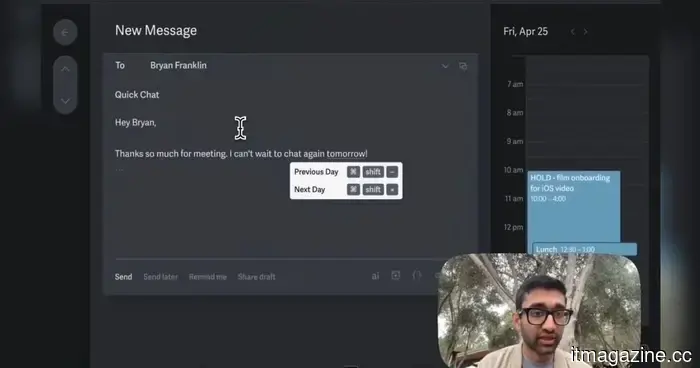 Wispr Flow has finally repaired its toolbar following complaints from hundreds of users.
Wispr Flow received over 700 responses from critics regarding what wasn't functioning properly. Its initial noticeable adjustment relocates the desktop Flow Bar, while additional reliability enhancements still need to demonstrate their effectiveness.
Wispr Flow has finally repaired its toolbar following complaints from hundreds of users.
Wispr Flow received over 700 responses from critics regarding what wasn't functioning properly. Its initial noticeable adjustment relocates the desktop Flow Bar, while additional reliability enhancements still need to demonstrate their effectiveness.
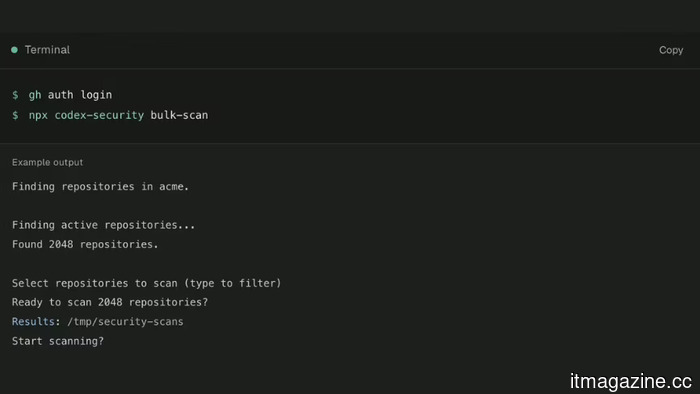 OpenAI has made Codex Security available as open-source, but has restricted access to the scanner.
OpenAI has made its Codex Security CLI available as open source to identify bugs in code, but the scanner itself is still restricted. This move can be seen as a strategic attempt to capture the Application Security market and to compete with Anthropic’s Claude Security.
OpenAI has made Codex Security available as open-source, but has restricted access to the scanner.
OpenAI has made its Codex Security CLI available as open source to identify bugs in code, but the scanner itself is still restricted. This move can be seen as a strategic attempt to capture the Application Security market and to compete with Anthropic’s Claude Security.
 As AI produces an increasing number of messages, the ability for humans to recognize them becomes more valuable.
AI has accelerated internal communication, but it has also made it more difficult to trust. Motivosity suggests that integrating company updates into recognition platforms, where employees are already engaged, is the way for organizations to stand out amidst the clutter.
As AI produces an increasing number of messages, the ability for humans to recognize them becomes more valuable.
AI has accelerated internal communication, but it has also made it more difficult to trust. Motivosity suggests that integrating company updates into recognition platforms, where employees are already engaged, is the way for organizations to stand out amidst the clutter.
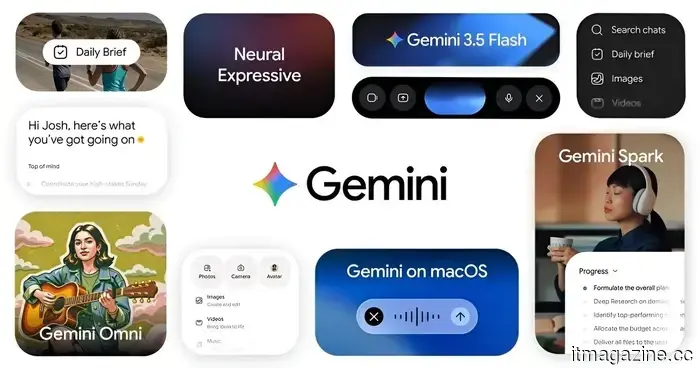 Gemini can now condense the most chaotic comment threads in Google Docs.
Gemini is now able to organize extensive comments in Google Docs by reviewer or topic, highlight unresolved queries, draft replies, and propose edits, although access is contingent upon having the appropriate plan, settings, and document permissions.
Gemini can now condense the most chaotic comment threads in Google Docs.
Gemini is now able to organize extensive comments in Google Docs by reviewer or topic, highlight unresolved queries, draft replies, and propose edits, although access is contingent upon having the appropriate plan, settings, and document permissions.
 DoorDash aims to deliver your food order using a drone in the future.
DoorDash received FAA clearance to launch DoorDash Air, an internal drone delivery service, positioning itself alongside Wing, Zipline, and Amazon as one of just eight certified drone operators in the US.
DoorDash aims to deliver your food order using a drone in the future.
DoorDash received FAA clearance to launch DoorDash Air, an internal drone delivery service, positioning itself alongside Wing, Zipline, and Amazon as one of just eight certified drone operators in the US.
 DeepMind disbands its Nobel Prize-winning AlphaFold team.
Google DeepMind has disbanded its Nobel Prize-winning AlphaFold team, reallocating the majority of its members to the Gemini project as key contributors depart for Anthropic.
DeepMind disbands its Nobel Prize-winning AlphaFold team.
Google DeepMind has disbanded its Nobel Prize-winning AlphaFold team, reallocating the majority of its members to the Gemini project as key contributors depart for Anthropic.
As AI produces an increasing number of messages, the ability for humans to recognize them becomes more important.
AI has accelerated internal communication but has also made it more challenging to trust. Motivosity suggests that incorporating company updates into recognition platforms, where employees are already engaged, is the way for organizations to break through the clutter.