
Tesla begins testing its production Cybercab in Austin, which lacks a steering wheel and pedals.
Tesla is currently testing a production version of its Cybercab without a steering wheel or pedals on the streets of Austin, Texas. This two-seat vehicle, which Tesla introduced in October 2024, is operated solely by its autonomous software, while a safety monitor is present in the passenger seat. Tesla shared a video of the tests on X, demonstrating the gold-colored Cybercab navigating through Austin without any human controls.
This marks the first instance of Tesla putting a vehicle lacking manual controls on public roads. Previous prototype cybercabs tested in several U.S. cities recently were equipped with a steering wheel and pedals. The production model eliminates these controls entirely, indicating that Tesla's purpose-built robotaxi is progressing from concept to real-world deployment.
The timing of this test is significant, as last week, the NHTSA proposed eliminating the federal requirement for brake pedals in vehicles designed solely for automated driving systems. If this rule change is approved, it would remove one of the final major regulatory hurdles for vehicles like the Cybercab, expected to occur later this year.
Since June 2025, Tesla has operated a robotaxi service in Austin using modified Model Y SUVs, some of which run without safety drivers. According to Texas records, there are currently 42 Tesla robotaxis registered in the state, in contrast to 577 for Waymo. The Cybercab aims to alter this balance by providing a purpose-built vehicle that is less expensive to manufacture and maintain than retrofitting consumer cars.
Tesla believes it can outperform Waymo because it creates both the vehicle and the driving software, allowing for better control over costs. Additionally, Tesla relies exclusively on cameras for perception, while Waymo employs a combination of lidar, radar, and cameras, which is a more costly sensor setup. Tesla aims to set a retail price of under $30,000 for the Cybercab, with a long-term production target of two million units annually.
The robotaxi service in Austin has faced challenges, with Tesla reporting 17 incidents from July 2025 to April 2026, including at least two crashes caused by remote operators taking control of the vehicles at low speeds. Waymo has also encountered issues, such as recalling nearly 4,000 robotaxis after they entered highway construction zones 13 times.
Both companies are discovering that scaling autonomous driving reveals edge cases faster than they can be resolved through software updates. As of now, Waymo has issued six recalls, while Tesla's Austin fleet has experienced crashes involving both its AI and human backup systems.
Rolling out these standout, gold-colored Cybercabs without visible controls will place Tesla's robotaxi initiative under significantly greater public scrutiny than the minimally observable Model Y fleet. Each mistake will be more noticeable, and every success harder to overlook. The performance of the Cybercab in relation to the years of expectations will depend on the forthcoming developments on Austin's streets, rather than on Elon Musk's predicted timelines.
Other articles
 The EU has launched an antitrust investigation into Align regarding the tying of Invisalign and its scanners.
The European Commission is looking into whether Align Technology unlawfully links its iTero scanners to its Invisalign clear aligners within the EEA.
The EU has launched an antitrust investigation into Align regarding the tying of Invisalign and its scanners.
The European Commission is looking into whether Align Technology unlawfully links its iTero scanners to its Invisalign clear aligners within the EEA.
 Google begins testing Gmail Live, its new voice search feature for your inbox.
Google has begun testing Gmail Live, a voice-activated search feature that responds to verbal inquiries regarding your inbox and directs you to the original email.
Google begins testing Gmail Live, its new voice search feature for your inbox.
Google has begun testing Gmail Live, a voice-activated search feature that responds to verbal inquiries regarding your inbox and directs you to the original email.
 Nvidia competitor Etched has secured $800 million in funding with support from Jane Street and a fund associated with TSMC.
AI chip startup Etched has secured $800 million in funding, supported by Jane Street and the VentureTech Alliance, which is connected to TSMC. The company also has one billion dollars in signed sales agreements.
Nvidia competitor Etched has secured $800 million in funding with support from Jane Street and a fund associated with TSMC.
AI chip startup Etched has secured $800 million in funding, supported by Jane Street and the VentureTech Alliance, which is connected to TSMC. The company also has one billion dollars in signed sales agreements.
 X introduces a hosted MCP server to allow AI tools to connect directly to its API.
X now operates its own MCP server, allowing AI tools such as Claude, Cursor, and Grok to connect to the platform's API without the need for developers to create the integration.
X introduces a hosted MCP server to allow AI tools to connect directly to its API.
X now operates its own MCP server, allowing AI tools such as Claude, Cursor, and Grok to connect to the platform's API without the need for developers to create the integration.
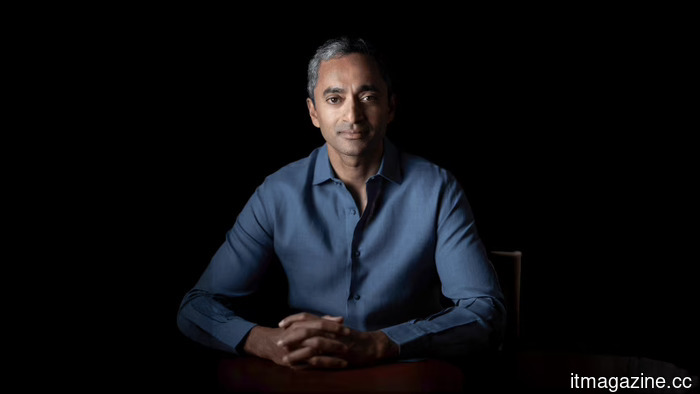 Chamath's AI coding startup, 8090, has secured $135 million in funding.
Chamath Palihapitiya has secured $135 million, with Salesforce leading the investment, for his AI coding startup, 8090, and is taking on the role of CEO for the first time since his tenure at Facebook.
Chamath's AI coding startup, 8090, has secured $135 million in funding.
Chamath Palihapitiya has secured $135 million, with Salesforce leading the investment, for his AI coding startup, 8090, and is taking on the role of CEO for the first time since his tenure at Facebook.
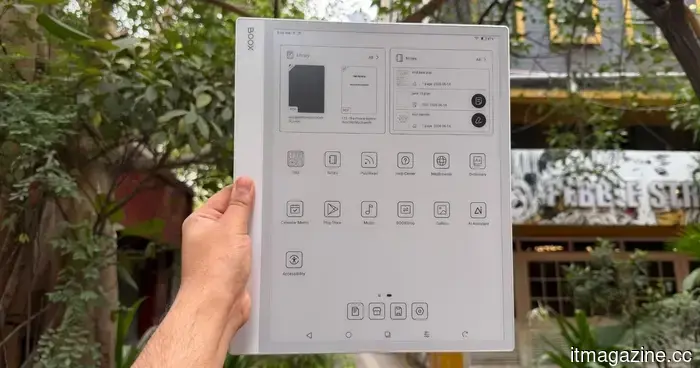 Onyx Boox Note Max review: A year later, I still adore this oversized e-reader that tries to act like a laptop, but ultimately falls short.
The Onyx Boox Max Note is an impressive paper-like tablet that offers considerable versatility. However, its greatest strength also contributes to its fundamental flaw.
Onyx Boox Note Max review: A year later, I still adore this oversized e-reader that tries to act like a laptop, but ultimately falls short.
The Onyx Boox Max Note is an impressive paper-like tablet that offers considerable versatility. However, its greatest strength also contributes to its fundamental flaw.
Tesla begins testing its production Cybercab in Austin, which lacks a steering wheel and pedals.
Tesla has started engineering tests of its production Cybercab in Austin, which does not have a steering wheel or pedals, while a safety monitor occupies the passenger seat.