
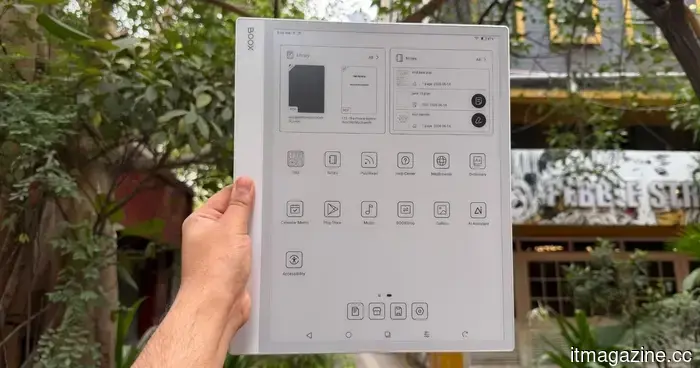
Onyx Boox Note Max review: A year later, I still adore this oversized e-reader that tries to act like a laptop, but ultimately falls short.
**Onyx Boox Note Max**
**MSRP**: $629.99
**“Maxed out e-ink goodness with great software and a light problem.”**
**Pros**
- Stunning, A4-sized e-ink display
- Android with complete Play Store access
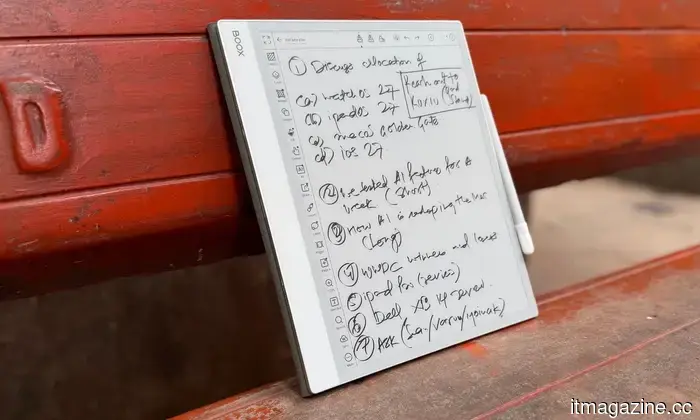
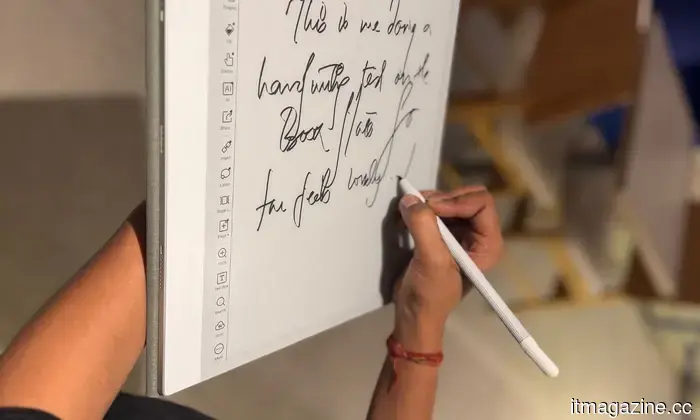
- Exceptional handwriting experience
- Great document and note-taking applications
- Battery life that lasts for weeks
**Cons**
- Noticeable input lag during typing
- No backlight, making it impractical in low light
- Lacks a physical volume rocker
- Inconsistent track record for software updates
**Quick Review**
For years, I’ve searched for that perfect device to replace my notebook, PDF collection, and possibly my laptop. The Boox Note Max comes closest to offering that dream without straying too far into the realm of a traditional computer. However, it also highlights why that dream often falters.
This device is massive, featuring a 13.3-inch e-ink display designed to match the size of an A4 sheet, with a premium price tag around $650–$699. It’s not intended for everyone, and Onyx is clear about that. It caters to academics, data analysts, musicians reliant on sheet music, and professionals dealing with complex PDFs and handwritten notes. If that describes you, read on; if not, you may already be concerned about paying a high price for just an e-ink slate with a stylus.
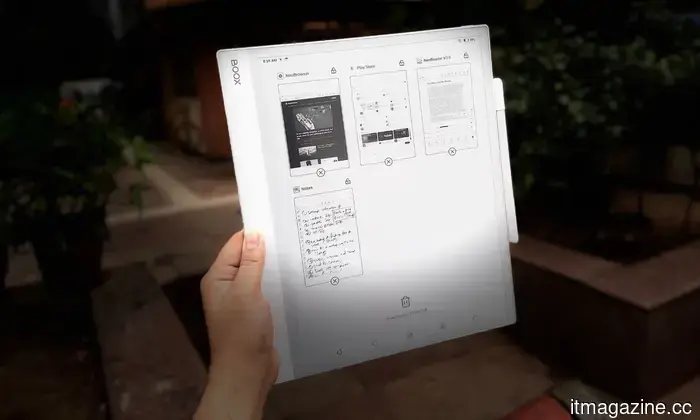
What distinguishes this tablet is the complete Android experience, surpassing the limitations of Kindle Scribe and reMarkable devices. You can download nearly any app from the Google Play Store, synchronize with Google Drive, and run two applications simultaneously. The writing experience is exceptional, enhanced by Onyx's choice to exclude a front backlight, which allows the stylus to closely connect with the digital ink.
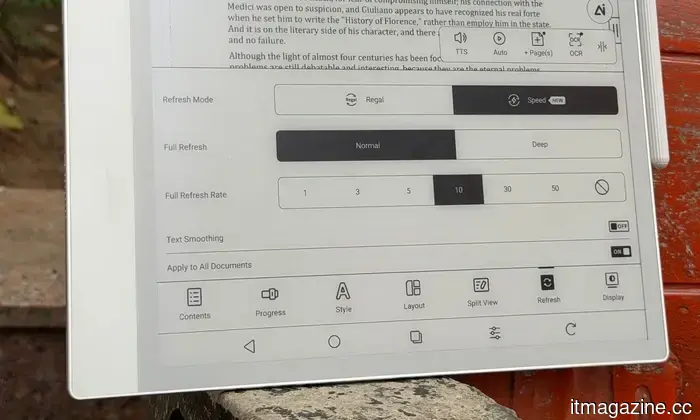
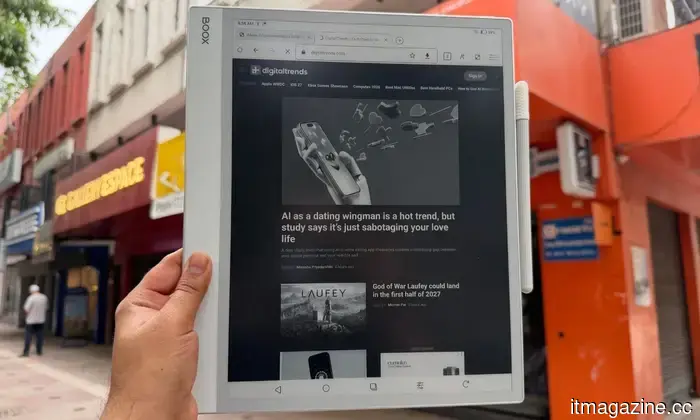
However, there is a significant drawback: the incorporation of a fully-fledged tablet OS on an inherently slow e-ink display leads to noticeable input lag, particularly when typing or browsing. While it excels as a digital notebook and large-format document viewer, it falls short as a laptop or iPad substitute, regardless of how effectively the device (or the company) may try to convince you otherwise.
**Onyx Boox Note Max Design and Build Quality: An Eye-Catching Giant**
Upon unboxing the Onyx Boox Note Max, I was surprised by its size. It’s approximately the dimensions of a laptop screen, yet surprisingly thin at just 4.6mm—one millimeter slimmer than an iPad Pro—while still feeling very sturdy. I tried bending it to check for flexibility and found none. The understated white-and-gray chassis exudes professionalism and doesn’t draw attention in meetings or on a classroom desk.
Despite its large surface area, it weighs only 615 grams (21.7 ounces). While it may not be ideal for one-handed reading in bed, it rests comfortably on a desk, music stand, or lap during commutes. The asymmetrical bezel design is functional, with a wider left edge providing a secure grip and preventing accidental touches.
On the right side, magnets securely hold the included stylus, preventing it from getting lost in a bag. The rear corners snap into the Boox Magnetic Case or the official Keyboard Cover.
Ports and buttons are minimal, including a power button on the top-right, a USB-C charging port, dual downward-firing speakers, and a microphone for memos. Unfortunately, there is no dedicated volume rocker, which tested my patience coming from other devices. Adjusting volume requires pulling up an on-screen slider, a slow process on an e-ink display.
**Score**: 8/10
**Onyx Boox Note Max Display: Love It or Hate It—No In-Between**
The display is the primary focus of the Note Max. It features a 13.3-inch E Ink Carta 1300 glass screen with a resolution of 3200 x 2400 pixels, resulting in a pixel density of 300 PPI. The size enhances the reading experience significantly, especially for technical manuals, research papers, and legal documents.
Unlike standard 10-inch readers that require constant zooming and panning, the Note Max displays A4 and US Letter documents almost at their original size. Text is sharp, and the Carta 1300 technology provides excellent contrast, making it pleasurable to read a variety of content.
However, one major downside is its lack of any lighting. This absence means that reading in dark settings is impossible. In dim lecture halls or on night flights, expect to strain your eyes.
This decision was intentional, as adding a front-light layer would introduce another layer between the glass and the e-ink capsules. By removing it, Onyx minimized the distance between the pen tip and the ink. While you sacrifice the ability to read in low light, you gain a more authentic writing experience without parallax.
Another benefit is the








Other articles
 Kobo responds to Kindle's Goodreads feature by introducing automatic syncing with StoryGraph.
Kobo has activated its integration with StoryGraph, allowing your reading progress to sync automatically. There’s no need for manual updates anymore.
Kobo responds to Kindle's Goodreads feature by introducing automatic syncing with StoryGraph.
Kobo has activated its integration with StoryGraph, allowing your reading progress to sync automatically. There’s no need for manual updates anymore.
 Samsung is set to release a new Galaxy Ring, which might introduce some innovative health features.
Samsung is developing a new Galaxy Ring, with a significant enhancement potentially stemming from the way the ring processes health signals in the background. Hon Pak, head of Samsung's digital health team, informed Forbes about the ongoing development of this next-generation ring. However, Samsung has yet to reveal details regarding the name, release date, pricing, regions, or other specifics.
Samsung is set to release a new Galaxy Ring, which might introduce some innovative health features.
Samsung is developing a new Galaxy Ring, with a significant enhancement potentially stemming from the way the ring processes health signals in the background. Hon Pak, head of Samsung's digital health team, informed Forbes about the ongoing development of this next-generation ring. However, Samsung has yet to reveal details regarding the name, release date, pricing, regions, or other specifics.
 Anthropic has introduced Claude Sonnet 5, an economical agent model.
Claude Sonnet 5 offers performance similar to Opus 4.8 at a mid-range price, starting at $2/$10 per million tokens until August 31. Here are the new updates.
Anthropic has introduced Claude Sonnet 5, an economical agent model.
Claude Sonnet 5 offers performance similar to Opus 4.8 at a mid-range price, starting at $2/$10 per million tokens until August 31. Here are the new updates.
 You can now create images using Gemini's memory at no cost.
Gemini's most personal image generator is now available without a subscription. If you're in the U.S., you can now create AI art much more easily and at no cost.
You can now create images using Gemini's memory at no cost.
Gemini's most personal image generator is now available without a subscription. If you're in the U.S., you can now create AI art much more easily and at no cost.
 Chamath's AI coding startup, 8090, has secured $135 million in funding.
Chamath Palihapitiya has secured $135 million, with Salesforce taking the lead, for his AI coding startup 8090, and he is assuming the role of CEO for the first time since his tenure at Facebook.
Anthropic introduces Claude Science, a workspace for AI laboratory development.
Anthropic's Claude Science is an AI workbench that integrates a scientist's tools and allows agents to perform analyses, with a reviewer agent available to verify the results.
Chamath's AI coding startup, 8090, has secured $135 million in funding.
Chamath Palihapitiya has secured $135 million, with Salesforce taking the lead, for his AI coding startup 8090, and he is assuming the role of CEO for the first time since his tenure at Facebook.
Anthropic introduces Claude Science, a workspace for AI laboratory development.
Anthropic's Claude Science is an AI workbench that integrates a scientist's tools and allows agents to perform analyses, with a reviewer agent available to verify the results.
Onyx Boox Note Max review: A year later, I still adore this oversized e-reader that tries to act like a laptop, but ultimately falls short.
The Onyx Boox Max Note is an impressive paper-like tablet that offers considerable versatility. However, its greatest strength also contributes to its fundamental flaw.