
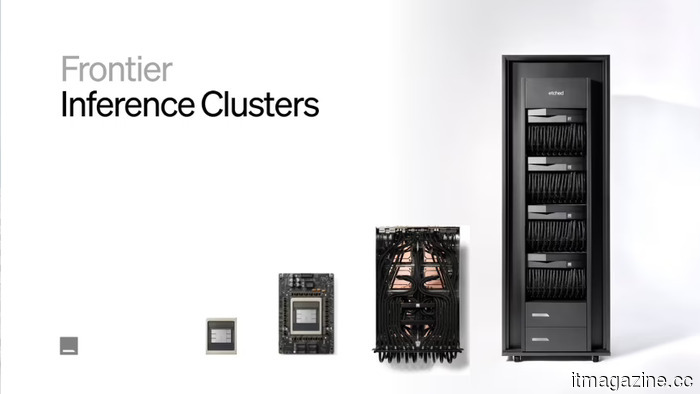
Nvidia competitor Etched has secured $800 million in funding with support from Jane Street and a fund associated with TSMC.
AI chip startup Etched has successfully secured $800 million in funding, with notable backers including trading firm Jane Street and the TSMC-affiliated VentureTech Alliance. The company has also announced one billion dollars in sales agreements and plans to commence shipments by this summer.
Most of the funding was raised through a $500 million round led by Stripes, which closed in December, bringing Etched’s valuation to five billion dollars. This round attracted investments from figures such as Peter Thiel, Positive Sum, Ribbit Capital, Hudson River Trading, and Two Sigma. Additionally, Jane Street spearheaded an undisclosed funding round, contributing over $100 million in total, as reported by Bloomberg.
The list of investors features prominent names in AI, including Geoffrey Hinton, who received a Nobel Prize for his pioneering work in modern AI, computer vision innovator Fei-Fei Li, and hedge fund manager Stanley Druckenmiller.
Founded in 2022 by Harvard dropouts Gavin Uberti and Robert Wachen, Etched has remained relatively low-profile for the past two years while developing its product. The company's chip, named Sohu, is designed for running transformer models by embedding the architecture directly into silicon, instead of using general-purpose GPUs. Partnering with TSMC, Etched has developed what they call low-voltage inference, which allows their chips to operate at lower voltages to avoid overheating and improve performance.
Moreover, Etched has designed its complete server rack, which includes circuit boards, cooling plates, and networking connections, rather than just focusing on the chip itself—a feat that Wachen stated no other chip startup has accomplished. The company now employs 400 people, with over half located near its headquarters in San Jose.
The inference chip market is drawing significant investment as the industry transitions from training models to scaling their execution. For instance, Nvidia acquired Groq for $20 billion in December primarily for a licensing deal that absorbed most of Groq's engineers. In April, Google revealed plans for a new version of its AI chips centered on inference.
London-based Fractile has raised $220 million for inference chips that integrate compute and memory on the same die. The competition to develop specialized silicon for inference, rather than adapting training GPUs, is becoming one of the most capital-intensive pursuits in the semiconductor sector.
Whether Etched can fulfill its one billion dollars in contracts hinges on the performance of its chips under production workloads—a challenge that no startup in this field has yet completely resolved. “If you have compute now, people will buy it,” noted Positive Sum CEO Patrick O’Shaughnessy. The startup's strategy is based on the belief that being an early player with a comprehensive server rack, rather than just a chip, provides a significant advantage beyond mere benchmark figures.
Other articles
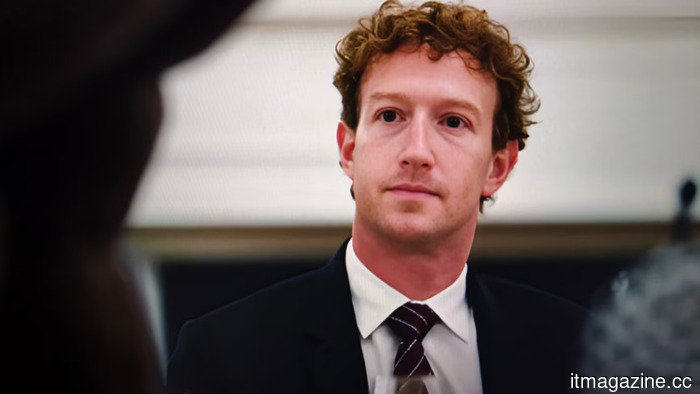 Meta pretended to be teenagers to evaluate competing AI chatbots.
According to WIRED, numerous contractors working on a Meta project pretended to be teenagers in order to evaluate how ChatGPT, Gemini, and Character.AI respond to topics like suicide, drugs, and sex.
Meta pretended to be teenagers to evaluate competing AI chatbots.
According to WIRED, numerous contractors working on a Meta project pretended to be teenagers in order to evaluate how ChatGPT, Gemini, and Character.AI respond to topics like suicide, drugs, and sex.
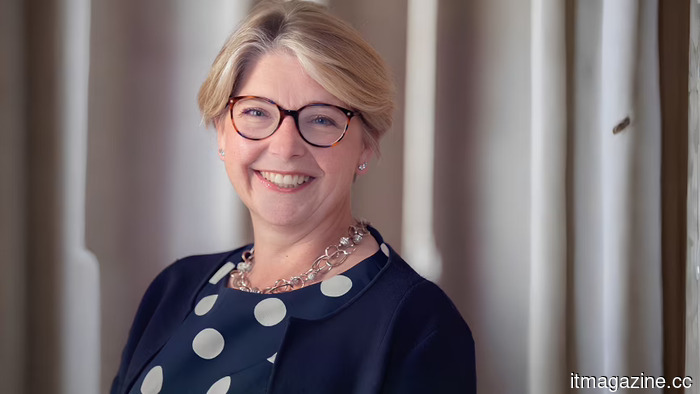 The Bank of England's Breeden cautions that AI agents may cause market collapses.
Sarah Breeden, the deputy governor of the BoE, states that independent AI trading agents might increase volatility if they act simultaneously, potentially necessitating new regulations.
The Bank of England's Breeden cautions that AI agents may cause market collapses.
Sarah Breeden, the deputy governor of the BoE, states that independent AI trading agents might increase volatility if they act simultaneously, potentially necessitating new regulations.
 AI shopping surpassed traditional search on Prime Day, causing concern for Amazon.
During Prime Day, AI shopping recommendations surpassed search, email, and social channels in conversion rates for the first time, indicating a change that could challenge Amazon's dominance in product discovery.
AI shopping surpassed traditional search on Prime Day, causing concern for Amazon.
During Prime Day, AI shopping recommendations surpassed search, email, and social channels in conversion rates for the first time, indicating a change that could challenge Amazon's dominance in product discovery.
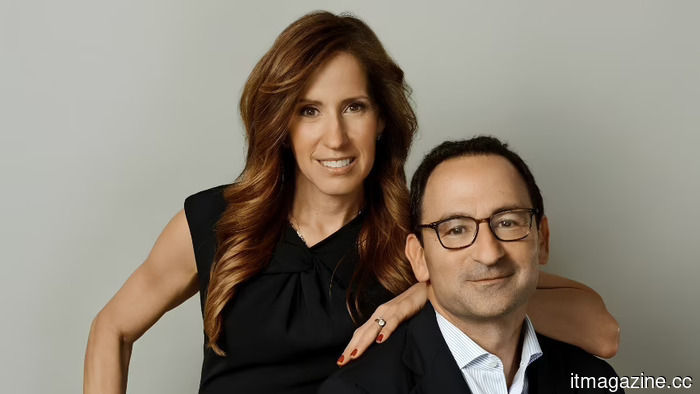 Jon and Mindy Gray wagered $55 million on AI to detect cancer in its early stages.
The president of Blackstone and his spouse are sponsoring a new Penn institute that employs AI and biomarkers to detect hereditary cancers at their earliest stages.
Jon and Mindy Gray wagered $55 million on AI to detect cancer in its early stages.
The president of Blackstone and his spouse are sponsoring a new Penn institute that employs AI and biomarkers to detect hereditary cancers at their earliest stages.
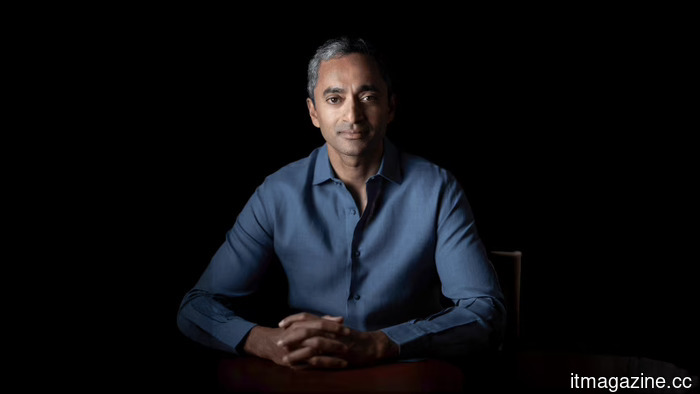 Chamath's AI coding startup, 8090, has secured $135 million in funding.
Chamath Palihapitiya has secured $135 million, with Salesforce leading the investment, for his AI coding startup, 8090, and is taking on the role of CEO for the first time since his tenure at Facebook.
Chamath's AI coding startup, 8090, has secured $135 million in funding.
Chamath Palihapitiya has secured $135 million, with Salesforce leading the investment, for his AI coding startup, 8090, and is taking on the role of CEO for the first time since his tenure at Facebook.
 Samsung is set to release a new Galaxy Ring that may feature some innovative health functionalities.
Samsung is developing a new Galaxy Ring, and the key improvement might stem from the processes that follow the ring’s collection of health signals in the background. Hon Pak, the head of Samsung’s digital health team, mentioned to Forbes that a next-generation ring is currently in the works. However, Samsung has not revealed the name, expected launch date, pricing, regions, or […]
Samsung is set to release a new Galaxy Ring that may feature some innovative health functionalities.
Samsung is developing a new Galaxy Ring, and the key improvement might stem from the processes that follow the ring’s collection of health signals in the background. Hon Pak, the head of Samsung’s digital health team, mentioned to Forbes that a next-generation ring is currently in the works. However, Samsung has not revealed the name, expected launch date, pricing, regions, or […]
Nvidia competitor Etched has secured $800 million in funding with support from Jane Street and a fund associated with TSMC.
AI chip startup Etched has secured $800 million in funding, supported by Jane Street and the VentureTech Alliance, which is connected to TSMC. The company also has one billion dollars in signed sales agreements.