

The EU has launched an antitrust investigation into Align regarding the tying of Invisalign and its scanners.
The European Commission has chosen to investigate how teeth straightening technology operates, particularly focusing on the device used by dentists for scanning. A formal antitrust inquiry has been launched into Align Technology, the U.S. company behind Invisalign, amid suspicions that it unlawfully connects its iTero intra-oral scanners with its clear aligners throughout the European Economic Area. This investigation, initiated by a complaint from a competitor, will evaluate if this practice violates EU competition regulations.
The allegation's mechanics are clear, even if the dental aspects are complex. Align produces two key products: the iTero scanner, which generates a digital 3D model of a patient’s mouth, and Invisalign, the leading brand in clear aligners. The Commission is concerned that Align may be structuring its offerings in a way that encourages dentists to prefer Invisalign when using the scanner, thereby hindering competition from other aligner manufacturers.
In competition law, tying involves making the sale or full functionality of one product dependent on another. This becomes problematic only when the company involved holds a dominant position in one of the markets, as it could then use its strength in one area to suppress competition in another. The Commission evidently believes that Align has sufficient power in the markets for clear aligners, scanners, or both to warrant a formal investigation over a mere informal discussion.
The case emerged through typical channels, having been prompted by a complaint from a rival, which is how the Commission often learns of potential market abuses by dominant firms. Align is contending with a crowded and increasingly competitive landscape in clear aligners, facing challenges from lower-cost alternatives, and is engaged in various legal battles, including patent disputes and trade complaints against competitors.
For Brussels, this move aligns with a long-standing pattern. The Commission has developed much of its current competition policy around tying and bundling cases, most notably against major tech platforms, where it has consistently ruled that a dominant company cannot leverage its strength in one product to gain an unfair advantage in another. Although applying this reasoning to dental scanners and aligners is on a smaller scale, the underlying principle remains the same as that which the Commission has upheld against much larger corporations.
This also illustrates the EU’s broader readiness to scrutinize the actions of dominant American firms operating within its single market, a stance that has characterized its relationship with U.S. tech companies, ranging from Apple’s App Store to Meta’s advertising technology bundling. While Align is a medical-device company rather than a tech platform, it is subject to the same expectation that a dominant position entails responsibilities that the Commission is willing to enforce.
An investigation does not equate to a conclusion of wrongdoing. Launching a formal inquiry signifies that the Commission views the concerns as warranting thorough examination, without implying that it has determined Align has violated the law. These investigations can typically take years to conclude, resulting in either fines, settlements regarding behavioral commitments, or a decision to take no action at all. Align will be given the opportunity to respond and argue that its products are integrated for valid clinical purposes rather than aimed at excluding competitors.
However, the company cannot dictate the timeline or level of scrutiny. A formal EU antitrust investigation poses significant implications for any business reliant on the European market, carrying the risk of hefty fines and mandatory changes in sales practices. For now, the specific inquiry posed by Brussels revolves around whether the scanner and the aligner are too closely linked and whether this has detrimental effects on competition within European orthodontics.
Other articles
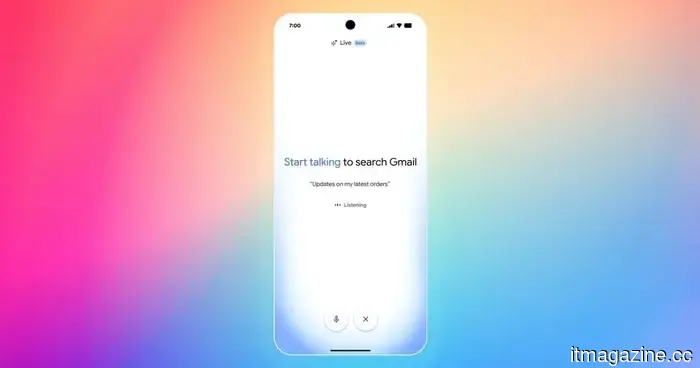 Google begins testing Gmail Live, its new voice search feature for your inbox.
Google has begun testing Gmail Live, a voice-activated search feature that responds to spoken inquiries regarding your inbox and references the original email.
Google begins testing Gmail Live, its new voice search feature for your inbox.
Google has begun testing Gmail Live, a voice-activated search feature that responds to spoken inquiries regarding your inbox and references the original email.
 Irish court instructs regulator to reassess the ban on TikTok's data transfer to China.
Ireland's High Court confirmed TikTok's GDPR liability along with its €530 million fine, while directing the Data Protection Commission (DPC) to reevaluate the decision to suspend data transfers to China.
Irish court instructs regulator to reassess the ban on TikTok's data transfer to China.
Ireland's High Court confirmed TikTok's GDPR liability along with its €530 million fine, while directing the Data Protection Commission (DPC) to reevaluate the decision to suspend data transfers to China.
 X introduces a hosted MCP server to allow AI tools to connect directly to its API.
X now operates its own MCP server, allowing AI tools such as Claude, Cursor, and Grok to connect to the platform's API without the need for developers to create the integration.
X introduces a hosted MCP server to allow AI tools to connect directly to its API.
X now operates its own MCP server, allowing AI tools such as Claude, Cursor, and Grok to connect to the platform's API without the need for developers to create the integration.
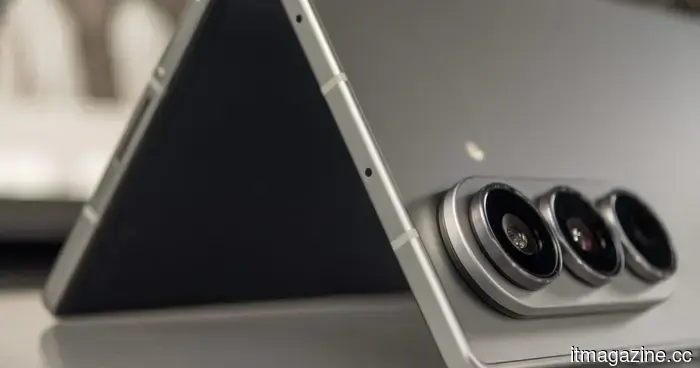 The Galaxy Z Fold 8 could be launching soon, with significant upgrades having recently been revealed.
A recent leak suggests that the Galaxy Z Fold 8 could be released soon, featuring a broader design, a lighter build, a larger battery, and quicker charging capabilities.
The Galaxy Z Fold 8 could be launching soon, with significant upgrades having recently been revealed.
A recent leak suggests that the Galaxy Z Fold 8 could be released soon, featuring a broader design, a lighter build, a larger battery, and quicker charging capabilities.
 Peacock Premium Plus enters the fray alongside YouTube as the competition for streaming bundles intensifies.
Peacock Premium Plus can now be accessed via YouTube Primetime Channels for a monthly fee of $16.99. However, current Peacock subscribers are advised to review their account and billing information before making the switch.
Peacock Premium Plus enters the fray alongside YouTube as the competition for streaming bundles intensifies.
Peacock Premium Plus can now be accessed via YouTube Primetime Channels for a monthly fee of $16.99. However, current Peacock subscribers are advised to review their account and billing information before making the switch.
 Reservations for the Xreal Aura glasses are now officially available, and they largely adhere to the $1,500 price point.
Reservations for the Xreal Aura are now available, with a maximum price of $1,500, which places the Android XR glasses well below Snap’s Specs by several hundred dollars.
Reservations for the Xreal Aura glasses are now officially available, and they largely adhere to the $1,500 price point.
Reservations for the Xreal Aura are now available, with a maximum price of $1,500, which places the Android XR glasses well below Snap’s Specs by several hundred dollars.
The EU has launched an antitrust investigation into Align regarding the tying of Invisalign and its scanners.
The European Commission is looking into whether Align Technology unlawfully links its iTero scanners to its Invisalign clear aligners within the EEA.