
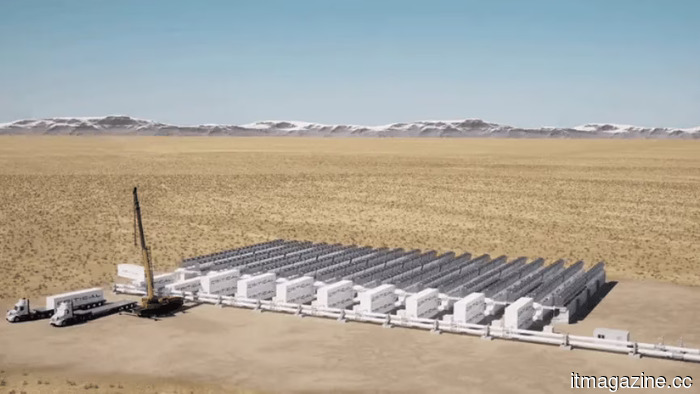
Critical Energy secures $22 million for factory-constructed geothermal systems.
The competition to harness artificial intelligence faces a challenge that renewable sources like solar panels and wind turbines can't resolve alone: the need for electricity at 3am during calm, cloudy conditions. Critical Energy, a startup based in Los Angeles and established by a former SpaceX engineer, has secured $22 million to meet this continuous demand through geothermal energy, which functions like a traditional power plant. The focus is more on quickly constructing surface components than on drilling deeper into the ground.
The funding consists of a $19 million seed investment, raised over several rounds and co-led by Susa Ventures and Upfront Ventures, along with an additional $3 million in venture debt from Silicon Valley Bank.
The bottleneck has shifted from underground to above ground.
For five years, the narrative around geothermal energy has revolved around subsurface techniques. By adopting horizontal drilling and fracking methods from the oil and gas sector, costs and time to access the Earth’s heat have decreased significantly, sometimes reducing well drilling expenses by about half.
What remains largely unchanged is the power plant itself. These facilities are predominantly custom-made for individual wells and require 18 to 24 months to assemble on-site. Consequently, a well that can be drilled in a matter of weeks can be left idle for almost two years while waiting for the machinery that converts its thermal energy into electricity.
“It’s still significantly quicker and less expensive to manufacture it in the opposite direction, to build it in a factory,” stated Spencer Jackson, founder and CEO, in an interview with TechCrunch.
Transitioning from rocket engines to turbines
Jackson spent around seven years at SpaceX, where he worked on Falcon Heavy structures, thermal protection for Starship, and components of the Raptor engine. His proposal is to conceptualize a power plant as a product rather than a construction project.
Critical Energy’s units consist of container-sized turbines primarily built off-site, designed for transport and activation within a few weeks, after which they can be assembled for larger operations. The company highlights that their turbomachinery resembles rocket engines. The first commercial project, with a capacity of 2.5 million watts, is anticipated for completion in 2027.
Why investors are once again showing interest in geothermal energy
The timing of this comes as no surprise. Data centers are putting enough pressure on power grids that regulators are urging households to reduce peak electricity usage. A recent estimate indicates that advanced geothermal technology could supply nearly two-thirds of new data centers by 2030.
This situation has attracted funding towards stable, dispatchable clean energy, similar to the trend seen with grid-scale storage. Critical Energy positions itself not so much as a competitor to drilling companies like Fervo Energy but as a provider of the turbine technology essential for the entire industry.
The challenge ahead
Currently, this remains a concept, rather than a proven record. Critical Energy has initiated a pilot project in Los Angeles, but has yet to deliver a commercial facility, and its more ambitious projections—such as a cost of under $2,000 per kilowatt and the potential to generate 300 gigawatts a year by 2045—are the founder’s aspirations rather than established outcomes.
The underlying risk is one that every company dealing with modular hardware encounters: factory economics function effectively only if there is a sufficient volume of orders. Should the geothermal expansion underground continue to surge, Critical Energy might be ahead of a significant shortage. Conversely, if growth stalls, it would find itself with an assembly line waiting for demand.
Other articles
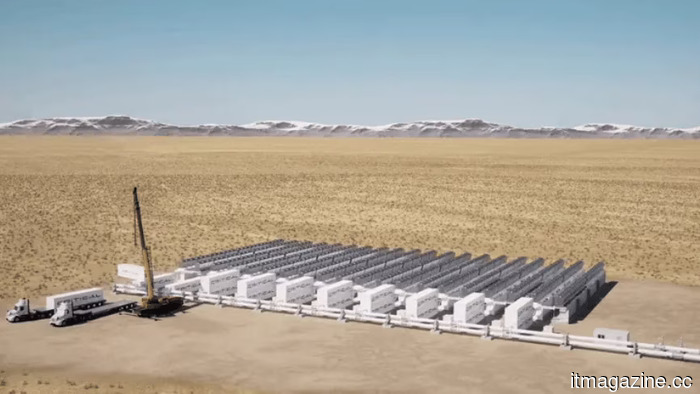 Critical Energy secures $22M for prefabricated geothermal systems.
Critical Energy, established by a former SpaceX employee, has secured $22 million to scale up the production of modular geothermal turbines, wagering that the growing demand for AI will require stable sources of clean energy promptly.
Critical Energy secures $22M for prefabricated geothermal systems.
Critical Energy, established by a former SpaceX employee, has secured $22 million to scale up the production of modular geothermal turbines, wagering that the growing demand for AI will require stable sources of clean energy promptly.
 A 21-year-old Stanford graduate has successfully secured $11.6 million to develop a wearable hormone monitoring device that does not require blood samples.
Clair Health secured an $11.6 million seed funding round led by Khosla Ventures for a wrist-mounted device that monitors estrogen and progesterone levels without the use of needles. The product is set to be shipped in November.
A 21-year-old Stanford graduate has successfully secured $11.6 million to develop a wearable hormone monitoring device that does not require blood samples.
Clair Health secured an $11.6 million seed funding round led by Khosla Ventures for a wrist-mounted device that monitors estrogen and progesterone levels without the use of needles. The product is set to be shipped in November.
 Fifty percent of Americans currently utilize AI chatbots, yet 40% believe that AI will have a negative impact on society, and two-thirds lack confidence in the government's ability to regulate it.
A survey conducted by Pew Research involving 5,119 adults in the US revealed that 49% utilize AI chatbots, while 40% anticipate that AI will have a negative impact on society, and 67% express low confidence in the government's ability to provide oversight.
Fifty percent of Americans currently utilize AI chatbots, yet 40% believe that AI will have a negative impact on society, and two-thirds lack confidence in the government's ability to regulate it.
A survey conducted by Pew Research involving 5,119 adults in the US revealed that 49% utilize AI chatbots, while 40% anticipate that AI will have a negative impact on society, and 67% express low confidence in the government's ability to provide oversight.
 One million Dutch individuals depend solely on social media for their news.
The 2026 Digital News Report reveals that 7% of Dutch adults rely exclusively on social media for news, an increase from 2% in 2018, although trust and interest continue to decline.
One million Dutch individuals depend solely on social media for their news.
The 2026 Digital News Report reveals that 7% of Dutch adults rely exclusively on social media for news, an increase from 2% in 2018, although trust and interest continue to decline.
 SpaceX’s rising stock value makes it less expensive to pursue acquisitions.
SpaceX's all-stock Cursor deal, valued at $60 billion, results in reduced dilution as the stock rises by 50% after its IPO. Ackman refers to it as a strategic asset, a view shared by Anthropic and OpenAI.
SpaceX’s rising stock value makes it less expensive to pursue acquisitions.
SpaceX's all-stock Cursor deal, valued at $60 billion, results in reduced dilution as the stock rises by 50% after its IPO. Ackman refers to it as a strategic asset, a view shared by Anthropic and OpenAI.
 Meloni states that children can easily circumvent social media restrictions.
Italy's Prime Minister stated at the G7 that prohibiting children from using social media is "easily bypassed" and that it should be the platforms, rather than parents, who take on the responsibility.
Meloni states that children can easily circumvent social media restrictions.
Italy's Prime Minister stated at the G7 that prohibiting children from using social media is "easily bypassed" and that it should be the platforms, rather than parents, who take on the responsibility.
Critical Energy secures $22 million for factory-constructed geothermal systems.
Critical Energy, established by a former SpaceX employee, secured $22 million to scale up the production of modular geothermal turbines, believing that the growing demand for AI requires a rapid supply of reliable clean energy.