
Fifty percent of Americans currently utilize AI chatbots, yet 40% believe that AI will have a negative impact on society, and two-thirds lack confidence in the government's ability to regulate it.
A Pew survey involving 5,119 US adults reveals that 49% of respondents use AI chatbots, yet 40% believe AI will negatively impact society. Additionally, 67% express distrust in governmental regulation, while 59% distrust companies involved in AI development. The findings indicate that while half of American adults utilize AI chatbots, many are concerned about the technology's potential societal harm and lack confidence in the ability of both the government and corporations to manage it effectively. The report, published by the Pew Research Center on Wednesday, shows an increase in chatbot use from about a third in 2024. Concurrently, 40% think AI will be detrimental to society, roughly two-thirds believe its progression is too rapid, and 71% feel that the technology will compromise the security of their personal data.
Among US adults, ChatGPT is the leading chatbot, with 44% reporting its use, followed by Google's Gemini at 24%, Microsoft Copilot at 17%, MetaAI at 14%, Grok at 8%, Claude at 6%, and Character.ai at 3%. The most popular use for chatbots is information searching, mentioned by 42% of users, followed by entertainment at 25%, image and video creation or editing at 24%, and medical advice at 20%.
The report highlights a significant trust deficit; 67% of Americans lack confidence in the government's ability to regulate AI effectively. Furthermore, 59% do not trust US companies to develop AI technology responsibly. The government's struggle to establish a coherent regulatory framework has been noted by the public, and there is a notable partisan divide in trust regarding regulation; a separate Pew survey from March 2025 indicated that 54% of Republicans trust the government to regulate AI, compared to only 36% of Democrats.
"AI is now a reality for many people, not a future concept," said Jeffrey Gottfried, associate director of research at Pew Research Center. "While Americans are increasingly adopting chatbots and integrating AI into their homes, they maintain a complex and skeptical relationship with the technology, using it but remaining wary of its societal implications."
This skepticism spans various demographics. An earlier Pew survey from 2024 revealed that only 17% of the general public believed AI would positively impact the US in the next 20 years, in contrast to 56% of AI experts who held that view. Americans showed more optimism regarding AI in healthcare, predicting positive outcomes by 44%, whereas expectations were lower for education at 24% and jobs at 23%.
Concerns about employment are not unfounded; in April, Meta and Microsoft announced a total of 23,000 job cuts, citing AI investment as the reason. So far in 2026, the tech sector has reported over 96,000 job eliminations, with the companies involved being some of the most profitable globally. Pew’s study shows that 21% of US workers now utilize AI at work, up from 16% in 2024, but many more express anxiety about future job impacts, with only 23% of the general public believing AI will enhance job performance over the next 20 years, compared to 73% of AI experts.
The report also highlights significant non-adoption rates. Among the 51% of US adults not using AI chatbots, 60% cite disinterest rather than lack of access or technical skills. Many respondents acknowledged using AI-enabled products without recognizing them as AI, including 37% with smartwatches and 35% with smart speakers like Amazon Echo or Apple HomePod.
Fewer Americans use chatbots for high-stakes purposes subject to the most regulatory scrutiny; only 13% use them for news, 10% for emotional support, and 4% for companionship. However, concerns about data privacy are widespread; 71% of respondents agreed that AI will make personal data less secure.
The new data from Pew is derived from multiple surveys conducted at various times between 2024 and February 2026. The chatbot usage statistics are based on the February 2026 survey, while some attitudinal measurements come from earlier polling phases. The methodology employs Pew's American Trends Panel, which includes a nationally representative sample acquired through random selection of residential addresses, with interviews conducted online or over the phone.
The data illustrates a nation that is adopting AI tools more rapidly than it is building trust in the institutions intended to regulate them. The gap between usage and trust is widening, with neither regulators nor the industry presenting a viable plan to bridge this divide.
Other articles
 China's five-year plan focuses on the effects of AI on employment.
The employment plan from China's State Council for 2026–2030 mandates that the government monitors the impact of AI on job creation and loss, serving as a political safeguard for its own AI development.
China's five-year plan focuses on the effects of AI on employment.
The employment plan from China's State Council for 2026–2030 mandates that the government monitors the impact of AI on job creation and loss, serving as a political safeguard for its own AI development.
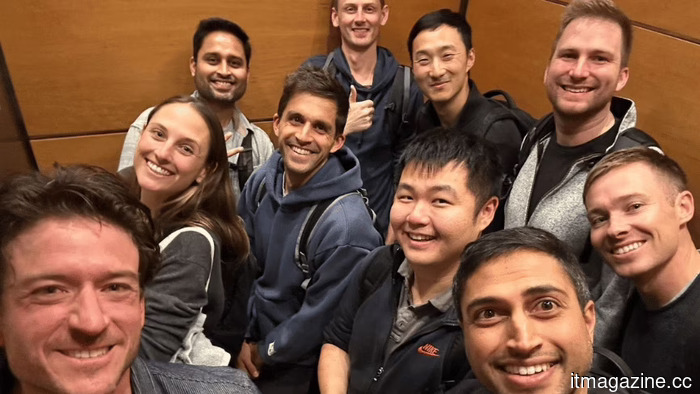 Convey secures $38 million from a16z for AI 'team members.'
Convey has secured $38 million in a Series A funding round led by a16z to develop AI "teammates" that handle back-office tasks, believing that the term 'teammate' will resonate better than 'agent' in a competitive enterprise sector.
Convey secures $38 million from a16z for AI 'team members.'
Convey has secured $38 million in a Series A funding round led by a16z to develop AI "teammates" that handle back-office tasks, believing that the term 'teammate' will resonate better than 'agent' in a competitive enterprise sector.
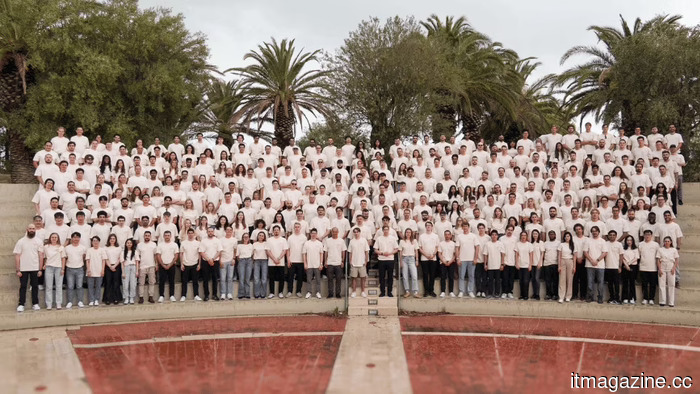 Poland invests $11 million in ElevenLabs.
Poland's state fund Vinci acquired an $11 million stake in the $11 billion AI voice company ElevenLabs and established AI Lab Poland, aiming to foster its own AI leaders domestically.
Poland invests $11 million in ElevenLabs.
Poland's state fund Vinci acquired an $11 million stake in the $11 billion AI voice company ElevenLabs and established AI Lab Poland, aiming to foster its own AI leaders domestically.
 Critical Energy secures $22M for prefabricated geothermal systems.
Critical Energy, established by a former SpaceX employee, has secured $22 million to scale up the production of modular geothermal turbines, wagering that the growing demand for AI will require stable sources of clean energy promptly.
Critical Energy secures $22M for prefabricated geothermal systems.
Critical Energy, established by a former SpaceX employee, has secured $22 million to scale up the production of modular geothermal turbines, wagering that the growing demand for AI will require stable sources of clean energy promptly.
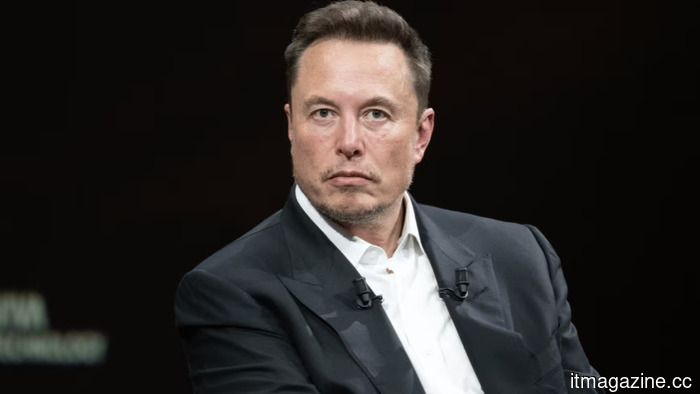 SpaceX's rising stock price makes acquisitions more affordable.
SpaceX's $60 billion all-stock Cursor agreement results in less dilution as the stock rises 50% following its IPO. Ackman describes it as a strategic asset. Anthropic and OpenAI share similar ambitions.
SpaceX's rising stock price makes acquisitions more affordable.
SpaceX's $60 billion all-stock Cursor agreement results in less dilution as the stock rises 50% following its IPO. Ackman describes it as a strategic asset. Anthropic and OpenAI share similar ambitions.
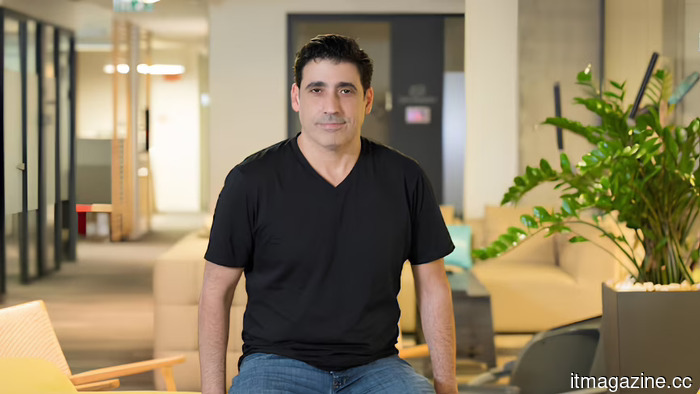 Reasons CMOs require a new accountability operating system.
Perion's CEO, Tal Jacobson, discusses why the accountability gap for Chief Marketing Officers is an issue related to infrastructure rather than measurement. He also highlights how AI-driven execution is transforming the way marketing demonstrates its impact on business.
Reasons CMOs require a new accountability operating system.
Perion's CEO, Tal Jacobson, discusses why the accountability gap for Chief Marketing Officers is an issue related to infrastructure rather than measurement. He also highlights how AI-driven execution is transforming the way marketing demonstrates its impact on business.
Fifty percent of Americans currently utilize AI chatbots, yet 40% believe that AI will have a negative impact on society, and two-thirds lack confidence in the government's ability to regulate it.
A survey conducted by Pew Research involving 5,119 adults in the US revealed that 49% utilize AI chatbots, while 40% anticipate that AI will have a negative impact on society, and 67% express low confidence in the government's ability to provide oversight.