
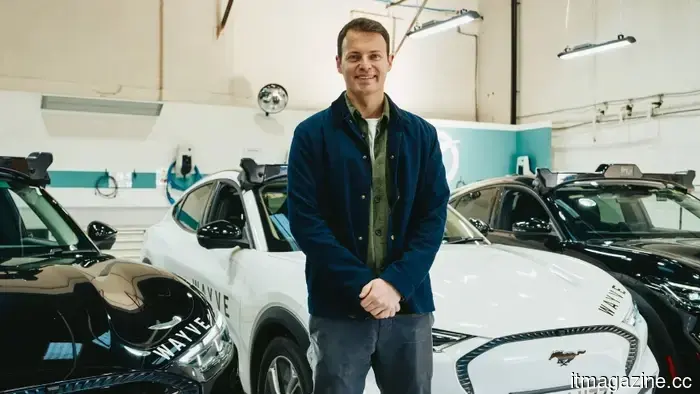
Wayve expands its $1.2 billion funding round with an additional $60 million from AMD, Arm, and Qualcomm.
The extension of Wayve’s $1.2 billion Series D Round provides the London-based startup with comprehensive coverage of nearly all compute architectures currently utilized in the automotive industry, including chips that are already in millions of vehicles as well as those that will support future generations. Plans are in place for robotaxi trials with Uber in both London and Tokyo.
Wayve, known for its autonomous driving software, has secured an additional $60 million from AMD, Arm, and Qualcomm Ventures, which extends its Series D funding round. This investment increases the total for Wayve’s Series D to $1.2 billion and, when combined with prior funding rounds, brings its overall financial backing to around $1.5 billion with a post-money valuation of $8.6 billion.
The addition of these three chip manufacturers to the Series D lineup complements existing investors such as SoftBank Vision Fund 2, Eclipse, Balderton, Microsoft, NVIDIA, Uber, and automakers like Mercedes-Benz, Nissan, and Stellantis. The strategic importance of these new investors lies in their extensive coverage of the automotive compute stack, encompassing both existing chip architectures in millions of cars and those that will drive the next wave of autonomous technologies.
With the inclusion of NVIDIA, which joined the Series D in February, Wayve has established investment partnerships with four companies whose semiconductor technologies form the foundation of nearly all automotive compute platforms.
For Wayve, which emphasizes that its AI Driver can operate on any vehicle and any hardware setup without the need for location-specific adjustments, this hardware-agnostic investor network represents both a commercial and financial advantage: it simplifies the process for car manufacturers to implement Wayve's solutions without being restricted to a single chip supplier.
Founded in 2017 by Alex Kendall, who continues to serve as co-founder and CEO, Wayve takes a comprehensive AI approach to self-driving technology, training a singular foundation model using extensive, globally diverse driving data instead of relying on manually written rules or high-definition maps.
This same foundational model enables functionalities ranging from Level 2+ “hands-off” advanced driver-assistance systems (ADAS) to Level 3 “eyes-off” and Level 4 fully driverless applications, with the AI Driver entirely powered by onboard vehicle computing utilizing native sensors.
In 2025, Wayve executed its AI-500 Roadshow, testing the AI Driver in a zero-shot mode—without city-specific adjustments—across over 500 cities in Europe, North America, and Japan. The new funds will help facilitate integration across diverse automotive computing platforms and support ongoing deployment in both production ADAS and automated driving systems, building on two existing partnerships.
Wayve and Qualcomm Technologies announced a collaboration in March 2026 to create a pre-integrated AI Driver solution on the Snapdragon Ride Platform that includes Active Safety software, providing automakers with an efficient method to deploy Wayve’s AI across the widely adopted automotive system-on-chips (SoCs) from Qualcomm.
Additionally, Wayve has a strong association with NVIDIA: the Nissan robotaxi prototype showcased at NVIDIA GTC in March 2026 was developed on the NVIDIA DRIVE Hyperion platform, operating the Wayve AI Driver on dual DRIVE AGX Thor processors.
In terms of commercial relationships, Wayve established a definitive production partnership with Nissan in 2025 to incorporate the AI Driver into the next generation of its ProPILOT driver-assistance systems, with the first models expected to initiate production in Japan and other markets beginning in fiscal year 2027.
In March 2026, Wayve, Uber, and Nissan signed a memorandum of understanding to launch a robotaxi pilot in Tokyo by late 2026, contingent on regulatory negotiations, marking Uber's first partnership for autonomous vehicles in Japan. Wayve and Uber are also planning a trial for London as part of a broader rollout involving over ten cities worldwide.
Kendall stated that the objective is to develop an AI Driver that functions across “the full automotive compute ecosystem, from architectures already in use in millions of vehicles today to the platforms that will drive the next generation of automated vehicles.”
Other articles
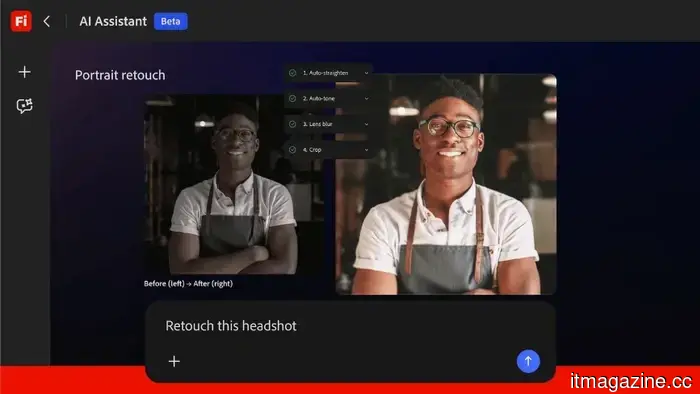 Adobe introduces Firefly AI Assistant to coordinate tasks throughout Creative Cloud.
Adobe's Firefly AI Assistant utilizes natural language to manage tasks within Photoshop, Premiere, Lightroom, and Illustrator. It will soon enter public beta, featuring integration with Anthropic Claude.
Adobe introduces Firefly AI Assistant to coordinate tasks throughout Creative Cloud.
Adobe's Firefly AI Assistant utilizes natural language to manage tasks within Photoshop, Premiere, Lightroom, and Illustrator. It will soon enter public beta, featuring integration with Anthropic Claude.
 The EU announces that its age verification application is prepared.
The EU has introduced an open-source age verification application that utilizes zero-knowledge proof to protect children from harmful online content.
The EU announces that its age verification application is prepared.
The EU has introduced an open-source age verification application that utilizes zero-knowledge proof to protect children from harmful online content.
 More than 30 WordPress plugins purchased on Flippa have been compromised through a backdoor in a supply chain attack.
A hacker acquired over 30 WordPress plugins on Flippa, embedded backdoors that remained inactive for eight months, and then triggered disguised SEO spam visible only to Googlebot. WordPress does not conduct ownership-transfer inspections.
More than 30 WordPress plugins purchased on Flippa have been compromised through a backdoor in a supply chain attack.
A hacker acquired over 30 WordPress plugins on Flippa, embedded backdoors that remained inactive for eight months, and then triggered disguised SEO spam visible only to Googlebot. WordPress does not conduct ownership-transfer inspections.
 ChatGPT, Gemini, and other AI bots often provide poor medical advice about half the time.
A study published in BMJ Open discovered that five prominent AI chatbots frequently provided inaccurate health recommendations, with open-ended inquiries leading to the poorest responses and the quality of citations deteriorating upon examination.
ChatGPT, Gemini, and other AI bots often provide poor medical advice about half the time.
A study published in BMJ Open discovered that five prominent AI chatbots frequently provided inaccurate health recommendations, with open-ended inquiries leading to the poorest responses and the quality of citations deteriorating upon examination.
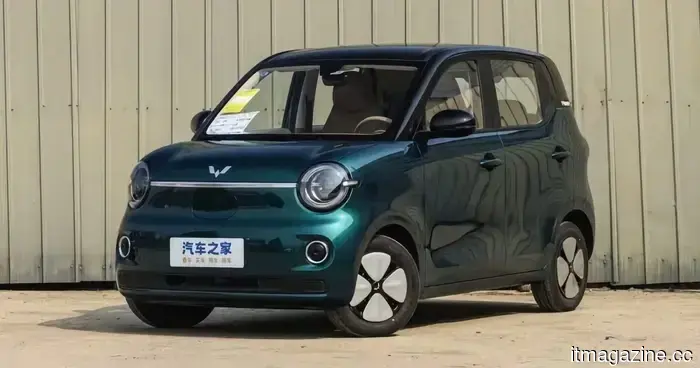 This $8,000 Chinese electric vehicle takes inspiration from the Mini Cooper and offers a commendable electric range.
Wuling's refreshed Hongguang Mini EV features a design reminiscent of the Mini Cooper, offers a range of 301 km, and has a starting price of under $6,500.
This $8,000 Chinese electric vehicle takes inspiration from the Mini Cooper and offers a commendable electric range.
Wuling's refreshed Hongguang Mini EV features a design reminiscent of the Mini Cooper, offers a range of 301 km, and has a starting price of under $6,500.
 U.S. utility companies intend to invest $1.4 trillion by 2030 to support the growth of artificial intelligence.
U.S. utility companies intend to invest $1.4 trillion in electricity infrastructure, propelled by AI data centers. Residential customers might shoulder almost 50% of the expenses.
U.S. utility companies intend to invest $1.4 trillion by 2030 to support the growth of artificial intelligence.
U.S. utility companies intend to invest $1.4 trillion in electricity infrastructure, propelled by AI data centers. Residential customers might shoulder almost 50% of the expenses.
Wayve expands its $1.2 billion funding round with an additional $60 million from AMD, Arm, and Qualcomm.
Wayve has secured $60 million from AMD, Arm, and Qualcomm Ventures, thereby expanding its Series D funding round to $1.2 billion. Plans for robotaxi trials with Uber are set for Tokyo and London starting in 2026.