

The EU announces that its age verification application is prepared.
Commission President Ursula von der Leyen and digital chief Henna Virkkunen announced that the open-source app has been developed using zero-knowledge proof technology, enabling users to verify their age without disclosing personal information to platforms. It is set to begin a pilot phase with member states, as there is currently no EU-wide binding minimum age established.
The European Commission has confirmed that its age verification app is technologically ready. During a press conference in Brussels on Wednesday, von der Leyen revealed that it would soon be accessible for platforms across the EU.
The app was introduced at the event alongside Executive Vice-President Virkkunen and addresses an ongoing debate among regulators, platforms, and privacy advocates regarding how to verify users' ages online without creating a surveillance system that compromises user privacy.
The technical method utilized is the most noteworthy feature of the announcement. The app employs zero-knowledge proof cryptography, allowing users to mathematically prove their age (in this instance, that they meet the minimum age requirement) without revealing any personal details.
Users will upload a passport or national ID to the app, which then issues a verifiable age credential. Platforms will receive confirmation of the user's eligibility without viewing the document.
This solution is entirely open-source, suitable for both mobile and desktop devices, and is based on the same technical framework as the EU’s COVID digital certificate, demonstrating the bloc's ability to implement cross-border digital credential systems effectively.
Additionally, it is designed to integrate with the European Digital Identity Wallets that are being introduced across member states, anticipating full deployment by the end of 2026.
The app is now moving into a pilot phase involving participating member states, online platforms, end users, and third-party software providers. The Commission has made the technical specifications and source code available to the public, enabling developers to customize the app, including translating it into national languages, while prohibiting alterations to its privacy-protecting features.
Virkkunen indicated that the Commission will establish a European coordination mechanism to ensure consistency among member states as they implement their own national age verification standards, which currently vary greatly in terms of methodology and minimum age requirements.
This development comes at a time when at least a dozen European nations, including the UK and Norway, have established or are considering laws setting minimum age limits for social media, typically between 13 and 16 years.
Greece has announced a ban on social media access for children under 15 starting next year.
In November, the European Parliament approved a non-binding resolution advocating for an EU-wide minimum age of 16. However, no binding EU legislation has been enacted yet.
The European scenario is influenced by Australia's recent groundbreaking prohibition of social media for children under 16, implemented in late 2025, marking it as the first country to impose such a national restriction.
The Commission is launching the app alongside intensified enforcement of the Digital Services Act (DSA), targeting platforms that fail to safeguard minors. It has initiated formal inquiries to assess whether Snapchat adheres to child protection regulations under the DSA, collaborating with the Dutch Digital Services Coordinator to assist in the investigation.
Preliminary findings suggest that Pornhub, Stripchat, XNXX, and XVideos have violated DSA guidelines by allowing minors to access their services. An expert panel focused on children's online safety is expected to provide recommendations by summer 2026.
Ursula von der Leyen was clear about the enforcement stance: “Online platforms can easily utilize our age verification app, so there will be no more excuses. We will have a zero-tolerance approach for companies that disregard our children's rights.”
Other articles
 Get a $75 discount on the Ray-Ban Meta smart glasses, featuring AI technology, open-ear audio, and a 12MP camera, all in a stylish frame that you'd choose to wear regardless.
Many wearable technologies require you to sacrifice your appearance for the desired features. However, the Ray-Ban Meta smart glasses do not. They are currently priced at $224.25, which is a $75 discount from their original price of $299. These glasses incorporate a 12MP ultra-wide camera, open-ear speakers, and AI assistance into a Wayfarer style frame that [...]
Get a $75 discount on the Ray-Ban Meta smart glasses, featuring AI technology, open-ear audio, and a 12MP camera, all in a stylish frame that you'd choose to wear regardless.
Many wearable technologies require you to sacrifice your appearance for the desired features. However, the Ray-Ban Meta smart glasses do not. They are currently priced at $224.25, which is a $75 discount from their original price of $299. These glasses incorporate a 12MP ultra-wide camera, open-ear speakers, and AI assistance into a Wayfarer style frame that [...]
 Wayve expands its $1.2 billion funding round with an additional $60 million from AMD, Arm, and Qualcomm.
Wayve has secured $60 million from AMD, Arm, and Qualcomm Ventures, thereby expanding its Series D funding round to $1.2 billion. Plans for robotaxi trials with Uber are set for Tokyo and London starting in 2026.
Wayve expands its $1.2 billion funding round with an additional $60 million from AMD, Arm, and Qualcomm.
Wayve has secured $60 million from AMD, Arm, and Qualcomm Ventures, thereby expanding its Series D funding round to $1.2 billion. Plans for robotaxi trials with Uber are set for Tokyo and London starting in 2026.
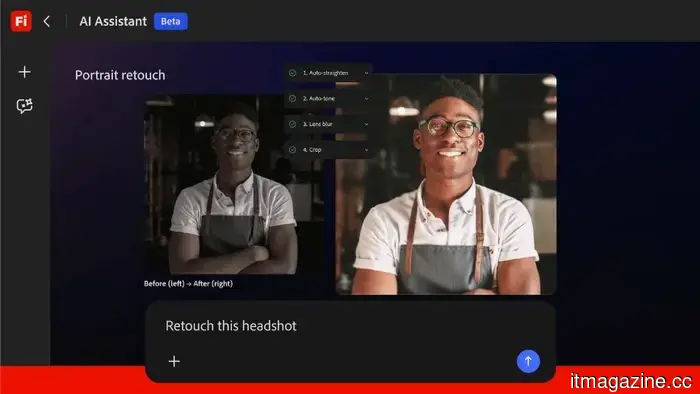 Adobe introduces the Firefly AI Assistant to manage tasks throughout Creative Cloud.
Adobe's Firefly AI Assistant employs natural language to coordinate activities across Photoshop, Premiere, Lightroom, and Illustrator. It will soon be available in public beta and includes integration with Anthropic Claude.
Adobe introduces the Firefly AI Assistant to manage tasks throughout Creative Cloud.
Adobe's Firefly AI Assistant employs natural language to coordinate activities across Photoshop, Premiere, Lightroom, and Illustrator. It will soon be available in public beta and includes integration with Anthropic Claude.
 More than 30 WordPress plugins purchased on Flippa have been compromised through a backdoor in a supply chain attack.
A hacker acquired over 30 WordPress plugins on Flippa, embedded backdoors that remained inactive for eight months, and then triggered disguised SEO spam visible only to Googlebot. WordPress does not conduct ownership-transfer inspections.
More than 30 WordPress plugins purchased on Flippa have been compromised through a backdoor in a supply chain attack.
A hacker acquired over 30 WordPress plugins on Flippa, embedded backdoors that remained inactive for eight months, and then triggered disguised SEO spam visible only to Googlebot. WordPress does not conduct ownership-transfer inspections.
 The pricing of Apple's iPhone 18 Pro may leave competitors struggling to keep up.
A recent rumor regarding the supply chain indicates that Apple is making significant efforts to prevent a substantial increase in the price of the iPhone 18 Pro, a decision that may add further strain on the already escalating prices of Android flagship devices.
The pricing of Apple's iPhone 18 Pro may leave competitors struggling to keep up.
A recent rumor regarding the supply chain indicates that Apple is making significant efforts to prevent a substantial increase in the price of the iPhone 18 Pro, a decision that may add further strain on the already escalating prices of Android flagship devices.
 Norwegian defense startup Stendr secures $5.4 million in funding.
Stendr, a startup focused on AI counter-drone technology and co-founded by Aleksander Leonard Larsen from Sky Mavis, has secured $5.4 million in pre-seed funding to develop European sovereign drone defense systems.
Norwegian defense startup Stendr secures $5.4 million in funding.
Stendr, a startup focused on AI counter-drone technology and co-founded by Aleksander Leonard Larsen from Sky Mavis, has secured $5.4 million in pre-seed funding to develop European sovereign drone defense systems.
The EU announces that its age verification application is prepared.
The EU has introduced an open-source age verification application that utilizes zero-knowledge proof to protect children from harmful online content.