
The US Army deployed a laser weapon on domestic territory and subsequently purchased it.
In late August, the US Army utilized a high-energy laser to target three drones near the Mexican border, successfully bringing all of them down. A week later, the Army finalized a contract to procure the production version of this technology.
On Wednesday, AeroVironment announced it has received a $464.8 million contract from the Army’s Portfolio Acquisition Executive for Fires, marking what the company claims is the first production contract for directed energy systems in the history of the United States.
What was acquired
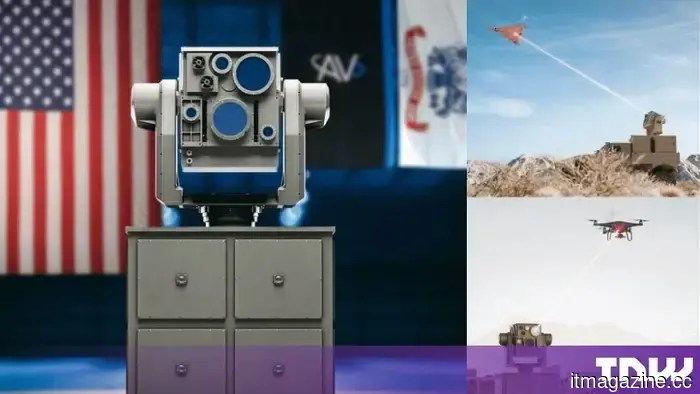
The Enduring-High Energy Laser program encompasses numerous LOCUST X3 systems that will be delivered over the coming years. Each system features a 30-kilowatt laser intended for use on various platforms. The Army plans to mount these lasers on Joint Light Tactical Vehicles, with options for palletized versions. AeroVironment is also investigating the suitability of this system for the Infantry Squad Vehicle.
The target range includes group 1 to 3 unmanned aircraft, which comprises small to medium drones rather than larger military aircraft. Additionally, AeroVironment will provide support and training for the systems.
The X3 is equipped with the company’s own AI targeting software and integrates into a broader framework that AeroVironment offers for layered air defense. The laser functions as part of that system instead of a standalone weapon.
The agreement is categorized as an Other Transaction Agreement, which allows the Pentagon to procure outside conventional federal acquisition rules, enabling a quicker process than typical contracts.
It had been deployed domestically
The sequence of events is more significant than the financial aspect. On the night of August 25 and into the morning after, a task force under US Northern Command employed laser technology from the same program against a group of drones located in the Rio Grande Valley in Texas. The operation was reported by Fernanda González in WIRED en Español, and later translated by Ars Technica. The lasers neutralized three drones, which officials identified as a physical threat to US military personnel and to Customs and Border Patrol agents.
Major General Curtis Taylor, leading the task force, linked the drones to organized crime, stating that cartel networks are increasingly using drones for illegal transportation and espionage against American personnel and law enforcement partners.
The identities of those operating the drones have not been confirmed publicly, and the Army has not disclosed the precise location of the incident.
Two different laser systems, and their distinction is important
The systems employed at the border operated at 20 kilowatts, sourced from the Army Multi-Purpose High Energy Laser program. This was a prototype effort preceding the recent contract. In contrast, the LOCUST X3, now entering production, operates at a 30-kilowatt capacity.
While the two systems are related, they are not identical weapons, and the Army has refrained from specifying which configuration was deployed in Texas. AeroVironment delivered the initial two prototypes in September 2025, followed by two additional units mounted on tactical vehicles that December. The newer versions include their own radar and command systems, as opposed to functioning as standalone units.
A laser of this nature operates by directing a concentrated beam onto a moving target long enough to heat it to the point of failure. The extent of damage caused is influenced by range, duration of exposure, and the materials composing the drone.
The approval came first
Utilizing a laser weapon within American airspace necessitated a permission that wasn't previously available. AeroVironment attributes this progress to testing conducted at White Sands Missile Range, in collaboration with a joint task force and the Fires office. This testing led to a safety agreement between the Department of War and the Federal Aviation Administration, legitimizing the system for domestic application.
Thus, the sequence is: clear the weapon for domestic usage, deploy it domestically, and then purchase it. Each phase required weeks, not years.
This rapid pace is what AeroVironment emphasizes as a selling point. John Garrity, who oversees directed energy at the company, referred to it as a production-ready system rather than a future prospect.
Where it stands
Investment in counter-drone technology has been rising over the past two years. In June, we noted that the Pentagon's initiative for drone dominance was boosting the valuations of every defense-tech firm in the sector, and Europe has developed its own set of drone-related unicorns, such as Berlin's Stark.
Lasers represent another aspect of this trade. Drones can be acquired for a few hundred dollars, while interceptor missiles incur significantly higher costs. This disparity forms the economic justification for directed energy technology, which, until now, had not been purchased at scale.
Additionally, this week marks a moment when federal agencies purchasing autonomous technology for domestic applications has emerged as a significant narrative. Recently, it was reported that immigration enforcement is planning to acquire a fleet of robot dogs without competitive bidding, and two states took action against automated license plate readers in a single week.
Counter-drone systems have also been used at civilian events, including this
Other articles
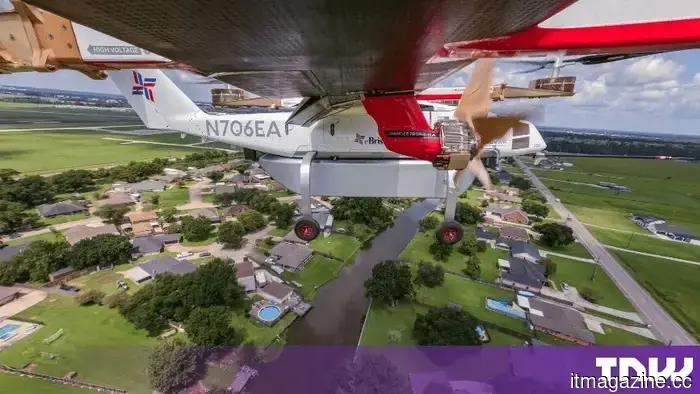 The FAA has just permitted a pilotless cargo aircraft to take off from an operational airport.
Elroy Air conducted a flight with an uncrewed 500-pound cargo aircraft from a regulated airport in Louisiana, marking the initial flights under an FAA pilot program.
The FAA has just permitted a pilotless cargo aircraft to take off from an operational airport.
Elroy Air conducted a flight with an uncrewed 500-pound cargo aircraft from a regulated airport in Louisiana, marking the initial flights under an FAA pilot program.
 Request an Uber, and a self-driving Mustang could arrive.
Londoners can now receive something unique when they request an Uber: a self-driving Ford Mustang Mach-E. Additionally, there is no extra charge for this experience.
Request an Uber, and a self-driving Mustang could arrive.
Londoners can now receive something unique when they request an Uber: a self-driving Ford Mustang Mach-E. Additionally, there is no extra charge for this experience.
 Apple might have discovered a way to incorporate MagSafe into its incredibly slim foldable iPhone.
Mark Gurman indicates that MagSafe will be included in Apple's foldable iPhone, and this feature might be what justifies its cost.
Apple might have discovered a way to incorporate MagSafe into its incredibly slim foldable iPhone.
Mark Gurman indicates that MagSafe will be included in Apple's foldable iPhone, and this feature might be what justifies its cost.
 Uber and Wayve have introduced London's inaugural robotaxi service, featuring a safety driver present in each vehicle.
Uber and Wayve started transporting passengers in London on Thursday with a fleet of fewer than 20 Ford Mustang Mach-Es. Transport for London (TfL) approved the cars as private hire vehicles, which means a licensed driver must remain in the vehicle and oversee each journey.
Uber and Wayve have introduced London's inaugural robotaxi service, featuring a safety driver present in each vehicle.
Uber and Wayve started transporting passengers in London on Thursday with a fleet of fewer than 20 Ford Mustang Mach-Es. Transport for London (TfL) approved the cars as private hire vehicles, which means a licensed driver must remain in the vehicle and oversee each journey.
 Snowflake surpassed expectations in nearly every measure, except for one figure that went in the opposite direction.
Snowflake exceeded expectations for revenue, profit, and guidance, resulting in shares increasing by over 20%. However, its remaining performance obligations were $370 million lower than predictions.
Snowflake surpassed expectations in nearly every measure, except for one figure that went in the opposite direction.
Snowflake exceeded expectations for revenue, profit, and guidance, resulting in shares increasing by over 20%. However, its remaining performance obligations were $370 million lower than predictions.
 Schools are adopting AI technologies. However, New York City has prohibited its use for over half a million students.
New York City is pausing the use of generative AI for its younger students. Over 500,000 children will return to school without access to AI tools designed for students.
Schools are adopting AI technologies. However, New York City has prohibited its use for over half a million students.
New York City is pausing the use of generative AI for its younger students. Over 500,000 children will return to school without access to AI tools designed for students.
The US Army deployed a laser weapon on domestic territory and subsequently purchased it.
AeroVironment secured a $464.8 million contract from the US Army for laser weapon systems. Just days prior, lasers from the same initiative successfully shot down three drones near the Mexican border.