
Snowflake surpassed expectations in nearly every measure, except for one figure that went in the opposite direction.
Snowflake surpassed expectations regarding revenue, profit, and guidance, leading to a more than 20% increase in its shares after hours. However, one figure in the report did not meet projections, and it's the one that projects the farthest into the future. Remaining performance obligations, which represent the contracted revenue Snowflake has booked but not yet recognized, totaled $9.00 billion. According to Brody Ford's report for Bloomberg, analysts had anticipated $9.37 billion.
Here are the numbers that exceeded forecasts:
For the quarter ending July 31, revenue reached $1.55 billion, reflecting a year-on-year increase of 35%, surpassing the consensus estimate of $1.48 billion. Product revenue, making up 96% of the total, grew by 37% to $1.49 billion, compared to the expected $1.42 billion. Adjusted earnings were reported at 62 cents per share, exceeding the analysts' prediction of 45 cents.
It's important to clarify that product revenue does not include professional services, which the report states explicitly, and the math confirms it: $1,491.9 million in product revenue plus $54.9 million in services yields the total of $1,546.8 million.
The company increased its full-year product revenue guidance to $6.07 billion, representing 36% growth, up from the $5.84 billion and 31% it previously projected in May. For the current quarter, it expects revenue between $1.588 billion and $1.593 billion, comfortably exceeding the approximate $1.50 billion consensus.
Net revenue retention stood at 126%. Snowflake added 692 new customers, bringing the total to 828 customers spending more than $1 million annually.
The figure that fell short:
Remaining performance obligations increased by 30% year on year, which appears robust on its own. However, it represents a deficiency of around $370 million compared to analysts' models.
Snowflake's release clarifies the complexity of this figure, stating it “is not necessarily indicative of future product revenue growth because it does not account for the timing of customers’ consumption.” Factors like renewals, contract duration, and seasonality can influence it.
Most coverage on Wednesday evening emphasized the positive results and the share price increase, with Bloomberg being the publication that highlighted the shortfall.
The reported profit is not the only profit:
Snowflake disclosed non-GAAP operating income of $237.0 million, with a 15.3% margin, and non-GAAP net income of $235.3 million. On a GAAP basis, the company reported a loss. The operating loss was $263.0 million, and the net loss was $191.7 million, equating to 55 cents per share. This loss is narrower than the $297.9 million loss recorded a year prior, but it is still a loss.
The difference between the two figures is mainly attributed to one line. Stock-based compensation expenses for the quarter amounted to $456.4 million, which exceeds the non-GAAP operating income that is being highlighted positively.
Snowflake cites decreasing stock compensation as a percentage of revenue and achieving GAAP profitability as part of its risk factors. This situation is typical for enterprise software, and the losses are declining. It is important to emphasize this, as the figures being reported primarily pertain to adjusted metrics.
Drivers of growth:
CEO Sridhar Ramaswamy informed Reuters that AI products accounted for "approximately half of the acceleration we are witnessing." The coding assistant CoCo has exceeded 9,100 accounts, adding over 2,000 in the last quarter. CoWork, which answers queries related to a company's own data, now has 5,800 accounts. Snowflake tracks these figures by averaging the last four weeks of the quarter.
Finance chief Brian Robins pointed out that this marks the third consecutive quarter in which product revenue growth has accelerated, alongside margin expansion.
Operating AI incurs costs. The non-GAAP product gross margin was reported at 74.7%, a decline from approximately 76% a year ago according to the company's figures. In May, Snowflake entered into a five-year agreement valued at $6 billion with Amazon Web Services for Graviton processors, which Ramaswamy noted secures pricing for storage and computing.
The faster-growing competitor:
Databricks is a comparison that Snowflake cannot escape. Last month, it secured a $5 billion funding round at a $190 billion valuation. Databricks recently announced it surpassed a revenue run rate of $7 billion, growing more than 80% year on year in its second quarter. This rate is more than double Snowflake’s 37%, and Databricks operates as a private entity not required to disclose audited results.
The broader context:
These results emerge during an earnings season where AI is the prevalent explanation for strong performance. Last week, Nvidia reported $96.2
Other articles
 ByteDance secures $29.6 billion, making it the second-largest loan in Asia this year, while incurring lower costs.
ByteDance has obtained a $29.6 billion loan after banks submitted over $30 billion in orders, resulting in an increase from the initial $20 billion facility.
ByteDance secures $29.6 billion, making it the second-largest loan in Asia this year, while incurring lower costs.
ByteDance has obtained a $29.6 billion loan after banks submitted over $30 billion in orders, resulting in an increase from the initial $20 billion facility.
 From uncontrolled expansion to technology-driven development in China's AI short drama sector.
In September, China introduced its initial specific regulatory framework for micro-dramas, known as the Administrative Measures for the Development of Micro-Dramas.
From uncontrolled expansion to technology-driven development in China's AI short drama sector.
In September, China introduced its initial specific regulatory framework for micro-dramas, known as the Administrative Measures for the Development of Micro-Dramas.
 Apple is facing a £2 billion lawsuit in the UK regarding App Tracking Transparency, initiated by a former official from the Competition and Markets Authority (CMA).
App developers in the UK have submitted a £2 billion claim to the Competition Appeal Tribunal, claiming that Apple imposes tougher tracking-consent regulations on third parties compared to its own advertising operations.
Apple is facing a £2 billion lawsuit in the UK regarding App Tracking Transparency, initiated by a former official from the Competition and Markets Authority (CMA).
App developers in the UK have submitted a £2 billion claim to the Competition Appeal Tribunal, claiming that Apple imposes tougher tracking-consent regulations on third parties compared to its own advertising operations.
 Request an Uber, and a self-driving Mustang could arrive.
Londoners can now receive something unique when they request an Uber: a self-driving Ford Mustang Mach-E. Additionally, there is no extra charge for this experience.
Request an Uber, and a self-driving Mustang could arrive.
Londoners can now receive something unique when they request an Uber: a self-driving Ford Mustang Mach-E. Additionally, there is no extra charge for this experience.
 Apple is facing a £2 billion lawsuit in the UK regarding App Tracking Transparency, initiated by a former official from the CMA.
UK app developers have submitted a £2bn lawsuit to the Competition Appeal Tribunal, claiming that Apple imposes more stringent tracking-consent regulations on third parties compared to its own advertising operations.
Apple is facing a £2 billion lawsuit in the UK regarding App Tracking Transparency, initiated by a former official from the CMA.
UK app developers have submitted a £2bn lawsuit to the Competition Appeal Tribunal, claiming that Apple imposes more stringent tracking-consent regulations on third parties compared to its own advertising operations.
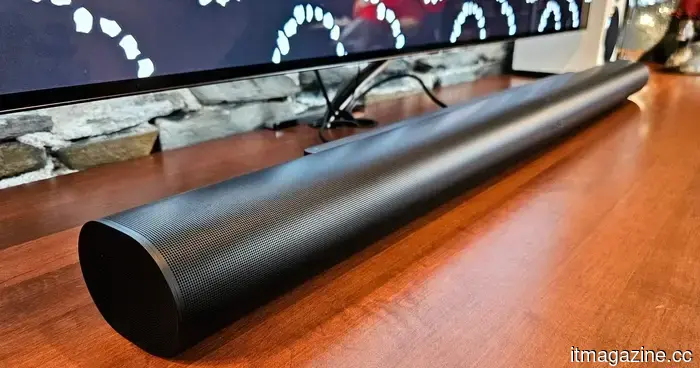 I discovered 6 Labor Day audio deals that are just perfect.
I went through the Labor Day audio sales on Amazon and Best Buy and discovered six soundbar and speaker deals that are truly worth looking into.
I discovered 6 Labor Day audio deals that are just perfect.
I went through the Labor Day audio sales on Amazon and Best Buy and discovered six soundbar and speaker deals that are truly worth looking into.
Snowflake surpassed expectations in nearly every measure, except for one figure that went in the opposite direction.
Snowflake exceeded expectations for revenue, profit, and guidance, resulting in shares increasing by over 20%. However, its remaining performance obligations were $370 million lower than predictions.