
Uber and Wayve have introduced London's inaugural robotaxi service, featuring a safety driver present in each vehicle.
London has launched its first robotaxi service, but every vehicle still has a human behind the wheel. On Thursday, Uber and Wayve began transporting passengers using a fleet of Ford Mustang Mach-Es, each one monitored by a licensed driver who can take control if necessary. Uber owns and manages the cars, while Wayve, a British firm based in Cambridge, provides the driving software.
This service has been anticipated for some time. Uber started a waitlist in London back in June, and most developments since then have been regulatory rather than technical. The fleet is intentionally small, with Uber beginning operations with fewer than 20 cars. Transport for London approved up to 15 vehicles for a one-year trial while granting permissions in August.
The actual license granted by TfL focuses on details that influence the entire operation. The modified Wayve cars were authorized as private hire vehicles instead of automated vehicles, meaning a licensed PHV driver must always be present and legally accountable for the vehicle during every ride. Removing the driver would necessitate a different type of permission altogether. An Automated Passenger Services permit, which must be obtained through the Driver and Vehicle Standards Agency under the Automated Vehicles Act, is a distinct process that neither Uber nor Wayve has finished.
Uber has not set a timeline for this transition. "That process is still in progress," stated Sarfraz Maredia, the head of autonomous mobility at Uber, who also confirmed that the fleet would expand over time. Riders cannot specifically request a robotaxi. The fares remain consistent with typical Uber prices; passengers are matched with a robotaxi instead of selecting one directly and can opt out if they choose, while the app excludes a tipping prompt.
The regulator has carefully framed its involvement. “Safety is our top priority. Any new vehicle licensed to carry passengers on London’s roads must align with our Vision Zero goal,” stated a TfL spokesperson, who added that the authority retains monitoring and enforcement powers over the trial.
The presence of a driver limits the trial's potential findings. A vehicle with a paid driver incurs costs similar to those of a regular minicab, meaning the economic advantages of autonomy cannot be demonstrated through this deployment. Achieving a pioneering status is significant, given the competitive landscape in London. Waymo is gearing up for a London service, and Baidu is likewise preparing to enter the market, making a supervised launch an opportunity to mark a milestone ahead of competitors.
However, the capability comparison is not favorable. Waymo operates fully driverless services in 14 American cities, so what Uber has initiated in London lags behind the capabilities of its main rival elsewhere. This trend continues through Uber's expansion across Europe; its first robotaxi service on the continent launched in Zagreb last month, also with safety drivers, and a pilot in Tokyo, conducted with Wayve and Nissan, employs the same supervised approach.
For Wayve, the London deployment serves as a testing ground for its methodology. The company develops an end-to-end driving model without pre-mapping cities, and it has dedicated the past year to building the computing infrastructure for its operations, securing investments from AMD, Arm, and Qualcomm in addition to a Series D funding round aimed at scaling the system.
London presents a challenging environment for this proof of concept. Its narrow streets, cyclists, bus lanes, roadworks, and a layout that predates cars create a tougher testing scenario than the spacious grids in which American robotaxis have learned to navigate. Additionally, the city features organized competition; black-cab drivers have raised concerns about how algorithmic competition affects taxi economics, and a supervised fleet of 15 vehicles offers them a modest target while the licensing situation remains unresolved.
Consequently, the safety driver is central to the current narrative. Until the DVSA permit is obtained, this service functions more as a driver-assistance system featuring a highly advanced assistant, whereas robotaxis have typically been advancing faster than the complexities arising from their expansion can be addressed.
Other articles
 Snowflake surpassed expectations in nearly every measure, except for one figure that went in the opposite direction.
Snowflake exceeded expectations for revenue, profit, and guidance, resulting in shares increasing by over 20%. However, its remaining performance obligations were $370 million lower than predictions.
Snowflake surpassed expectations in nearly every measure, except for one figure that went in the opposite direction.
Snowflake exceeded expectations for revenue, profit, and guidance, resulting in shares increasing by over 20%. However, its remaining performance obligations were $370 million lower than predictions.
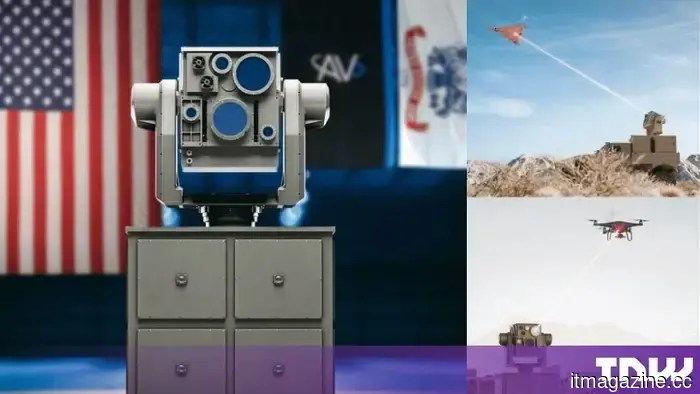 The US Army deployed a laser weapon on domestic territory and subsequently purchased it.
AeroVironment secured a $464.8 million contract from the US Army for laser weapon systems. Just days prior, lasers from the same initiative successfully shot down three drones near the Mexican border.
The US Army deployed a laser weapon on domestic territory and subsequently purchased it.
AeroVironment secured a $464.8 million contract from the US Army for laser weapon systems. Just days prior, lasers from the same initiative successfully shot down three drones near the Mexican border.
 Schools are welcoming AI technology. However, New York City has prohibited its use for over half a million students.
New York City is pausing the use of generative AI for its younger students. Over 500,000 children will return to school without the availability of AI tools designed for students.
Schools are welcoming AI technology. However, New York City has prohibited its use for over half a million students.
New York City is pausing the use of generative AI for its younger students. Over 500,000 children will return to school without the availability of AI tools designed for students.
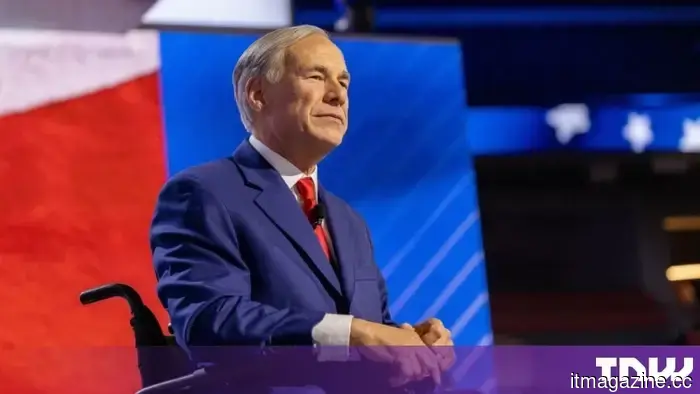 Texas Republicans are opposing data centers, and both Senate candidates are in agreement on the water regulations.
Data centers have emerged as a significant topic in the Texas gubernatorial and Senate races. Ken Paxton and James Talarico have both suggested implementing closed-loop water requirements, while Abbott is campaigning on the connection freeze he initiated in August.
Texas Republicans are opposing data centers, and both Senate candidates are in agreement on the water regulations.
Data centers have emerged as a significant topic in the Texas gubernatorial and Senate races. Ken Paxton and James Talarico have both suggested implementing closed-loop water requirements, while Abbott is campaigning on the connection freeze he initiated in August.
 Sony's argument in response to a lawsuit regarding digital ownership is that users are aware they do not truly own their games.
Sony is contesting a class action lawsuit in California regarding the description of digital game purchases on the PlayStation Store. The company claims that its checkout process clearly communicates to customers that they are buying a license.
Sony's argument in response to a lawsuit regarding digital ownership is that users are aware they do not truly own their games.
Sony is contesting a class action lawsuit in California regarding the description of digital game purchases on the PlayStation Store. The company claims that its checkout process clearly communicates to customers that they are buying a license.
 Apple has simplified the process of using two iPhones with a single number.
iOS 27 may simplify the process of managing two iPhones. With iPhone Handoff, you can alternate between devices while maintaining the same phone number.
Apple has simplified the process of using two iPhones with a single number.
iOS 27 may simplify the process of managing two iPhones. With iPhone Handoff, you can alternate between devices while maintaining the same phone number.
Uber and Wayve have introduced London's inaugural robotaxi service, featuring a safety driver present in each vehicle.
Uber and Wayve started transporting passengers in London on Thursday with a fleet of fewer than 20 Ford Mustang Mach-Es. Transport for London (TfL) approved the cars as private hire vehicles, which means a licensed driver must remain in the vehicle and oversee each journey.