

Unions at Micron in Taiwan are preparing to hold a vote on whether to strike regarding bonuses.
Approximately 10,000 Micron employees in Taiwan are represented by two unions that are currently preparing their members for a potential strike. A preliminary survey indicated that around 80% of the workers polled supported industrial action, according to a report by Reuters on Tuesday.
The conflict centers on bonuses rather than base salaries, specifically concerning the method of bonus calculation. The unions are urging Micron to replace its Incentive Pay Plan with a profit-sharing model, asserting that the existing system is complex for employees to grasp and yields significantly lower payments compared to similar programs at other memory manufacturers.
The unions' argument heavily references comparisons with Samsung and SK hynix. Samsung’s semiconductor division dedicates 10.5% of its profits to employee bonuses, while SK hynix allocates 10% of its annual operating profit, providing workers with a defined percentage directly connected to a transparent financial outcome.
This discrepancy involves more than just the amount of the bonuses. A fixed profit percentage offers employees a formula they can use to gauge their compensation against the company’s performance, whereas a discretionary incentive plan requires them to accept a calculation whose foundational methodology remains opaque.
Micron’s system differs in operation. Annual performance bonuses for Taiwanese employees are limited to 200% of their target, roughly equivalent to five months of salary, with actual payouts averaging around 2.6 months.
The timing of this situation enhances the unions' arguments significantly. With memory prices soaring as AI companies acquire computing power, manufacturers are seeing increased profits while workers are advocating for a bonus structure that would guarantee them a defined share of those profits.
Mediation sessions were planned for late August and mid-September, and should those discussions fail to reach a resolution, the unions could hold a formal strike vote in September.
A strike involving semiconductor personnel would be atypical in Taiwan, where highly specialized fabrication operations rely on skilled workers, and manufacturers have strong reasons to avoid disruptions.
Industrial action at a major memory facility would be notably impactful, given the challenges of replacing experienced workers or quickly relocating production.
Taiwan is also more crucial to Micron's manufacturing network than its US headquarters may imply. The company operates significant DRAM fabrication and advanced packaging facilities in Taiwan, and memory production cannot be readily transferred to another country on short notice.
There is limited spare capacity elsewhere that could accommodate such a disruption, as the global DRAM market is dominated by three major manufacturers, all experiencing high demand, and Micron's two primary competitors are the same companies whose employee bonus structures the unions are using as a benchmark.
This aspect elevates the dispute beyond a simple compensation issue. A strike at a Micron facility could exacerbate a memory market that is already operating at tight levels, particularly under rising demand from AI infrastructure.
The repercussions are extending into consumer electronics as well. Memory shortages have led to the removal of some budget smartphones from the market and compelled manufacturers to raise prices on products unrelated to AI.
Operating a semiconductor fabrication plant below capacity is particularly detrimental. Even with lower chip production, the facility continues to consume electricity and cleanroom resources, while the machinery itself represents billions in capital that depreciates and becomes outdated relatively quickly.
Therefore, the workers’ argument logically aligns with the company’s financial dynamics. If the supply shortage driven by the AI surge is causing higher memory prices and increased profits, the employees managing the fabrications are requesting that their compensation reflect those gains through a formulaic approach rather than a discretionary one.
European manufacturers hold little sway in this context and have almost no domestic DRAM production. Any agreements reached between Micron and its competitors and their workers will impact the pricing and availability of memory components utilized by European electronics companies, which have little influence over these negotiations.
Similar bonus disputes are arising at Samsung and SK hynix, indicating that this underlying tension extends beyond Micron. As memory prices and profits escalate, workers across all three major manufacturers are increasingly questioning how much of this added value should return to those producing the chips.
One crucial detail remains unreported: the proportion of Micron's global output that originates from its Taiwanese operations. This figure has not been disclosed by either the company or the unions, making it challenging to ascertain the exact impact a prolonged stoppage would have on global supply.
Micron has not publicly addressed the threat of a strike. Currently, the next significant step involves the mediation process, with a formal strike vote potentially occurring in September if the discussions do not result in an agreement.
Другие статьи
 Brazil is establishing its definition of a deepfake just five weeks prior to the election.
The electoral court took steps to widen AI regulations in anticipation of the election on October 4, following an incident where an AI avatar of Jair Bolsonaro campaigned in violation of a communication ban.
Meta eliminates fraudulent app advertisements in India following two requests.
Applications masquerading as pornography have the potential to intercept one-time passwords and banking PINs. Meta has taken down the ads that Reuters identified but did not respond to their inquiries.
Brazil is establishing its definition of a deepfake just five weeks prior to the election.
The electoral court took steps to widen AI regulations in anticipation of the election on October 4, following an incident where an AI avatar of Jair Bolsonaro campaigned in violation of a communication ban.
Meta eliminates fraudulent app advertisements in India following two requests.
Applications masquerading as pornography have the potential to intercept one-time passwords and banking PINs. Meta has taken down the ads that Reuters identified but did not respond to their inquiries.
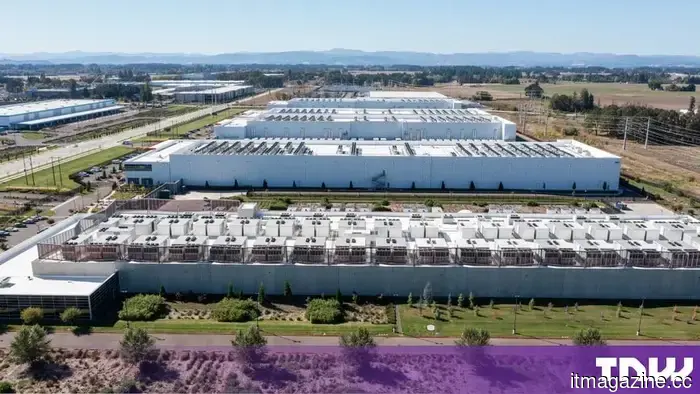 Texas has 474GW in data center requests but lacks clarity on how many of these are legitimate.
Interconnection queues throughout the US contain over 700GW of data center applications, which is ten times the current usage. States are beginning to impose fees for these requests.
Texas has 474GW in data center requests but lacks clarity on how many of these are legitimate.
Interconnection queues throughout the US contain over 700GW of data center applications, which is ten times the current usage. States are beginning to impose fees for these requests.
 A Chinese court has put a freeze on Nexperia’s shares in four of its subsidiaries.
The Dongguan court has frozen approximately 2.14 billion yuan in shareholdings until 2029 in relation to Wingtech's lawsuit against the Dutch chip manufacturer and three of its executives.
A Chinese court has put a freeze on Nexperia’s shares in four of its subsidiaries.
The Dongguan court has frozen approximately 2.14 billion yuan in shareholdings until 2029 in relation to Wingtech's lawsuit against the Dutch chip manufacturer and three of its executives.
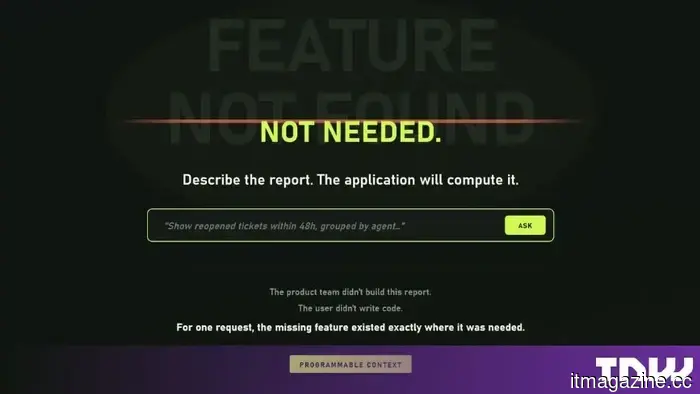
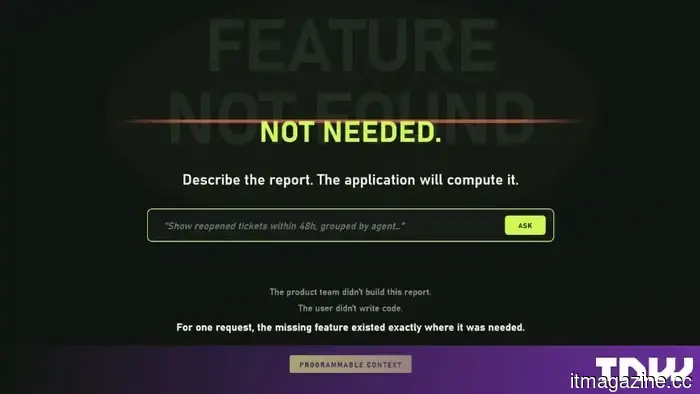 The next feature of your enterprise software won’t be delivered. It will be created.
The enterprise feature backlog is on the verge of failure. With an AI assistant able to create a small program tailored precisely to a user’s request, the time needed to fulfill requests shrinks from months to mere seconds.
The next feature of your enterprise software won’t be delivered. It will be created.
The enterprise feature backlog is on the verge of failure. With an AI assistant able to create a small program tailored precisely to a user’s request, the time needed to fulfill requests shrinks from months to mere seconds.
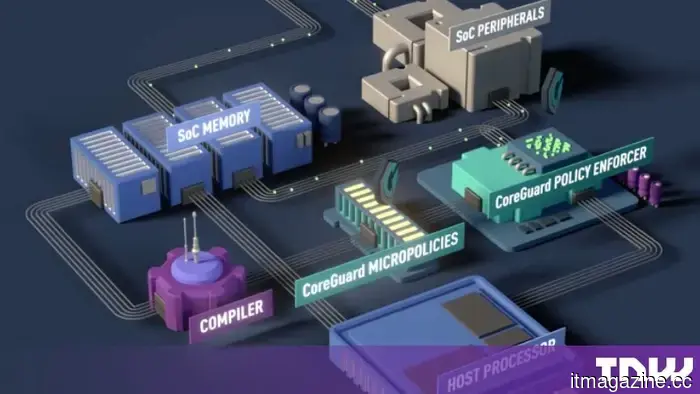 The upcoming front in cybersecurity will be within the processor.
Jothy Rosenberg, the founder of Dover Microsystems, contends that processors still lack the ability to detect attacks. CoreGuard, developed from DARPA's $100M CRASH initiative, monitors every instruction at the silicon level and applies security measures before any harm can happen.
The upcoming front in cybersecurity will be within the processor.
Jothy Rosenberg, the founder of Dover Microsystems, contends that processors still lack the ability to detect attacks. CoreGuard, developed from DARPA's $100M CRASH initiative, monitors every instruction at the silicon level and applies security measures before any harm can happen.
Unions at Micron in Taiwan are preparing to hold a vote on whether to strike regarding bonuses.
Two unions, representing approximately 10,000 employees, are advocating for profit sharing, referencing Samsung and SK Hynix. A strike could impact an already constrained memory market.