
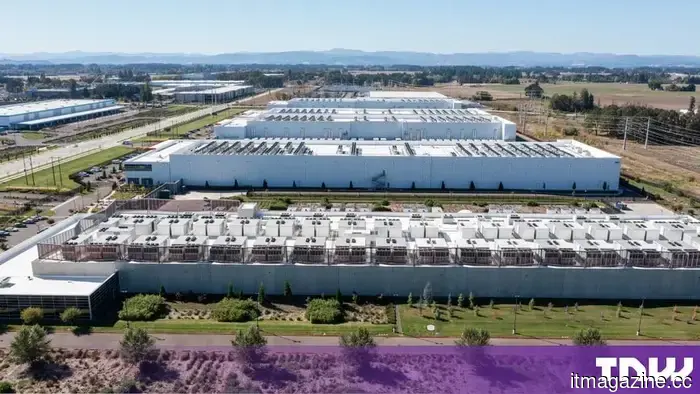
Texas has 474GW in data center requests but lacks clarity on how many of these are legitimate.
Texas has 474 gigawatts of requests from data center developers pending connection to its power grid, which is more than five times the state's peak demand record. In 2023, the figure stood at just 48 gigawatts, and this disparity clearly does not indicate that hundreds of gigawatts of new data centers are actually being built. The industry refers to this situation as “ghost demand,” and a Reuters analysis published on Tuesday highlights the extent of the gap. Requests for data center connections now surpass 700 gigawatts across the Midwest, Mid-Atlantic, and South, which is more than ten times the current estimates of electricity consumption by data centers in the U.S.
The issue arises less from developers intentionally misleading grid operators and more from the incentives within the connection process. Developers can submit requests for multiple potential locations, allowing them to keep options open at relatively low cost and ultimately choose only one site to build. From their perspective, it's logical to secure a position in the queue before making a final decision on which project will proceed. “When you don’t know what is real, you really don’t know how to build the infrastructure for it,” remarked Thomas Gleeson, chairman of the Texas Public Utility Commission.
Grid operators must plan generation and transmission infrastructure years ahead, but the numbers they base their planning on can include projects that are still merely possibilities. Developers also have a strong incentive to file early; queue positions can determine who gets connected first. If a company waits until its project is fully funded and prepared for construction, it may find that another developer submitted a speculative request two years earlier and now holds priority.
One method of distinguishing serious projects from speculative ones is to increase application costs. Exelon implemented stricter collateral requirements, which resulted in a 40% drop in its high-probability data center demand pipeline, down to 11 gigawatts. Ohio experienced a similar outcome after imposing grid connection study fees of up to $100,000, leading to a more than 50% reduction in AEP Ohio's pipeline, indicating that at least some of the apparent demand was never tied to projects poised to advance.
Pennsylvania provides a clearer illustration of the disconnect between proposed projects and actual construction. Over 100 data centers have been proposed in the state, yet only 20 have applied for permits, with most others lacking both secured electricity and identified customers. On August 18, Governor Josh Shapiro signed an executive order mandating stricter permitting for projects above 25 megawatts, along with additional information regarding the ultimate users of the facilities. Texas also initiated an audit in early August, examining ownership, tax incentives, water usage, and plans for power generation.
Neither state has taken steps to prohibit data center development. Instead, the new regulations require developers to furnish more evidence of the seriousness of their projects, and initial findings suggest that a substantial amount of the proposed demand cannot yet meet that standard. The repercussions of inaccurate demand estimates extend beyond developers and grid operators. PJM Interconnection, which oversees the largest electricity grid in the U.S., has experienced capacity costs escalate by $29.4 billion across approximately four auctions—costs that ultimately affect the electricity bills of households and businesses.
At the same time, the actual demand for electricity from data centers is genuine and increasing, complicating matters for grid operators who cannot simply ignore the queues. “The reality is that the load is showing up, and generation is not keeping pace,” stated Jeff Shields of PJM. Thus, grid operators must differentiate between companies that genuinely plan to construct a data center and those merely holding a development option, often lacking the information necessary to make such distinctions. This lack of transparency is one issue that the new state regulations aim to address.
“The entities that rushed into the space are perhaps now realizing just how challenging some of this construction is,” noted Daniel Farris, an attorney at Foley & Lardner. Tyson Slocum of Public Citizen described Texas’s efforts as trying to impose more structure on an industry that still resembles the Wild West. However, there is a risk of overcorrection. If grid operators begin to dismiss connection requests too aggressively, they could underinvest in generation and transmission, ultimately making it more difficult for legitimate projects to connect.
This issue presents the other side of the dilemma that Shields is highlighting: real demand is emerging, even if the queue obscures the precise amount. Europe has faced a similar challenge but taken a different approach. Denmark has halted new grid connections for data centers, while 63% of new European data center capacity is now being developed outside the continent's five established hubs, mainly due to increasingly lengthy connection queues at those locations.
For European operators, the U.S. figures serve as a cautionary tale regarding what those queues may signify. A pipeline that appears to demonstrate overwhelming demand may reflect the same development strategy replicated across various potential sites, and crafting grid infrastructure based on such figures could lead to overbuilding in some areas while still not addressing
Other articles
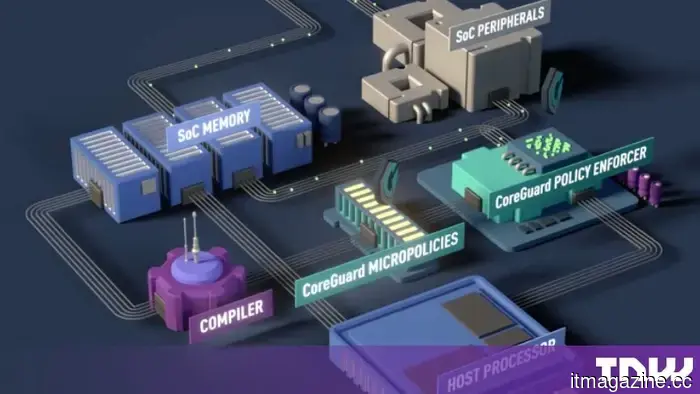 The upcoming front in cybersecurity will be within the processor.
Jothy Rosenberg, the founder of Dover Microsystems, contends that processors still lack the ability to detect attacks. CoreGuard, developed from DARPA's $100M CRASH initiative, monitors every instruction at the silicon level and applies security measures before any harm can happen.
The upcoming front in cybersecurity will be within the processor.
Jothy Rosenberg, the founder of Dover Microsystems, contends that processors still lack the ability to detect attacks. CoreGuard, developed from DARPA's $100M CRASH initiative, monitors every instruction at the silicon level and applies security measures before any harm can happen.
 Unions at Micron in Taiwan are preparing to hold a vote on whether to strike regarding bonuses.
Two unions, representing approximately 10,000 employees, are advocating for profit sharing, referencing Samsung and SK Hynix. A strike could impact an already constrained memory market.
Unions at Micron in Taiwan are preparing to hold a vote on whether to strike regarding bonuses.
Two unions, representing approximately 10,000 employees, are advocating for profit sharing, referencing Samsung and SK Hynix. A strike could impact an already constrained memory market.
 Brazil is establishing its definition of a deepfake just five weeks prior to the election.
The electoral court took steps to widen AI regulations in anticipation of the election on October 4, following an incident where an AI avatar of Jair Bolsonaro campaigned in violation of a communication ban.
Brazil is establishing its definition of a deepfake just five weeks prior to the election.
The electoral court took steps to widen AI regulations in anticipation of the election on October 4, following an incident where an AI avatar of Jair Bolsonaro campaigned in violation of a communication ban.
 A Chinese court has put a freeze on Nexperia’s shares in four of its subsidiaries.
The Dongguan court has frozen approximately 2.14 billion yuan in shareholdings until 2029 in relation to Wingtech's lawsuit against the Dutch chip manufacturer and three of its executives.
Meta eliminates fraudulent app advertisements in India following two requests.
Applications masquerading as pornography have the potential to intercept one-time passwords and banking PINs. Meta has taken down the ads that Reuters identified but did not respond to their inquiries.
A Chinese court has put a freeze on Nexperia’s shares in four of its subsidiaries.
The Dongguan court has frozen approximately 2.14 billion yuan in shareholdings until 2029 in relation to Wingtech's lawsuit against the Dutch chip manufacturer and three of its executives.
Meta eliminates fraudulent app advertisements in India following two requests.
Applications masquerading as pornography have the potential to intercept one-time passwords and banking PINs. Meta has taken down the ads that Reuters identified but did not respond to their inquiries.
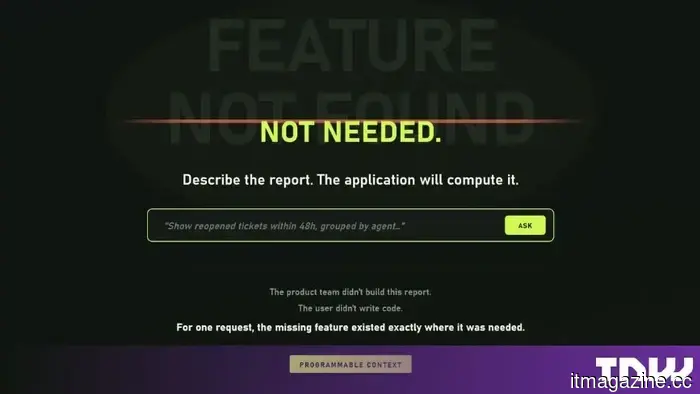
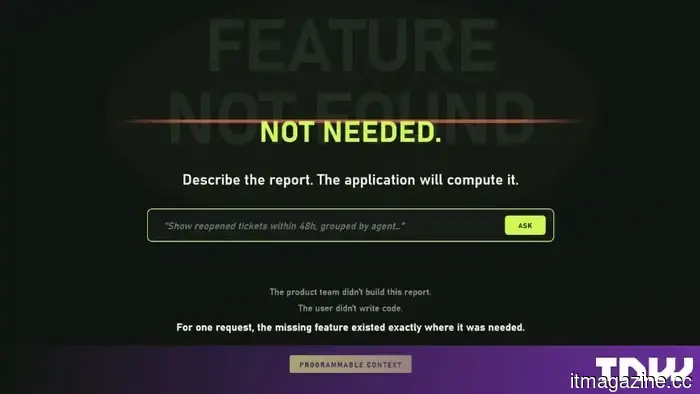 The next feature of your enterprise software won’t be delivered. It will be created.
The enterprise feature backlog is on the verge of failure. With an AI assistant able to create a small program tailored precisely to a user’s request, the time needed to fulfill requests shrinks from months to mere seconds.
The next feature of your enterprise software won’t be delivered. It will be created.
The enterprise feature backlog is on the verge of failure. With an AI assistant able to create a small program tailored precisely to a user’s request, the time needed to fulfill requests shrinks from months to mere seconds.
Texas has 474GW in data center requests but lacks clarity on how many of these are legitimate.
Interconnection queues throughout the US contain over 700GW of data center applications, which is ten times the current usage. States are beginning to impose fees for these requests.