
A Chinese court has put a freeze on Nexperia’s shares in four of its subsidiaries.
A court in Dongguan has placed a freeze on Nexperia's shareholdings in four of its Chinese subsidiaries, valued at approximately 2.14 billion yuan, with the order set to remain in effect until August 2029. According to Reuters, this order came into effect in the last week of August.
The assets in question include Nexperia's stakes in semiconductor operations located in Wuxi and Shanghai, along with a fully owned subsidiary related to its equipment business in Wuxi. The total value of the frozen shareholdings is about $300 million, which will remain inaccessible for up to three years as the case progresses through the Chinese judicial system.
This type of freeze serves as a preservation order rather than a judgment regarding the underlying case. It prohibits the defendant from disposing of assets while the claim is under consideration, meaning Nexperia is unable to sell or restructure the affected Chinese subsidiaries during the duration of the order.
The lawsuit was initiated by Wingtech, Nexperia's Chinese owner, which filed against the company and three of its executives in May. Wingtech claims that the Dutch government’s restrictions on Nexperia are discriminatory and is seeking 8 billion yuan in damages.
Nexperia has stated that the order does not impact its daily operations. The company has asserted that the measures do not affect management or business continuity, and nothing in the order indicates that production at the affected sites has been halted. This distinction is significant as the court has frozen ownership stakes rather than the factories themselves.
The goal of the order is to ensure that the assets remain available if Wingtech ultimately prevails in its case, and not to hinder Nexperia’s ability to continue manufacturing and selling semiconductors.
The dispute began in The Hague, where the Dutch government intervened in Nexperia last year due to concerns regarding the potential relocation of technology, funds, and production assets out of the Netherlands. Subsequently, a Dutch court suspended the company’s chief executive and placed Wingtech's voting rights under independent oversight.
Although Nexperia may not be well-known outside the semiconductor sector, its products are utilized on a massive scale. The company produces discrete semiconductors and basic logic chips in quantities reaching tens of billions, supplying components for cars, appliances, and industrial machinery.
In response to the Dutch intervention, China reacted through both the supply chain and legal avenues. Beijing imposed export restrictions that disrupted the shipment of Nexperia components, creating challenges for European manufacturers that depend on these relatively simple parts and often find it difficult to source alternatives.
Later, the two governments reached an agreement aimed at restoring normal operations, but this did not resolve the underlying dispute between Wingtech and Nexperia. Legal battles have continued in both jurisdictions, while the companies and governments maintain opposing positions regarding ownership control over the business.
Wingtech’s Chinese lawsuit, filed in May, was reported previously. A significant development in the case is that a Chinese court has taken steps to preserve assets before a hearing on the merits has occurred.
This action aligns with a broader shift in European policy concerning strategic technology. The Netherlands has expanded its focus to include sectors like AI and biotechnology, reflecting similar concerns about foreign ownership and control that initially motivated the intervention in Nexperia.
The complexity of the dispute is heightened by Nexperia’s operations across multiple jurisdictions. Being a Dutch company owned by a Chinese group, with manufacturing in China and customers throughout Europe, means that Dutch, Chinese, and European authorities each have some degree of influence over different aspects of the business.
This situation clarifies why ownership has become such a pivotal issue. Wingtech legally acquired Nexperia, yet the Dutch government has subsequently imposed restrictions on Wingtech’s control for national security reasons, and neither party appears willing to compromise.
A ruling in either jurisdiction is unlikely to resolve the entire dispute. A Dutch court can address the government’s intervention and Wingtech’s voting rights in the Netherlands, but it lacks the power to unfreeze assets controlled by a Chinese court, just as a Chinese ruling cannot restore Wingtech's authority over its Dutch parent company.
For European manufacturers, the pressing concern is less about the legal arguments than about the potential recurrence of disruptions in the supply chain as a result of the dispute. Nexperia produces fundamental components in large quantities, and previous restrictions illustrated how rapidly a conflict over ownership can impact companies uninvolved in the dispute.
The escalating semiconductor conflict has already led to numerous disputes with a similar structure. ASML has navigated tensions between the US and China for years, while Dutch semiconductor policy is increasingly influenced by pressures from both Washington and Beijing.
Nexperia asserts that the recent order does not affect the way the business functions, at least for the time being. The three-year duration of the asset freeze implies that the Chinese court anticipates that the ownership dispute will take a significantly longer time to resolve.
Other articles
 TCL introduces two new affordable 11-inch Android tablets, with prices beginning at $190.
TCL broadens its TAB A1 series by introducing two new affordable 11-inch tablets, each equipped with the Helio G100 chip, an 8,000mAh battery, and identical storage options.
TCL introduces two new affordable 11-inch Android tablets, with prices beginning at $190.
TCL broadens its TAB A1 series by introducing two new affordable 11-inch tablets, each equipped with the Helio G100 chip, an 8,000mAh battery, and identical storage options.
 Brazil is establishing its definition of a deepfake just five weeks prior to the election.
The electoral court took steps to widen AI regulations in anticipation of the election on October 4, following an incident where an AI avatar of Jair Bolsonaro campaigned in violation of a communication ban.
Brazil is establishing its definition of a deepfake just five weeks prior to the election.
The electoral court took steps to widen AI regulations in anticipation of the election on October 4, following an incident where an AI avatar of Jair Bolsonaro campaigned in violation of a communication ban.
 Unions at Micron in Taiwan are preparing to hold a vote on whether to strike regarding bonuses.
Two unions, representing approximately 10,000 employees, are advocating for profit sharing, referencing Samsung and SK Hynix. A strike could impact an already constrained memory market.
Unions at Micron in Taiwan are preparing to hold a vote on whether to strike regarding bonuses.
Two unions, representing approximately 10,000 employees, are advocating for profit sharing, referencing Samsung and SK Hynix. A strike could impact an already constrained memory market.
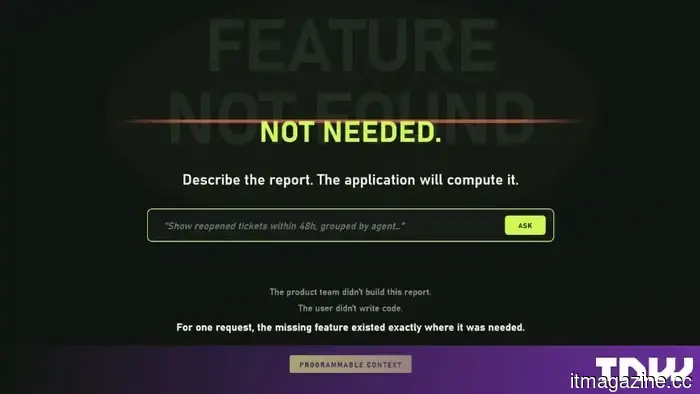 The next feature of your enterprise software won’t be delivered. It will be created.
The enterprise feature backlog is on the verge of failure. With an AI assistant able to create a small program tailored precisely to a user’s request, the time needed to fulfill requests shrinks from months to mere seconds.
The next feature of your enterprise software won’t be delivered. It will be created.
The enterprise feature backlog is on the verge of failure. With an AI assistant able to create a small program tailored precisely to a user’s request, the time needed to fulfill requests shrinks from months to mere seconds.
 TCL launches two affordable 11-inch Android tablets, with prices beginning at $190.
TCL enhances its TAB A1 series by introducing two new affordable 11-inch tablets, each featuring the Helio G100 chip, an 8,000mAh battery, and identical storage options.
TCL launches two affordable 11-inch Android tablets, with prices beginning at $190.
TCL enhances its TAB A1 series by introducing two new affordable 11-inch tablets, each featuring the Helio G100 chip, an 8,000mAh battery, and identical storage options.
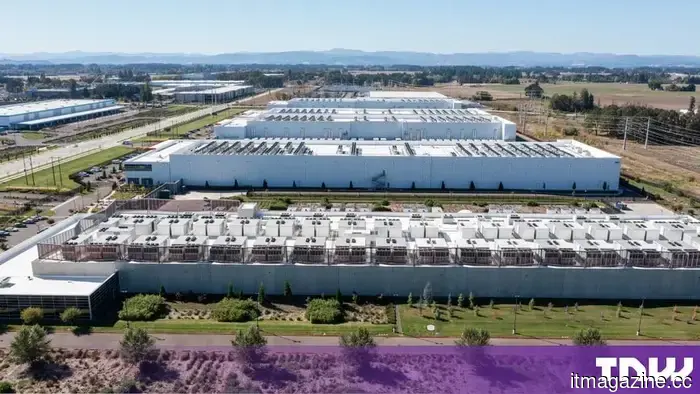 Texas has 474GW in data center requests but lacks clarity on how many of these are legitimate.
Interconnection queues throughout the US contain over 700GW of data center applications, which is ten times the current usage. States are beginning to impose fees for these requests.
Texas has 474GW in data center requests but lacks clarity on how many of these are legitimate.
Interconnection queues throughout the US contain over 700GW of data center applications, which is ten times the current usage. States are beginning to impose fees for these requests.
A Chinese court has put a freeze on Nexperia’s shares in four of its subsidiaries.
The Dongguan court has frozen approximately 2.14 billion yuan in shareholdings until 2029 in relation to Wingtech's lawsuit against the Dutch chip manufacturer and three of its executives.