

Brazil is establishing its definition of a deepfake just five weeks prior to the election.
Brazil is set to hold elections on October 4, and on Tuesday, its electoral court addressed a pressing issue that regulators worldwide are grappling with: what constitutes a deepfake? According to Reuters, the Tribunal Superior Eleitoral was anticipated to make decisions regarding wider limitations on AI-generated campaign materials.
The suggested regulations extend beyond merely prohibiting misleading deepfakes. They entail mandates for labeling AI-generated political content, banning systems that recommend candidates, and instituting a blackout period during which no synthetic political material can be published or promoted just before and after the election.
The importance of the definition arises from a previous case in Brazil that blurs the lines between disclosure and deception. In July, while under house arrest and restricted from public communication, Jair Bolsonaro appeared as an AI-generated avatar during his son’s campaign launch, explicitly stating it was a simulation. This transparency is central to the legal discussion. Current electoral laws in Brazil address misleading content, but an AI avatar that clearly identifies itself as artificial does not fit easily into that framework.
Lula’s coalition filed a complaint with the TSE, claiming that the video still infringed upon guidelines regarding synthetic content aimed at influencing voters. Flávio Bolsonaro’s campaign contended that a simulation which is clearly labeled should not be considered a deepfake, a viewpoint that gains traction if the definition relies on whether viewers are being misled.
The court has shown some differences of opinion on where the boundaries lie. TSE president Kássio Nunes Marques indicated that AI-generated campaign materials could be acceptable if they do not cause harm, while Supreme Court justice Alexandre de Moraes cautioned that the same technology might contravene Bolsonaro’s house arrest and lead to electoral misinformation.
Brazil already had regulations concerning AI in place prior to this election. The TSE established requirements for the upcoming 2024 municipal elections, including the need for disclosure of synthetic content, which clarifies why the Bolsonaro avatar was introduced as a simulation instead of an impersonation without transparency.
The ruling expected on Tuesday is likely to clarify what is permissible, although the timing poses challenges. With just five weeks before a national election, campaigns, platforms, and regulators will have limited time to adapt to whatever guidelines the court implements.
The issues Brazil faces extend beyond its borders. Rules based on disclosure, like those under the EU’s AI Act, are formulated on the premise that informing individuals when content has been created or altered by AI will lessen its potential to mislead them. The Bolsonaro case challenges this idea since content can be fully transparent about its synthetic origin yet still be politically compelling.
Moreover, the current regulations were not designed to address a unique situation: a politician who is legally barred from public communication can still connect with voters via an AI-generated representation, even though they have not spoken directly to the audience.
The intended restrictions on recommendation systems introduce additional complications as they involve not just the content but the manner in which platforms disseminate political material. Preventing algorithms from recommending specific candidates would necessitate regulators to scrutinize the standard functionalities of platforms, which is considerably harder to oversee than verifying whether an individual video has an AI disclosure.
Brazil has more experience in this area than many other nations. Its courts have been proactive in regulating online platforms and political discourse, and the TSE had already set AI-specific electoral rules before the current campaign commenced.
However, enforcing these rules may prove more challenging than defining them. A ban on synthetic political content around election day is only effective if regulators can quickly identify and halt its spread, a task made particularly difficult when material circulates in private messaging groups rather than on public social networks.
The blackout provision is also the least explored aspect of the proposal. Treating AI-generated political content as a distinct category requiring a quiet period around an election represents a significant shift from existing European standards, which typically emphasize transparency and the conditions under which synthetic content can mislead.
Consequently, European regulators have a practical interest in observing the developments in Brazil. The EU's own transparency mandates rely on similar assumptions about disclosure, while they have yet to encounter a comparable scenario involving a politician forbidden from communicating but who can still engage voters through an AI-generated representation.
The vastness of Brazil's electorate complicates enforcement further. With over 150 million eligible voters and political conversations deeply rooted in messaging apps—much of it occurring in private exchanges and groups that regulators cannot feasibly monitor like public posts—the challenge intensifies.
Thus, Brazil is striving to delineate these boundaries while the campaign is already ongoing, and the political parties affected have a direct stake in how these lines are drawn. Leaving the rules ambiguous would pose its own dilemmas, but finalizing them only weeks before the election provides minimal opportunity for regulators, campaigns, and platforms to familiarize themselves with the new guidelines.
The election is scheduled for October 4, which leaves the TSE roughly five weeks to see how the new regulations, approved on Tuesday, will function in practice.
Other articles
 A Chinese court has put a freeze on Nexperia’s shares in four of its subsidiaries.
The Dongguan court has frozen approximately 2.14 billion yuan in shareholdings until 2029 in relation to Wingtech's lawsuit against the Dutch chip manufacturer and three of its executives.
A Chinese court has put a freeze on Nexperia’s shares in four of its subsidiaries.
The Dongguan court has frozen approximately 2.14 billion yuan in shareholdings until 2029 in relation to Wingtech's lawsuit against the Dutch chip manufacturer and three of its executives.
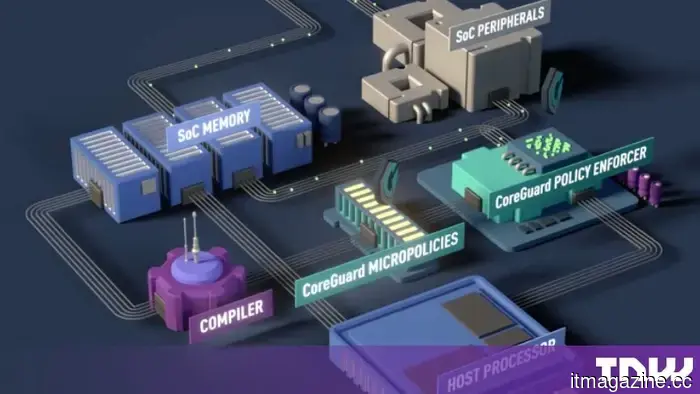 The upcoming front in cybersecurity will be within the processor.
Jothy Rosenberg, the founder of Dover Microsystems, contends that processors still lack the ability to detect attacks. CoreGuard, developed from DARPA's $100M CRASH initiative, monitors every instruction at the silicon level and applies security measures before any harm can happen.
The upcoming front in cybersecurity will be within the processor.
Jothy Rosenberg, the founder of Dover Microsystems, contends that processors still lack the ability to detect attacks. CoreGuard, developed from DARPA's $100M CRASH initiative, monitors every instruction at the silicon level and applies security measures before any harm can happen.
 Unions at Micron in Taiwan are preparing to hold a vote on whether to strike regarding bonuses.
Two unions, representing approximately 10,000 employees, are advocating for profit sharing, referencing Samsung and SK Hynix. A strike could impact an already constrained memory market.
Unions at Micron in Taiwan are preparing to hold a vote on whether to strike regarding bonuses.
Two unions, representing approximately 10,000 employees, are advocating for profit sharing, referencing Samsung and SK Hynix. A strike could impact an already constrained memory market.
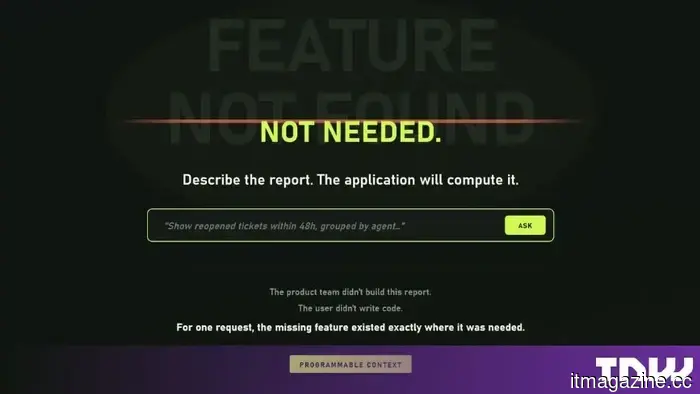
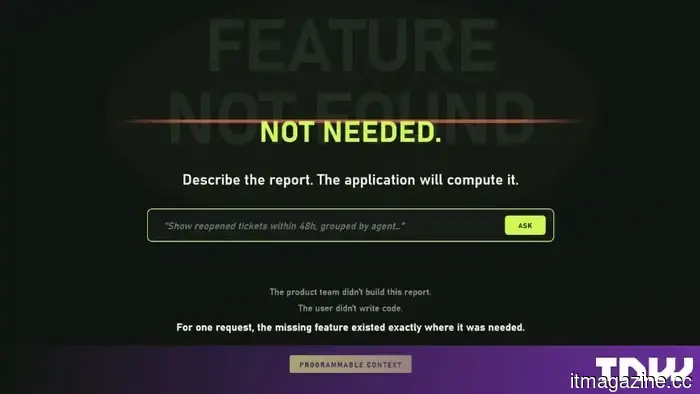 The next feature of your enterprise software won’t be delivered. It will be created.
The enterprise feature backlog is on the verge of failure. With an AI assistant able to create a small program tailored precisely to a user’s request, the time needed to fulfill requests shrinks from months to mere seconds.
Meta eliminates fraudulent app advertisements in India following two requests.
Applications masquerading as pornography have the potential to intercept one-time passwords and banking PINs. Meta has taken down the ads that Reuters identified but did not respond to their inquiries.
The next feature of your enterprise software won’t be delivered. It will be created.
The enterprise feature backlog is on the verge of failure. With an AI assistant able to create a small program tailored precisely to a user’s request, the time needed to fulfill requests shrinks from months to mere seconds.
Meta eliminates fraudulent app advertisements in India following two requests.
Applications masquerading as pornography have the potential to intercept one-time passwords and banking PINs. Meta has taken down the ads that Reuters identified but did not respond to their inquiries.
 Texas has 474GW in data center requests but lacks clarity on how many of these are legitimate.
Interconnection queues throughout the US contain over 700GW of data center applications, which is ten times the current usage. States are beginning to impose fees for these requests.
Texas has 474GW in data center requests but lacks clarity on how many of these are legitimate.
Interconnection queues throughout the US contain over 700GW of data center applications, which is ten times the current usage. States are beginning to impose fees for these requests.
Brazil is establishing its definition of a deepfake just five weeks prior to the election.
The electoral court took steps to widen AI regulations in anticipation of the election on October 4, following an incident where an AI avatar of Jair Bolsonaro campaigned in violation of a communication ban.