
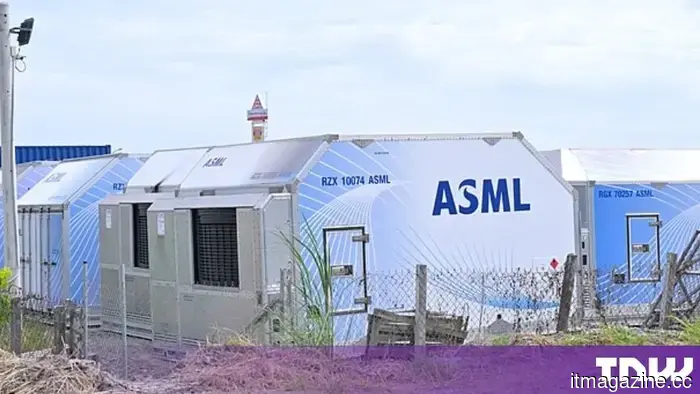
UBS states that China is improbable to catch up with ASML’s leading technology within this decade.
UBS analysts indicate that China's lithography program is comparable to ASML's status in 2004 and is unlikely to produce a competitive EUV alternative within the next decade. They also predict that China will achieve high-volume production of immersion DUV machines in two to five years, a sector the Dutch government regulates through export licenses.
According to UBS analysts, China will not be able to match ASML's most advanced technology this decade, with its lithography efforts remaining similar to ASML's position in 2004, as reported by Bloomberg. This assessment is based on patent comparisons. Analysts led by Francois-Xavier Bouvignies reviewed light source and laser subsystems, finding their maturity to be akin to ASML's fifteen years prior to its mass production of extreme ultraviolet equipment.
The second conclusion has greater implications for Europe. UBS anticipates that China will achieve high-volume production of immersion deep ultraviolet machines in the next two to five years, in a bloc that TNW has indicated has little hope for chip independence.
The disparity in pricing clarifies the demand. ASML's immersion DUV systems are priced near $90 million, while its EUV tools exceed $200 million.
Europe’s leverage has never solely rested on the EUV machine. It lies in a license from The Hague, which since September 7, 2024, has regulated the NXT:1970i and 1980i models. This signified the moment the Netherlands reassumed control over the licensing, as prior licensing for those models was overseen by Washington, while the NXT:2000i and subsequent immersion systems were already under Dutch authority.
ASML's CEO expressed concerns about the trajectory of the situation. Christophe Fouquet noted in 2024 that making a case for national security was increasingly challenging, with restrictions appearing to be economically driven.
The commercial stakes are significant. In the third quarter of 2025, China represented 42% of net sales, and ASML has cautioned about a potential steep decline this year.
So far, the impact hasn't been severe. ASML reported €8.8 billion in net sales and €2.8 billion in net income for the first quarter, with a full-year forecast ranging from €36 billion to €40 billion.
This dependency is mutual. Every advanced chip globally is produced by machines from a single company in Veldhoven, with no alternative supplier available.
Around that one company, Europe has remarkably little to offer. The bloc contributes to less than 10% of global semiconductor production, prompting the Commission to propose a second Chips Act in June after TNW highlighted the sector's grim outlook.
The timing is noteworthy. The tool that China cannot replicate is a decade away, while the instrument restricted by the Dutch license is just two to five years from fruition.
Both timelines are intertwined. Europe's most potent leverage over Chinese chip production appears poised to expire well before the technological gap it was designed to safeguard.
Published September 1, 2026 - 1:39 pm UTC
Other articles
 The next feature of your enterprise software won’t be delivered. It will be created.
The enterprise feature backlog is on the verge of failure. With an AI assistant able to create a small program tailored precisely to a user’s request, the time needed to fulfill requests shrinks from months to mere seconds.
The next feature of your enterprise software won’t be delivered. It will be created.
The enterprise feature backlog is on the verge of failure. With an AI assistant able to create a small program tailored precisely to a user’s request, the time needed to fulfill requests shrinks from months to mere seconds.
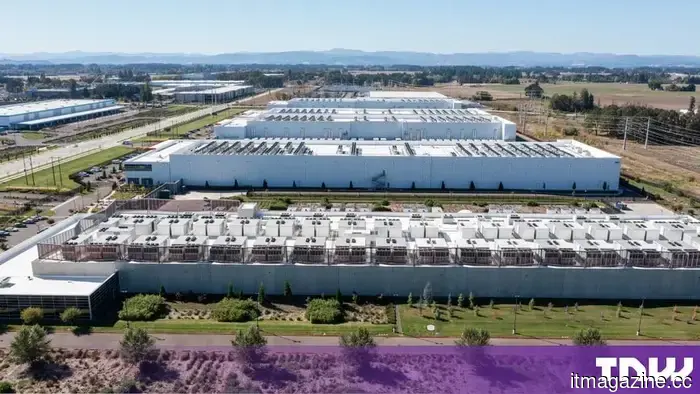 Texas has 474GW in data center requests but lacks clarity on how many of these are legitimate.
Interconnection queues throughout the US contain over 700GW of data center applications, which is ten times the current usage. States are beginning to impose fees for these requests.
Texas has 474GW in data center requests but lacks clarity on how many of these are legitimate.
Interconnection queues throughout the US contain over 700GW of data center applications, which is ten times the current usage. States are beginning to impose fees for these requests.
 A Chinese court has put a freeze on Nexperia’s shares in four of its subsidiaries.
The Dongguan court has frozen approximately 2.14 billion yuan in shareholdings until 2029 in relation to Wingtech's lawsuit against the Dutch chip manufacturer and three of its executives.
A Chinese court has put a freeze on Nexperia’s shares in four of its subsidiaries.
The Dongguan court has frozen approximately 2.14 billion yuan in shareholdings until 2029 in relation to Wingtech's lawsuit against the Dutch chip manufacturer and three of its executives.
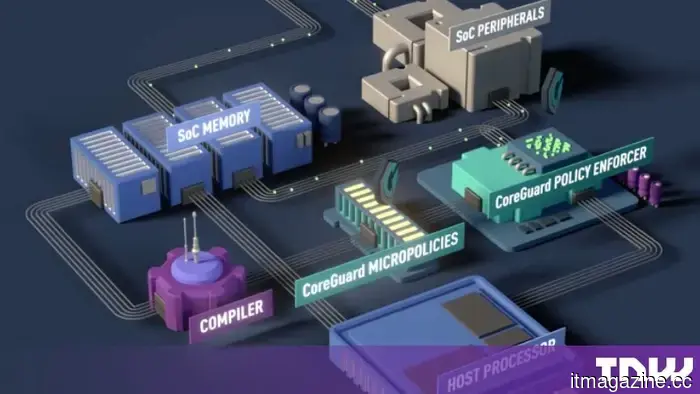 The upcoming front in cybersecurity will be within the processor.
Jothy Rosenberg, the founder of Dover Microsystems, contends that processors still lack the ability to detect attacks. CoreGuard, developed from DARPA's $100M CRASH initiative, monitors every instruction at the silicon level and applies security measures before any harm can happen.
Meta eliminates fraudulent app advertisements in India following two requests.
Applications masquerading as pornography have the potential to intercept one-time passwords and banking PINs. Meta has taken down the ads that Reuters identified but did not respond to their inquiries.
The upcoming front in cybersecurity will be within the processor.
Jothy Rosenberg, the founder of Dover Microsystems, contends that processors still lack the ability to detect attacks. CoreGuard, developed from DARPA's $100M CRASH initiative, monitors every instruction at the silicon level and applies security measures before any harm can happen.
Meta eliminates fraudulent app advertisements in India following two requests.
Applications masquerading as pornography have the potential to intercept one-time passwords and banking PINs. Meta has taken down the ads that Reuters identified but did not respond to their inquiries.
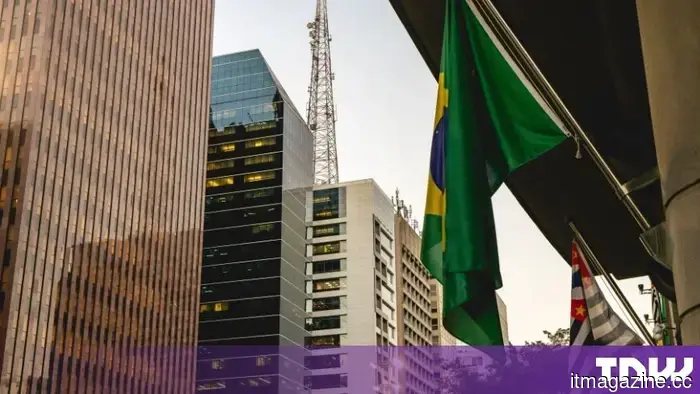 Brazil is establishing its definition of a deepfake just five weeks prior to the election.
The electoral court took steps to widen AI regulations in anticipation of the election on October 4, following an incident where an AI avatar of Jair Bolsonaro campaigned in violation of a communication ban.
Brazil is establishing its definition of a deepfake just five weeks prior to the election.
The electoral court took steps to widen AI regulations in anticipation of the election on October 4, following an incident where an AI avatar of Jair Bolsonaro campaigned in violation of a communication ban.
UBS states that China is improbable to catch up with ASML’s leading technology within this decade.
UBS states that China will not be able to replicate ASML's EUV technology in this decade, but they anticipate high-volume immersion DUV production within the next two to five years, which is what The Hague licenses.