
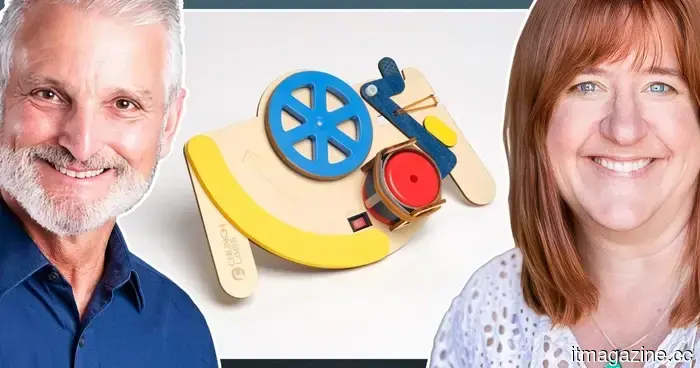
The Importance of Developing an Engineer's Mindset in Children During the AI Era
Perhaps the most valuable gift you can provide your children is the experience of failure. This notion might seem radical and even a bit uncomfortable, especially since parenting often revolves around shielding children from frustration and disappointment. However, by intervening every time they face difficulty, we might be depriving them of opportunities to cultivate the essential skills needed to thrive in an increasingly unpredictable world.
This issue has gained urgency as artificial intelligence transforms our perception of work. In a previous discussion on Trending Forward, I examined the implications of AI taking over tasks and skills previously requiring years of training. The challenge isn't merely anticipating which jobs may vanish, but understanding how to prepare individuals for a job market where today's essential skills might not hold the same value in a decade or two.
Today’s children will enter a workforce that remains uncertain in terms of its future landscape. Some professions they eventually pursue may not even be in existence yet. Two decades ago, aspiring to work for a YouTube creator wouldn’t have seemed like a viable career goal; today, it's a completely legitimate option. Instead of attempting to predict which specific careers will emerge, it is more sensible to concentrate on the human abilities that are transferable: curiosity, judgment, problem-solving, and perseverance.
These concepts were central to my recent conversation on Trending Forward with Rachele Harmuth, Chief Product Officer at CrunchLabs, the educational and entertainment firm founded by former NASA engineer and YouTube star Mark Rober. Before our discussion, I was already familiar with their approach; years back, I had gifted my granddaughter a CrunchLabs Build Box subscription, and we spent hours assembling projects together. While those projects were inventive and genuinely educational, what truly impressed me was that they didn’t always fit together perfectly the first time.
Upon reflection, I believe those unsuccessful attempts were just as valuable as the successful outcomes.
AI transforms the learning landscape for kids
Traditionally, education has heavily focused on acquiring knowledge and mastering established skills. Children learn dates, formulas, languages, coding, and other subjects with the expectation that these skills will prepare them for future employment. While knowledge remains important, AI is making it progressively easier for machines to perform many tasks that used to require a person's ability to recall information accurately or follow a correct procedure.
A more challenging question arises when there is no clear process to adhere to.
Harmuth and I discussed the difficulty in forecasting which careers will prevail in 15 or 20 years. The solution is not simply to pinpoint today's most promising technical skill and teach it to every child. By the time today’s eight-year-olds enter the job market, the surrounding technology will undoubtedly have evolved. Therefore, a more prudent investment might be in teaching them how to tackle unfamiliar problems, manage uncertainty, and persist when an initial solution fails.
CrunchLabs encapsulates this philosophy with the phrase: "Think like an engineer." This doesn't imply that every child who engages with its projects should aspire to design bridges, create robots, or work for NASA. In this context, engineering represents a problem-solving mindset: define your objective, brainstorm potential solutions, test one, analyze what went wrong, and adapt accordingly.
Curiosity, creative confidence, and a willingness to embrace failure lie at the heart of this methodology. The first two are relatively straightforward for adults to grasp, while the third poses more of a challenge.
Making failure less intimidating
Parents and grandparents often have the instinct to fix things. When observing a child struggling with a puzzle, an assembly task, or a new skill, the tendency can be almost reflexive: move that piece, turn it around, let me show you how. While sometimes intervention is necessary, eliminating every challenge also removes the chance for them to learn what it's like to work through frustration independently.
During our conversation, Harmuth drew an intriguing comparison. Children grasp this process while playing video games. It's common knowledge that no one expects to pick up a controller and conquer a challenging game on the first try. You fail, restart, adjust your strategy, and try again. A failure isn't a sign of incompetence; rather, it is part of the learning process.
In contrast, the physical world often elicits a very different reaction. If a drawing doesn't meet expectations, a child may conclude they lack artistic ability. If an instrument produces a squeak, they decide they're not musical. A failed construction project leads to the belief, "I can't do this." The real issue lies not in the failure itself, but in the significance we attach to it.
Mark Rober's initiatives provide a valuable counterexample. His videos highlight incredible inventions, yet the completed product doesn't capture the entire narrative. Behind the polished outcomes lie failed attempts, prototypes, and ideas that didn’t pan out. His willingness to share these failures is integral to making his engineering approach accessible to children.
CrunchLabs extends this philosophy across its offerings. Build Boxes introduce younger audiences to hands-on physics and engineering activities, while the Hack Pack allows older kids to explore robotics. The CrunchLabs Mysteries book series
Other articles
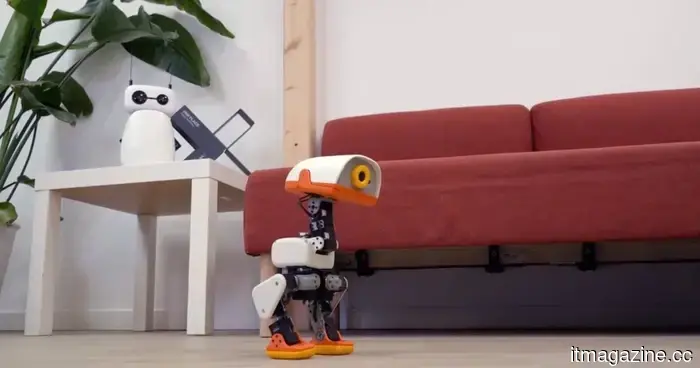 Pollen Robotics’ Microduck is designed to simplify and reduce the costs of training physical AI systems, making the process less delicate.
Pollen Robotics' Microduck is a small biped priced at $399, created to facilitate more accessible physical AI training. It allows developers to test new robotic behaviors on a durable platform that can withstand an occasional fall.
Pollen Robotics’ Microduck is designed to simplify and reduce the costs of training physical AI systems, making the process less delicate.
Pollen Robotics' Microduck is a small biped priced at $399, created to facilitate more accessible physical AI training. It allows developers to test new robotic behaviors on a durable platform that can withstand an occasional fall.
 Switching to Metro by T-Mobile might land you a new phone along with significant savings.
Your existing phone could be due for an upgrade or may still be fully functional. A more suitable wireless plan should align with your actual requirements. Metro by T-Mobile presents various options to facilitate switching carriers without obligating you to follow the same route.
Switching to Metro by T-Mobile might land you a new phone along with significant savings.
Your existing phone could be due for an upgrade or may still be fully functional. A more suitable wireless plan should align with your actual requirements. Metro by T-Mobile presents various options to facilitate switching carriers without obligating you to follow the same route.
 Anthropic is testing a new standard for Claude to interact with factory and laboratory equipment.
Anthropic's Model Hardware Standard allows suppliers to define how an AI can control a machine. From January 2027, Europe will regulate safety functions related to AI in machinery.
Anthropic is testing a new standard for Claude to interact with factory and laboratory equipment.
Anthropic's Model Hardware Standard allows suppliers to define how an AI can control a machine. From January 2027, Europe will regulate safety functions related to AI in machinery.
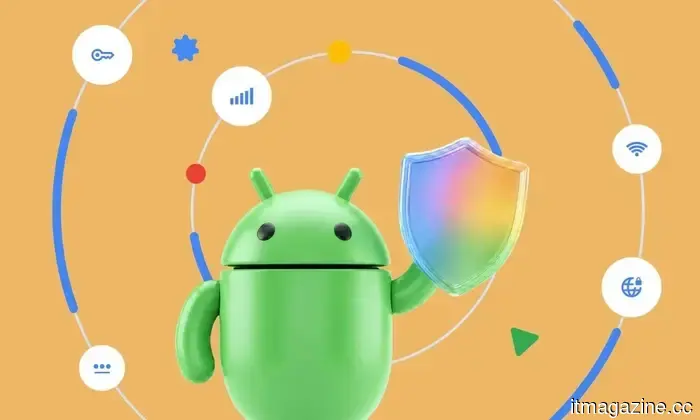 Android 17 will ultimately prevent ISPs from tracking the websites and apps you access.
Android 17 introduces Encrypted Client Hello, becoming the first major mobile operating system to widely prevent ISP tracking of your online activities, while also providing safeguards for home Wi-Fi privacy, countering fake certificates, and defending against 2G scam attacks.
Android 17 will ultimately prevent ISPs from tracking the websites and apps you access.
Android 17 introduces Encrypted Client Hello, becoming the first major mobile operating system to widely prevent ISP tracking of your online activities, while also providing safeguards for home Wi-Fi privacy, countering fake certificates, and defending against 2G scam attacks.
 Anthropic is evaluating a new standard for Claude to interface with factory and laboratory equipment.
Anthropic's Model Hardware Standard allows vendors to define how an AI can control a machine. Starting in January 2027, Europe will oversee the safety features of AI in machinery.
Anthropic is evaluating a new standard for Claude to interface with factory and laboratory equipment.
Anthropic's Model Hardware Standard allows vendors to define how an AI can control a machine. Starting in January 2027, Europe will oversee the safety features of AI in machinery.
 The Galaxy S27 Pro may adopt the Ultra's new design, capturing the essence of the iPhone.
Recent CAD renders allegedly reveal that the Galaxy S27 Pro will feature a significant camera redesign akin to that of the forthcoming Galaxy S27 Ultra.
The Galaxy S27 Pro may adopt the Ultra's new design, capturing the essence of the iPhone.
Recent CAD renders allegedly reveal that the Galaxy S27 Pro will feature a significant camera redesign akin to that of the forthcoming Galaxy S27 Ultra.
The Importance of Developing an Engineer's Mindset in Children During the AI Era
As AI transforms the skills and careers of the future, children may require more than just technical skills. Rachele Harmuth from CrunchLabs discusses how thinking like an engineer can foster curiosity, confidence, and resilience in children.