
Anthropic is evaluating a new standard for Claude to interface with factory and laboratory equipment.
Anthropic has introduced the Model Hardware Standard in a research preview, which is a specification detailing how hardware functions and how AI can safely manage it, for instance, by controlling the speed and angles of a robotic arm. The European Machinery Regulation will begin to address AI-related safety functions starting January 20, 2027.
The standard developed by Anthropic guides an AI on the operation of machines. The Model Hardware Standard, now in research preview, encapsulates the functions of hardware and its operational guidelines, so that a model does not have to depend on a physical manual or on two knowledgeable individuals.
An example provided by the company involves a robotic arm. A vendor can outline in an MHS file how an AI should maneuver a heavy arm safely, setting restrictions on the allowable speeds and angles.
The underlying concept focuses on accessible knowledge that cannot be utilized. “In many instances, scientific progress is stalled due to the inability to operate the equipment,” remarked Jonah Cool from Anthropic’s life sciences division.
The initiative is rooted in Anthropic's prior accomplishments. “What MCP accomplished for software, MHS will replicate for the hardware sector,” stated Alek Kemeny, referencing the Model Context Protocol that links assistants to applications like Gmail, Calendar, and Slack.
The demonstration of this technology occurred in a laboratory setting. According to Anthropic, a scientist from Genentech sent a PDF of an experimental design to Claude, and the assistant executed the experiment autonomously on hardware equipped with an MHS specification.
The test participants include a broad range of companies. Amazon Web Services, Danaher, Hugging Face, and Raspberry Pi have been engaging with the standard, and a waitlist is now available for others interested.
Among these, two companies have European origins. Raspberry Pi is based in the UK and is publicly traded in London, while Hugging Face was founded by a French team.
The trend in machinery is also leaning toward Europe. NEURA Robotics secured up to $1.4 billion in Germany this year, in a sector of humanoid robotics that TNW believes is more favorable than it appears.
Europe is poised to regulate this specific area. Regulation 2023/1230 will completely replace the Machinery Directive on January 20, 2027, and will address AI-driven safety functions and machinery with self-evolving behaviors for the first time.
This regulatory change will redefine what an MHS file may entail. A specification that limits a robotic arm's speeds and angles contributes to safety and, for high-risk categories, self-declaration of conformity will no longer suffice.
It’s essential to consider the safety record. TNW reported instances where Claude Cowork could breach its virtual machine and access credentials on a Mac, an issue that pertains to software.
Anthropic plans to open-source the framework following the conclusion of the preview. In Europe, those who create that file might find themselves regulating a safety component.
Other articles
 Anthropic is testing a new standard for Claude to interact with factory and laboratory equipment.
Anthropic's Model Hardware Standard allows suppliers to define how an AI can control a machine. From January 2027, Europe will regulate safety functions related to AI in machinery.
Anthropic is testing a new standard for Claude to interact with factory and laboratory equipment.
Anthropic's Model Hardware Standard allows suppliers to define how an AI can control a machine. From January 2027, Europe will regulate safety functions related to AI in machinery.
 The Galaxy S27 Pro may adopt the Ultra's new design, capturing the essence of the iPhone.
Recent CAD renders allegedly reveal that the Galaxy S27 Pro will feature a significant camera redesign akin to that of the forthcoming Galaxy S27 Ultra.
The Galaxy S27 Pro may adopt the Ultra's new design, capturing the essence of the iPhone.
Recent CAD renders allegedly reveal that the Galaxy S27 Pro will feature a significant camera redesign akin to that of the forthcoming Galaxy S27 Ultra.
 Switching to Metro by T-Mobile might land you a new phone along with significant savings.
Your existing phone could be due for an upgrade or may still be fully functional. A more suitable wireless plan should align with your actual requirements. Metro by T-Mobile presents various options to facilitate switching carriers without obligating you to follow the same route.
Switching to Metro by T-Mobile might land you a new phone along with significant savings.
Your existing phone could be due for an upgrade or may still be fully functional. A more suitable wireless plan should align with your actual requirements. Metro by T-Mobile presents various options to facilitate switching carriers without obligating you to follow the same route.
 SK Hynix has started construction on a $4 billion memory packaging facility in Indiana.
SK Hynix has begun construction on a $4 billion advanced packaging facility in Indiana. Europe granted state aid for a similar plant but then forfeited it.
SK Hynix has started construction on a $4 billion memory packaging facility in Indiana.
SK Hynix has begun construction on a $4 billion advanced packaging facility in Indiana. Europe granted state aid for a similar plant but then forfeited it.
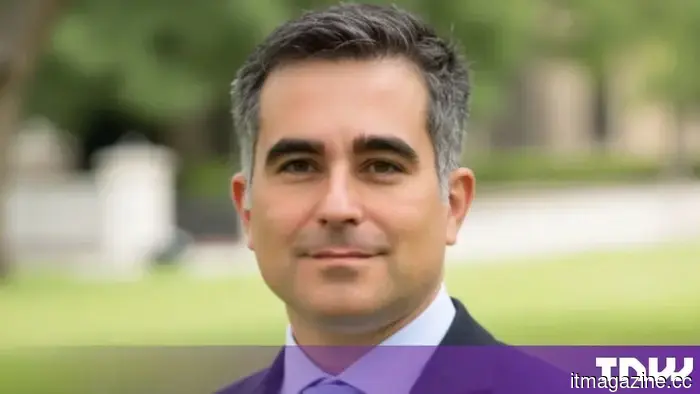 As artificial intelligence transforms the business landscape, the role of the fractional CTO is becoming increasingly relevant.
Only 21% of businesses have developed mature AI governance, while 74% anticipate utilizing agents by 2027 (Deloitte). Daniel Kirichanski, founder of Prime Path Global, contends that fractional CTO leadership addresses the divide between AI aspirations and organizational preparedness.
As artificial intelligence transforms the business landscape, the role of the fractional CTO is becoming increasingly relevant.
Only 21% of businesses have developed mature AI governance, while 74% anticipate utilizing agents by 2027 (Deloitte). Daniel Kirichanski, founder of Prime Path Global, contends that fractional CTO leadership addresses the divide between AI aspirations and organizational preparedness.
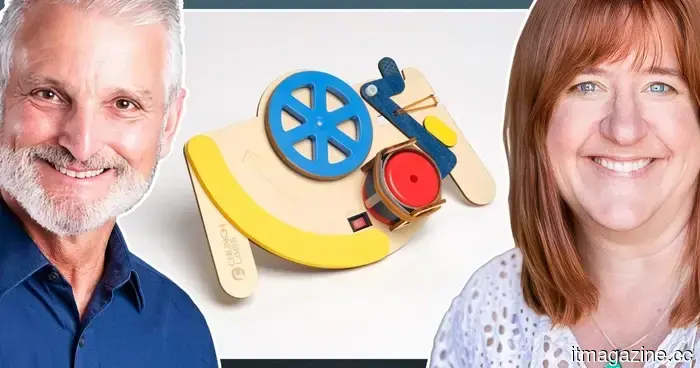 The Importance of Developing an Engineer's Mindset in Children During the AI Era
As AI transforms the skills and careers of the future, children may require more than just technical skills. Rachele Harmuth from CrunchLabs discusses how thinking like an engineer can foster curiosity, confidence, and resilience in children.
The Importance of Developing an Engineer's Mindset in Children During the AI Era
As AI transforms the skills and careers of the future, children may require more than just technical skills. Rachele Harmuth from CrunchLabs discusses how thinking like an engineer can foster curiosity, confidence, and resilience in children.
Anthropic is evaluating a new standard for Claude to interface with factory and laboratory equipment.
Anthropic's Model Hardware Standard allows vendors to define how an AI can control a machine. Starting in January 2027, Europe will oversee the safety features of AI in machinery.