
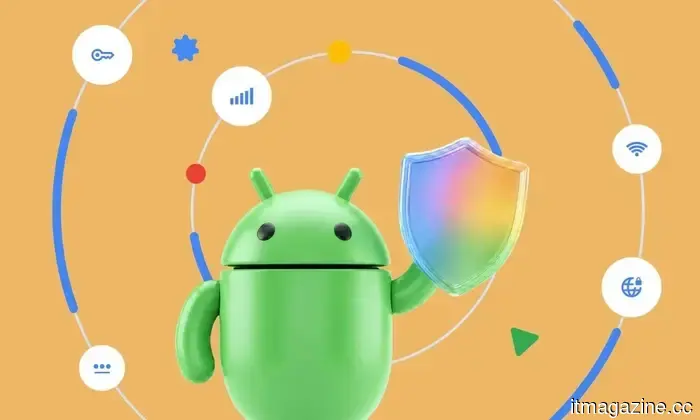
Android 17 will ultimately prevent ISPs from tracking the websites and apps you access.
Android 17 conceals your browsing from ISPs and prevents Wi-Fi scanning, fraudulent certificates, and 2G scams.
Even though HTTPS keeps your website activities private, your internet service provider and anyone monitoring the connection can still see the exact sites and applications you're accessing. This privacy issue has existed for years, and Google is now addressing it with four significant network security enhancements incorporated into Android 17.
How Android 17’s Encrypted Client Hello (ECH) prevents ISP tracking
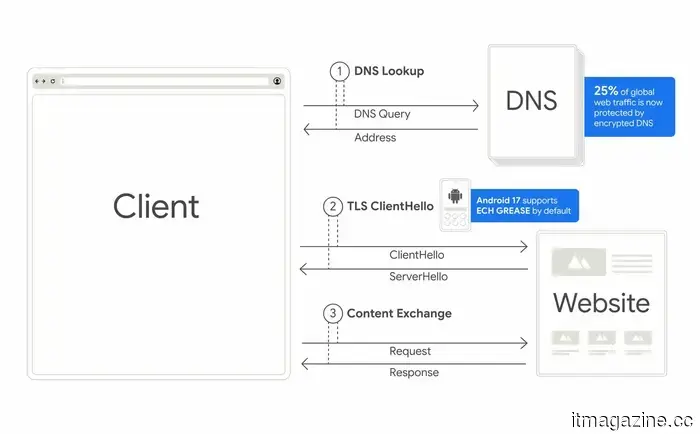
Your phone has been openly communicating its destination all along. Each time you connect to a site, there’s a moment in the handshake known as TLS ClientHello, during which your device broadcasts the domain it intends to visit in plain text. Anyone who is monitoring the network, including your ISP, can read this information.
Encrypted Client Hello encrypts this data so that it remains unreadable to anyone except for the site you're visiting. When combined with Private DNS, this prevents your ISP from tracking your browsing habits or linking your activity to create a profile. Android is the first major mobile operating system to implement this widely, in collaboration with Jigsaw, with developer support available through OkHttp 5.5.0.
Three additional security features included in Android 17
In addition to ECH, Android 17 introduces three more enhancements that address other critical privacy concerns:
Local Network Protection prevents apps from silently scanning your home Wi-Fi to identify devices you own, such as smart TVs, security cameras, or other connected gadgets, without your consent.
Certificate Transparency, which is now enforced by default, mandates that every website certificate be logged publicly. This makes it more difficult for a compromised or rogue certificate authority to issue a counterfeit certificate and intercept your traffic unnoticed.
Zero-click 2G protection counters scams. Criminals utilize devices referred to as SMS blasters to force nearby phones onto outdated 2G networks, then send phishing texts that evade modern spam filters. Android 17 enables participating carriers to disable 2G by default, automatically closing off this entire attack vector without requiring any action from you.
Together, these four modifications will address some of the most significant privacy issues that have integrated into the way your phone connects to the internet.
Manisha Priyadarshini is a tech and entertainment writer with over nine years of editorial experience.
The Galaxy S27 Pro may follow the Ultra’s new design, with iPhone influences included.
Recent CAD renders reveal a substantial rear redesign for Samsung’s anticipated 6.6-inch Pro flagship.
Rumors about Samsung’s Galaxy S27 Pro have circulated in various reports over the past few months, and we may now have our clearest view of the device itself. Android Headlines has released CAD renders from OnLeaks that supposedly portray the Galaxy S27 Pro, which reflects a similar design direction seen recently on the Galaxy S27 Ultra. The individual camera rings have been replaced by a significantly larger raised camera section that extends across the upper portion of the back. I must say, the new appearance definitely gives off strong iPhone vibes.
Zoom kits for smartphones are impressive. After using the Vivo X300 Ultra, I’ve concluded they aren't for everyone.
The phone is so capable on its own that the kit designed to enhance it mostly demonstrates you didn't really need it.
The competition in smartphone cameras has evolved significantly over the last few years. The discussion, which once centered on camera variety, has now shifted towards megapixel counts, sensor sizes, and overall versatility. Additionally, manufacturers are now offering first-party zoom kits featuring high-quality optics and functionalities that enhance their ecosystem.
I've spent the last few weeks using the Vivo X300 Ultra, which boasts one of the most ambitious camera systems available in a Snapdragon 8 Elite Gen 5 smartphone. For additional zoom capabilities, Vivo also markets ZEISS Telephoto Extender kits that transform the already substantial X300 Ultra into something resembling a professional camera. It's genuinely remarkable, but for the average person, it seems to be a solution looking for a problem.
The Galaxy S26 FE is officially launched, and Samsung isn't making significant changes.
Samsung’s latest Fan Edition retains much of the hardware from the Galaxy S25 FE, while introducing One UI 9 and newer Galaxy AI features.
Samsung has officially unveiled the Galaxy S26 FE, and as anticipated, most of the hardware closely resembles that of the Galaxy S25 FE. The phone is powered by the Exynos 2500, maintains the same 4,900mAh battery capacity, and continues with a familiar triple-camera setup.
The more notable updates involve the software aspects. Samsung is positioning the Galaxy S26 FE as the first device in the Galaxy S26 series to ship with One UI 9, while also incorporating several new camera functionalities and Galaxy AI features.




Other articles
 Claude now has its own browser and does not require the Chrome extension anymore.
Anthropic has integrated a browser into Claude Cowork, which is enabled by default. The DMA choice screen is applicable only to gatekeepers, and Anthropic does not fall into that category.
Claude now has its own browser and does not require the Chrome extension anymore.
Anthropic has integrated a browser into Claude Cowork, which is enabled by default. The DMA choice screen is applicable only to gatekeepers, and Anthropic does not fall into that category.
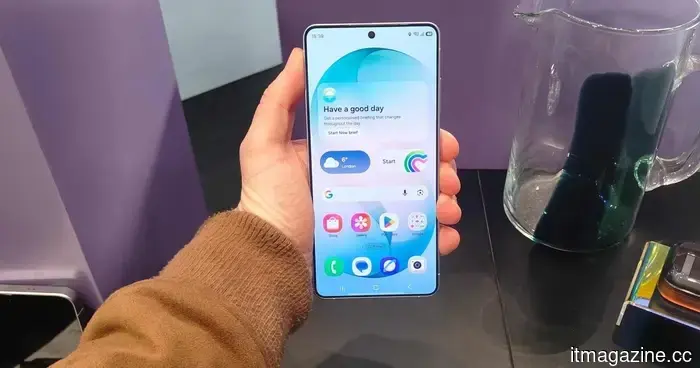 The Galaxy S27 Pro may adopt the Ultra's new design, capturing the essence of the iPhone.
Recent CAD renders allegedly reveal that the Galaxy S27 Pro will feature a significant camera redesign akin to that of the forthcoming Galaxy S27 Ultra.
The Galaxy S27 Pro may adopt the Ultra's new design, capturing the essence of the iPhone.
Recent CAD renders allegedly reveal that the Galaxy S27 Pro will feature a significant camera redesign akin to that of the forthcoming Galaxy S27 Ultra.
 Anthropic is testing a new standard for Claude to interact with factory and laboratory equipment.
Anthropic's Model Hardware Standard allows suppliers to define how an AI can control a machine. From January 2027, Europe will regulate safety functions related to AI in machinery.
Anthropic is testing a new standard for Claude to interact with factory and laboratory equipment.
Anthropic's Model Hardware Standard allows suppliers to define how an AI can control a machine. From January 2027, Europe will regulate safety functions related to AI in machinery.
 As artificial intelligence transforms the business landscape, the role of the fractional CTO is becoming increasingly relevant.
Only 21% of organizations have established mature AI governance, while 74% anticipate utilizing agents by 2027 (Deloitte). Daniel Kirichanski, founder of Prime Path Global, suggests that fractional CTO leadership bridges the divide between AI aspirations and organizational preparedness.
As artificial intelligence transforms the business landscape, the role of the fractional CTO is becoming increasingly relevant.
Only 21% of organizations have established mature AI governance, while 74% anticipate utilizing agents by 2027 (Deloitte). Daniel Kirichanski, founder of Prime Path Global, suggests that fractional CTO leadership bridges the divide between AI aspirations and organizational preparedness.
 The US is considering implementing tariffs that could increase the costs of laptops, phones, and gaming consoles.
The US is said to be considering wider semiconductor tariffs that could apply to finished electronics, which might lead to increased prices for laptops, gaming consoles, and possibly smartphones, depending on the specifics of the final policy.
The US is considering implementing tariffs that could increase the costs of laptops, phones, and gaming consoles.
The US is said to be considering wider semiconductor tariffs that could apply to finished electronics, which might lead to increased prices for laptops, gaming consoles, and possibly smartphones, depending on the specifics of the final policy.
 OpenAI, Anthropic, Google, and Microsoft advocate for cyber defense to be prioritized at the leadership level.
OpenAI, Anthropic, Google, and Microsoft are advocating for cyber defense to be prioritized at the leadership level. The EU has already implemented the reporting they are seeking.
OpenAI, Anthropic, Google, and Microsoft advocate for cyber defense to be prioritized at the leadership level.
OpenAI, Anthropic, Google, and Microsoft are advocating for cyber defense to be prioritized at the leadership level. The EU has already implemented the reporting they are seeking.
Android 17 will ultimately prevent ISPs from tracking the websites and apps you access.
Android 17 introduces Encrypted Client Hello, becoming the first major mobile operating system to widely prevent ISP tracking of your online activities, while also providing safeguards for home Wi-Fi privacy, countering fake certificates, and defending against 2G scam attacks.