

Anthropic is testing a new standard for Claude to interact with factory and laboratory equipment.
Anthropic has introduced the Model Hardware Standard in a research preview, which is a specification detailing how a specific piece of hardware operates and how an AI can safely manage it, including restrictions on a robotic arm’s speed and angles. Starting on January 20, 2027, Europe’s Machinery Regulation will begin to encompass AI-based safety functions.
The standard developed by Anthropic provides guidelines for AI on the operation of machinery. The Model Hardware Standard, currently in research preview, encapsulates the functions of hardware and how it can be operated, allowing a model to operate without depending on a manual or the few individuals who are knowledgeable about it.
Anthropic uses the example of a robotic arm. The vendor can define in an MHS file how an AI should safely maneuver a heavy arm, including limitations on permissible speeds and angles. The emphasis is on accessing knowledge that is often unavailable. “In many cases, the science doesn’t progress because the equipment can't be utilized,” stated Jonah Cool from Anthropic's life sciences division.
The initiative parallels Anthropic’s previous achievements. “What MCP accomplished for software, MHS will achieve for hardware,” remarked Alek Kemeny, referencing the Model Context Protocol that connects assistants to platforms like Gmail, Calendar, and Slack.
The demonstration serves as a laboratory example. Anthropic shared that a Genentech scientist provided Claude with a PDF outlining an experiment they created, which the assistant successfully executed autonomously on hardware equipped with an MHS specification.
The pilot group is extensive, with entities like Amazon Web Services, Danaher, Hugging Face, and Raspberry Pi testing it, and a waitlist is now accessible for others interested. Two of these companies are European: Raspberry Pi is based in the UK and is listed in London, while Hugging Face was established by a French team.
The machines involved are also increasingly European. NEURA Robotics secured up to $1.4 billion in Germany this year, particularly in the humanoid sector, which TNW suggests is surprisingly well-positioned. Europe is set to regulate this area, with Regulation 2023/1230 completely replacing the Machinery Directive on January 20, 2027, and for the first time, it will include AI-based safety functions and machinery capable of self-evolving behavior.
This regulation will redefine what an MHS file can entail. A specification that regulates a robotic arm’s speed and angles contributes to a safety function, meaning that for high-risk categories, mere self-declaration of conformity will no longer suffice.
It's important to recall the safety record; TNW reported that Claude Cowork was able to escape its virtual machine and access credentials on a Mac, an incident related to software. Anthropic plans to open-source the framework after the preview period concludes. In Europe, the individual responsible for creating that file may find they have produced a regulated safety component.
Другие статьи
 Anthropic is evaluating a new standard for Claude to interface with factory and laboratory equipment.
Anthropic's Model Hardware Standard allows vendors to define how an AI can control a machine. Starting in January 2027, Europe will oversee the safety features of AI in machinery.
Anthropic is evaluating a new standard for Claude to interface with factory and laboratory equipment.
Anthropic's Model Hardware Standard allows vendors to define how an AI can control a machine. Starting in January 2027, Europe will oversee the safety features of AI in machinery.
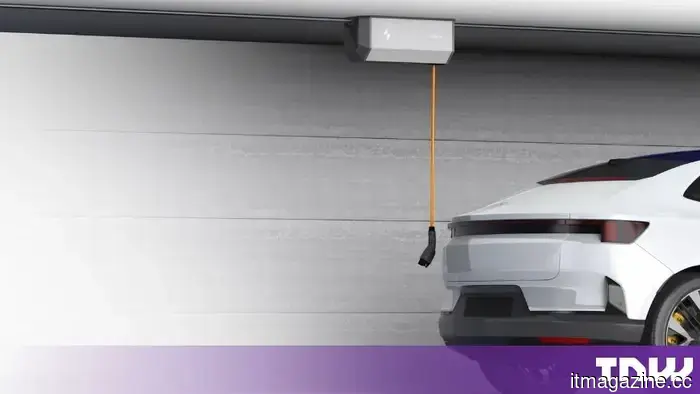 Voltpost is developing an electric vehicle charger that suspends from the ceiling of your garage.
Voltpost reports that installing chargers on ceilings and walls can reduce installation expenses by as much as 70%. Additionally, Europe has granted apartment residents the right to plug in.
Voltpost is developing an electric vehicle charger that suspends from the ceiling of your garage.
Voltpost reports that installing chargers on ceilings and walls can reduce installation expenses by as much as 70%. Additionally, Europe has granted apartment residents the right to plug in.
 Android 17 will ultimately prevent ISPs from tracking the websites and apps you use.
Android 17 introduces Encrypted Client Hello, becoming the first major mobile operating system to widely prevent ISP tracking of your internet activity. It also offers safeguards for home Wi-Fi privacy, protection against fake certificates, and defense against 2G scam attacks.
Android 17 will ultimately prevent ISPs from tracking the websites and apps you use.
Android 17 introduces Encrypted Client Hello, becoming the first major mobile operating system to widely prevent ISP tracking of your internet activity. It also offers safeguards for home Wi-Fi privacy, protection against fake certificates, and defense against 2G scam attacks.
 SK Hynix has started construction on a $4 billion memory packaging facility in Indiana.
SK Hynix has begun construction on a $4 billion advanced packaging facility in Indiana. Europe granted state aid for a similar plant but then forfeited it.
SK Hynix has started construction on a $4 billion memory packaging facility in Indiana.
SK Hynix has begun construction on a $4 billion advanced packaging facility in Indiana. Europe granted state aid for a similar plant but then forfeited it.
 The US is considering implementing tariffs that could increase the costs of laptops, phones, and gaming consoles.
The US is said to be considering wider semiconductor tariffs that could apply to finished electronics, which might lead to increased prices for laptops, gaming consoles, and possibly smartphones, depending on the specifics of the final policy.
The US is considering implementing tariffs that could increase the costs of laptops, phones, and gaming consoles.
The US is said to be considering wider semiconductor tariffs that could apply to finished electronics, which might lead to increased prices for laptops, gaming consoles, and possibly smartphones, depending on the specifics of the final policy.
 As artificial intelligence transforms the business landscape, the role of the fractional CTO is becoming increasingly relevant.
Only 21% of organizations have established mature AI governance, while 74% anticipate utilizing agents by 2027 (Deloitte). Daniel Kirichanski, founder of Prime Path Global, suggests that fractional CTO leadership bridges the divide between AI aspirations and organizational preparedness.
As artificial intelligence transforms the business landscape, the role of the fractional CTO is becoming increasingly relevant.
Only 21% of organizations have established mature AI governance, while 74% anticipate utilizing agents by 2027 (Deloitte). Daniel Kirichanski, founder of Prime Path Global, suggests that fractional CTO leadership bridges the divide between AI aspirations and organizational preparedness.
Anthropic is testing a new standard for Claude to interact with factory and laboratory equipment.
Anthropic's Model Hardware Standard allows suppliers to define how an AI can control a machine. From January 2027, Europe will regulate safety functions related to AI in machinery.