
Alibaba's stock dropped by 8.4%. Following that, Joe Tsai and Eddie Wu went on a shopping spree.
Alibaba’s top two executives purchased approximately $15.3 million of shares in their own company on Monday, shortly after the stock had dropped more than it had in over a year. Chairman Joe Tsai and CEO Eddie Wu together invested HK$120 million, as indicated by filings with the Hong Kong exchange.
Details of their purchases reveal that Tsai acquired around HK$80 million worth of 720,000 shares, while Wu bought 350,000 shares for approximately HK$40 million. Xinmei Shen and Coco Feng reported these purchases for the South China Morning Post, referring to them as a sign of confidence. Both executives filed their disclosures with the exchange on Monday afternoon, a few hours after the market opened lower.
Collectively, Tsai and Wu own less than 2% of the company, an observation made by Luz Ding for Bloomberg, meaning their purchases had a minimal impact on ownership. The HK$120 million they spent represents about 0.15% of the capital raised from the share placement.
Initially, Alibaba's stock fell as much as 10% in Hong Kong on Monday, closing down 8.4% at HK$112.70, according to Jenny Lee’s report for CNBC. Bloomberg cited an 8.5% drop, described as the largest decline since early 2025, while Semafor noted it was the steepest one-day decline in more than a year. Shares listed in the US also fell 3.4% in premarket trading.
The event triggering this downturn was Alibaba's announcement to issue 710 million new shares at HK$112.70 each, following a Friday close of HK$123. This placement is expected to generate HK$80 billion, or approximately $10.2 billion, which Alibaba plans to allocate entirely for AI investments. Bloomberg reported that the pricing reflected a 3.6% discount compared to Friday's US listing close. Wednesday marks the settlement for the share placement, which is the company’s first issuance since it went public in Hong Kong in 2019. The shares are designated for investors outside the United States. Alibaba termed this transaction as the largest primary follow-on offering ever made by a Hong Kong-listed company, in addition to being the most significant Regulation S equity offering on record. Only Alphabet and Intel have executed larger primary follow-on offerings this year.
In chronological order, Alibaba released its June-quarter results on Thursday, priced the share placement on Sunday, and saw the Hong Kong market react on Monday morning when it first opened. The stock price dropped throughout the trading session, leading to the purchases made by Tsai and Wu later that afternoon, with settlement scheduled for Wednesday.
Demand for the new shares was significant, with institutional investors reportedly seeking nearly three times the number offered, as informed sources disclosed to both Bloomberg and the Post. Analysts attributed this strong demand to the company's promising growth outlook, according to the Post. The offering was three times oversubscribed, yet the stock still experienced an 8% drop.
The market's reaction was influenced by Alibaba’s earlier announcement of a 75% decline in quarterly net profit. Simultaneously, capital expenditures surged 75% in the same quarter, reaching 67.7 billion yuan. The company committed in early 2025 to investing at least 380 billion yuan in cloud and AI infrastructure over three years, with reports suggesting that about half of this amount has already been utilized.
Wu described the necessity of spending, stating that to seize future growth opportunities, substantial capital expenditure investments are required to enhance computing capacity. He also indicated that Alibaba's own chips could significantly improve profit margins as they scale.
Competitors are also increasing their expenditures; for instance, Tencent's capital spending rose 65% from the previous quarter, reaching 52.8 billion yuan, as reported by CNBC. The firm faces a situation where its AI computing costs have surpassed its cash flow, prompting plans to lease out computing capacity.
The concerns extend beyond China. Jeronimo Gonzalez wrote for Semafor that Alibaba raised capital to remain competitive in the global AI landscape, although some traders expressed skepticism about the strategy. Investors around the world are fretting that revenues at tech companies are lagging behind AI expenditures, a situation that has led several firms to pursue equity sales instead, such as Alphabet’s record $85 billion equity offering in June. Despite the uncertain applications and costs, a columnist for Reuters suggested that the eventual returns remain speculative.
Analyst Vey-Sern Ling from UBP asserted that Alibaba is well-positioned to pursue AI growth, given its ownership of both a cloud division and a robust AI model. He anticipates that profits could weaken in the short term and that capital expenditures may continue to rise.
The funds raised are intended to develop Alibaba's comprehensive AI capabilities. The company operates Qwen, regarded by Bloomberg as the leading AI model family globally, with its models surpassing 3 billion downloads this month, outpacing Meta and Google. However, the
Other articles
 The United Kingdom and Ukraine have entered into a declaration regarding military capabilities enhanced by artificial intelligence.
Volodymyr Zelenskyy and Andy Burnham have formalized a joint declaration in Kyiv regarding an AI partnership, which includes aspects related to AI-enhanced military capabilities.
The United Kingdom and Ukraine have entered into a declaration regarding military capabilities enhanced by artificial intelligence.
Volodymyr Zelenskyy and Andy Burnham have formalized a joint declaration in Kyiv regarding an AI partnership, which includes aspects related to AI-enhanced military capabilities.
 Netflix may allow you to stream Peacock and Fox One through its app.
Netflix is allegedly discussing the integration of Peacock and Fox One into its app, marking a significant shift for a company that previously hesitated to collaborate with direct competitors.
Netflix may allow you to stream Peacock and Fox One through its app.
Netflix is allegedly discussing the integration of Peacock and Fox One into its app, marking a significant shift for a company that previously hesitated to collaborate with direct competitors.
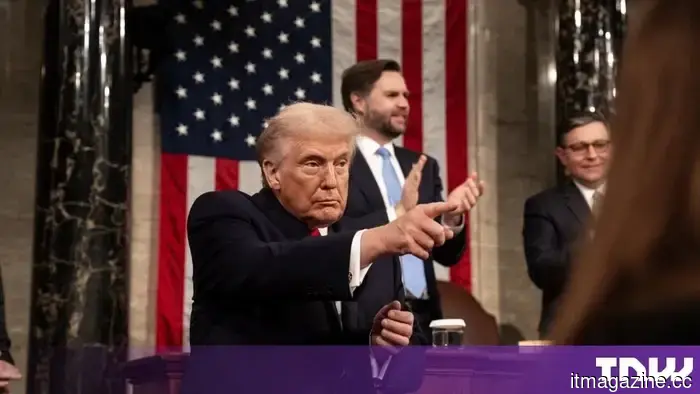 A disclosure reveals that Trump purchased shares in SpaceX two weeks following its IPO.
A financial disclosure reveals that Trump purchased as much as $50,000 in SpaceX stock on June 23, two weeks following the record IPO.
A disclosure reveals that Trump purchased shares in SpaceX two weeks following its IPO.
A financial disclosure reveals that Trump purchased as much as $50,000 in SpaceX stock on June 23, two weeks following the record IPO.
 LYNOOK transforms AI companions from individual conversations into immersive, memory-filled environments.
While many AI companion products continue to focus on keeping users engaged through straightforward one-on-one chat interactions, LYNOOK Technology is adopting a completely different approach.
LYNOOK transforms AI companions from individual conversations into immersive, memory-filled environments.
While many AI companion products continue to focus on keeping users engaged through straightforward one-on-one chat interactions, LYNOOK Technology is adopting a completely different approach.
 Investment in the UK's digital infrastructure reached £11.2 billion in 2025.
According to the ONS, investment in digital infrastructure in the UK hit £11.2 billion in 2025, which is three times the previous estimate. However, it also experienced a 4% decline compared to the previous year.
Investment in the UK's digital infrastructure reached £11.2 billion in 2025.
According to the ONS, investment in digital infrastructure in the UK hit £11.2 billion in 2025, which is three times the previous estimate. However, it also experienced a 4% decline compared to the previous year.
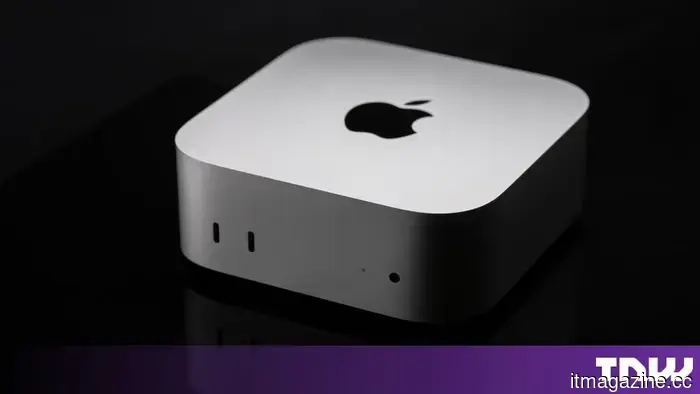 Apple has prepared a Mac mini, which could potentially be Tim Cook's final product.
According to Bloomberg, Apple is set to launch a new Mac mini in just a few days, AirPods 5 in September, and an OLED iPad mini in October.
Apple has prepared a Mac mini, which could potentially be Tim Cook's final product.
According to Bloomberg, Apple is set to launch a new Mac mini in just a few days, AirPods 5 in September, and an OLED iPad mini in October.
Alibaba's stock dropped by 8.4%. Following that, Joe Tsai and Eddie Wu went on a shopping spree.
The chairman and CEO of Alibaba purchased $15.3 million worth of shares after the Alibaba share placement caused the stock to experience its largest decline in over a year.