
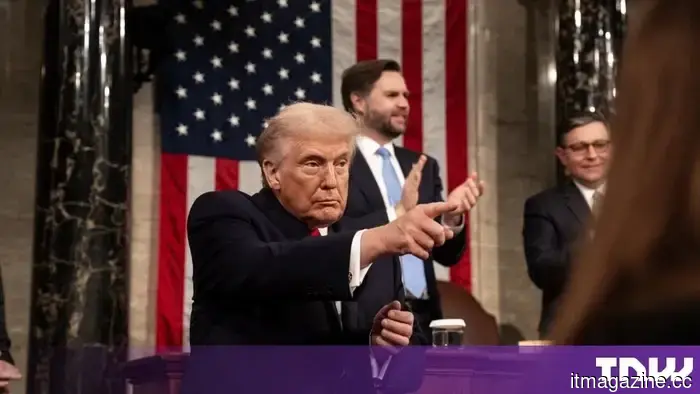
A disclosure reveals that Trump purchased shares in SpaceX two weeks following the IPO.
On June 23, Donald Trump purchased up to $50,000 worth of SpaceX stock, approximately two weeks after the company executed the largest initial public offering in history, as reported in a financial disclosure this week.
This acquisition places the current president on the shareholder list of a company whose federal contracts and regulatory treatment are determined by his own administration, raising questions related to the conflicts surrounding the listing. The White House provided a procedural explanation rather than defending the situation itself. A spokesperson stated that the president's portfolio is managed by third-party financial institutions and follows established indexes, citing the Schwab 1000 as an example.
This explanation seems reasonable and highlights a structurally unusual aspect of this specific stock. SpaceX actively sought the major index providers to expedite its inclusion before going public, meaning a significant number of investors now hold shares without making a conscious choice to do so.
Anyone tracking a broad US index automatically gained exposure to SpaceX, and a portfolio designed to mirror such an index would have likely acquired shares around the time the disclosure was made. Whether the president personally authorized the purchase is a separate issue from its appearance on his disclosure, and the document itself does not resolve this matter.
Regardless of who initiated the purchase, the timing is inconvenient. SpaceX shares were priced at $135 each, rose post-listing, and by late June, trading in the mid-$150s would mean the position was slightly underwater compared to Monday’s close, which returned to the $135 issue price.
A holding capped at $50,000 is insignificant relative to Trump’s reported wealth, and disclosure rules categorize holdings into bands rather than exact figures. The essential issue lies in the identity of the counterparty.
SpaceX generates a significant portion of its revenue from federal contracts with NASA and the Department of Defense, and its Starlink service relies on spectrum decisions and launch licensing controlled by federal agencies. The company has also profited from the administration’s broader deregulatory stance on commercial space travel.
Elon Musk's relationship with the president has been tumultuous, characterized by a public falling-out followed by reconciliation, yet the commercial ties between Musk's businesses and the federal government have persisted.
Starlink has been notably expanding its government operations, providing connectivity to federal agencies and competing for defense communications contracts, placing it in front of procurement officers who ultimately report to the president.
Legally, presidents are not required to divest, which is central to this issue. The conflict-of-interest law that governs most federal officials does not apply to the president, leaving the norms of blind trusts and voluntary divestment as practices rather than mandates, and this administration has opted not to adhere to them.
Disclosure remains the primary safeguard, functioning only in hindsight. The June purchase was made public in late August, by which time the position had been held through two months of decisions impacting the company.
The IPO itself was unprecedented, raising $75 billion with demand soaring to around $250 billion; BlackRock alone purchased $5 billion in stock. An IPO of this magnitude pulls nearly every institutional portfolio in the United States into the same situation currently faced by the president.
This dynamic presents a more significant consideration; when a single company enters indexes at this magnitude, the question of who holds a financial interest in its regulatory treatment extends beyond individuals.
Ethics lawyers have contended for years that the index-tracking explanation, while correct, does not address the underlying issue, as a president can affect the value of a holding irrespective of whether he chose it. The counterargument is that the same applies to every constituent of the index, which is why divestment has been the norm rather than mere disclosure.
Neither SpaceX nor Musk has responded to the disclosure. The filing reflects holdings as of a specific reporting date and does not clarify whether the position has since been increased, decreased, or sold.
Other articles
 The top limited series on Netflix that you can watch in one go.
This summary highlights 16 outstanding miniseries and limited series available on Netflix, showcasing a decade of prestigious television featuring nearly perfect ratings, critical praise, and some polarizing selections.
The top limited series on Netflix that you can watch in one go.
This summary highlights 16 outstanding miniseries and limited series available on Netflix, showcasing a decade of prestigious television featuring nearly perfect ratings, critical praise, and some polarizing selections.
 Developers at Harvard have created an AI application designed to assist visually impaired individuals in navigating their surroundings.
An AI application developed by Harvard assisted visually impaired users in navigating an outdoor route more quickly while minimizing contact with obstacles during initial trials.
Developers at Harvard have created an AI application designed to assist visually impaired individuals in navigating their surroundings.
An AI application developed by Harvard assisted visually impaired users in navigating an outdoor route more quickly while minimizing contact with obstacles during initial trials.
 MH Ventures and Mapleblock Capital jointly lead a $3 million investment in Oro to expand agentic finance.
Oro has secured $3 million to transform straightforward financial guidance into non-custodial, multi-step transactions. The platform boasts over 350,000 active users across 80 languages and aims for user-driven DeFi execution, especially considering that wallet breaches resulted in losses of $444 million in the first half of 2026.
MH Ventures and Mapleblock Capital jointly lead a $3 million investment in Oro to expand agentic finance.
Oro has secured $3 million to transform straightforward financial guidance into non-custodial, multi-step transactions. The platform boasts over 350,000 active users across 80 languages and aims for user-driven DeFi execution, especially considering that wallet breaches resulted in losses of $444 million in the first half of 2026.
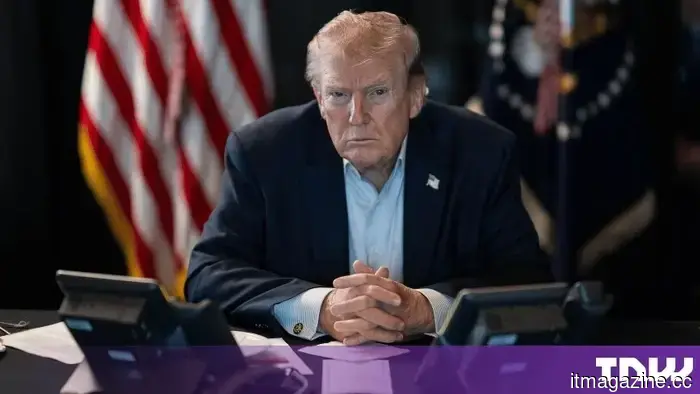 Trump argues that rejecting a data center is a mistake, while Abbott has a differing opinion.
Greg Abbott states that the criticism towards data centres is warranted, as reported by Axios. Trump asserts that communities that reject them are making an error.
Trump argues that rejecting a data center is a mistake, while Abbott has a differing opinion.
Greg Abbott states that the criticism towards data centres is warranted, as reported by Axios. Trump asserts that communities that reject them are making an error.
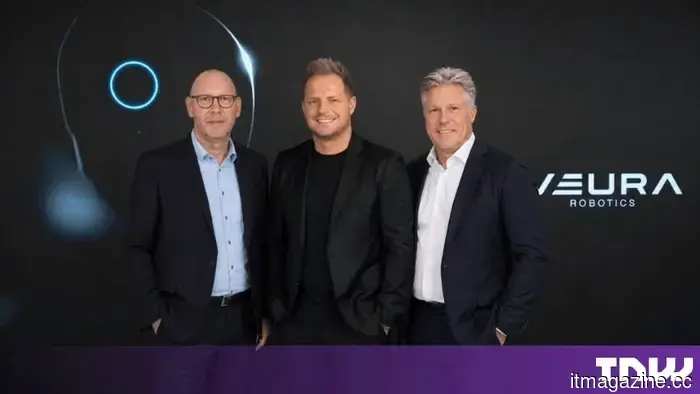 Following a €1.2 billion funding, NEURA has acquired its second company within eleven days.
NEURA Robotics is purchasing Adlatus Robotics to integrate its Neuraverse platform into autonomous cleaning machines, according to the German company.
Following a €1.2 billion funding, NEURA has acquired its second company within eleven days.
NEURA Robotics is purchasing Adlatus Robotics to integrate its Neuraverse platform into autonomous cleaning machines, according to the German company.
 An Australian court has determined that eHarmony deceived users regarding the costs of its memberships.
Australia's Federal Court determined that eHarmony deceived users regarding free membership, automatic renewal at rates up to five times higher, and the cancellation process.
An Australian court has determined that eHarmony deceived users regarding the costs of its memberships.
Australia's Federal Court determined that eHarmony deceived users regarding free membership, automatic renewal at rates up to five times higher, and the cancellation process.
A disclosure reveals that Trump purchased shares in SpaceX two weeks following the IPO.
A financial disclosure reveals that Trump purchased up to $50,000 worth of SpaceX stock on June 23, just two weeks following the record IPO.