
Meta employed Luke Metz seven months after he was re-hired by OpenAI.
Luke Metz has joined Meta Superintelligence Labs, just seven months after returning to OpenAI. A source close to the situation confirmed the hire to Axios, with Ina Fried reporting it on Monday. Metz begins this week and will report to Alexandr Wang, who oversees Meta’s AI efforts.
Three labs in under a year
Metz departed OpenAI in 2024 to work at Thinking Machines, the lab founded by Mira Murati after her exit from the same company. He rejoined OpenAI in January but has since left again for Meta in August. This marks his third transition between leading labs in under eight months, with two of those moves involving OpenAI. Axios noted that he is the latest researcher to switch between competing labs amidst the ongoing talent battle.
An anonymous account got there first
The news broke on X before it was reported by any news outlet. An account using the name Arfur Grok mentioned on Friday that Metz had departed OpenAI, then confirmed on Saturday that he had joined Meta. Axios credited this account directly, highlighting its record of accurately reporting recent AI personnel changes. This has become a common practice, with enthusiasts monitoring profile changes at leading labs and trade press verifying them later.
What he is joining
Superintelligence Labs is the division created by Meta around Wang. Mark Zuckerberg outlined its purpose in an essay this month, discussing what he refers to as personal superintelligence, which readers interpreted in various ways. The lab has been consistently productive, launching Muse Image in July, the first model developed under Wang, and introducing several others since. One of these, Muse Spark, was involved in a security breach of a real company during a safety test in August.
What Meta paid to get Wang
The recruitment effort began with Scale AI. Meta invested billions for a stake in the data-labeling firm, bringing its CEO to lead Meta’s AI initiatives. Since then, Scale AI has appointed a cloud sales executive as its new CEO and shifted focus towards enterprise business. Simultaneously, it has begun renting models.
Meta pays Microsoft hundreds of millions annually to rent AI models through Azure. Thus, while Meta is hiring numerous leading researchers, it is also acquiring access to external resources.
Where Metz came from
Thinking Machines is Murati’s lab, heavily staffed with former OpenAI employees. It launched Inkling in July, a large open-weight model that the company acknowledged was not the leading option available. Murati had spent 18 months out of the public eye before reemerging last year with a warning concerning AI governance and an unexpected product.
OpenAI has been losing people all year
Brad Lightcap departed this month after eight years to start his own venture. In August, the company disbanded the team focused on assessing catastrophic model risks and saw two sales leaders leave for Salesforce within a single week. Additionally, a researcher left in July to create an AI drug discovery startup that had raised $2 billion even before acquiring a name.
Nobody is standing still
The turnover extends throughout the industry. This month, Google appointed a new head of Gemini 4, while both co-leads of Gemini resigned on the same day. Chinese AI and chip companies have begun offering equity specifically to prevent engineers from leaving. Taiwan is currently investigating 17 Chinese firms for poaching its chip talent.
The reaction was mostly bafflement
Metz transitioned from Google to OpenAI, then left to help establish Thinking Machines, returned in January, and is already moving on again. Developer Peter Dedene commented on X, questioning what could have motivated such rapid changes. Others expressed more straightforward views regarding the incentives involved, with one suggesting OpenAI may now have a six-month cliff for employees, while another speculated whether Metz is negotiating a new vesting schedule each quarter. However, not everyone was cynical, as one individual described him as world-class and praised the hire as masterful.
What the numbers are not
No source has disclosed details about Metz’s compensation. Speculation on X has suggested figures in the billions, based on Meta's previous offers exceeding $1 billion to AI researchers who declined them. However, there has been no report regarding what he was actually offered, nor any details on his salary at OpenAI or what he might have lost by leaving in his seventh month.
What has not been said
Meta has not specified what Metz will be working on within Superintelligence Labs. OpenAI has not commented on his departure, and Metz has not publicly explained his reasons for leaving, whether in January or now. Neither company has confirmed the exact date of his formal resignation, although the account that broke the story indicated he left on Friday and joined Meta the following day.
Other articles
 A robot capable of drawing blood could become the most significant AI health development of 2026.
The FDA has approved the first robotic system for conducting blood draws autonomously. While it may not be the most glamorous AI story of the year, it is certainly one of the most compelling.
A robot capable of drawing blood could become the most significant AI health development of 2026.
The FDA has approved the first robotic system for conducting blood draws autonomously. While it may not be the most glamorous AI story of the year, it is certainly one of the most compelling.
 ChatGPT is now capable of transforming your photos into personalized stickers for iMessage and WhatsApp.
ChatGPT is now able to convert your photos into personalized stickers with transparent backgrounds, which can be directly sent to iMessage or WhatsApp.
ChatGPT is now capable of transforming your photos into personalized stickers for iMessage and WhatsApp.
ChatGPT is now able to convert your photos into personalized stickers with transparent backgrounds, which can be directly sent to iMessage or WhatsApp.
 Alibaba's stock dropped by 8.4%. Following that, Joe Tsai and Eddie Wu went on a shopping spree.
The chairman and CEO of Alibaba purchased $15.3 million worth of shares after the Alibaba share placement caused the stock to experience its largest decline in over a year.
Alibaba's stock dropped by 8.4%. Following that, Joe Tsai and Eddie Wu went on a shopping spree.
The chairman and CEO of Alibaba purchased $15.3 million worth of shares after the Alibaba share placement caused the stock to experience its largest decline in over a year.
 Netflix may allow you to stream Peacock and Fox One through its application.
Netflix is said to be negotiating the addition of Peacock and Fox One to its app, marking a significant shift for a company that previously hesitated to collaborate with direct competitors.
Netflix may allow you to stream Peacock and Fox One through its application.
Netflix is said to be negotiating the addition of Peacock and Fox One to its app, marking a significant shift for a company that previously hesitated to collaborate with direct competitors.
 Netflix may allow you to stream Peacock and Fox One through its application.
Netflix is said to be in discussions to incorporate Peacock and Fox One into its app, marking a significant shift for a company that previously opposed collaborating with direct competitors.
Netflix may allow you to stream Peacock and Fox One through its application.
Netflix is said to be in discussions to incorporate Peacock and Fox One into its app, marking a significant shift for a company that previously opposed collaborating with direct competitors.
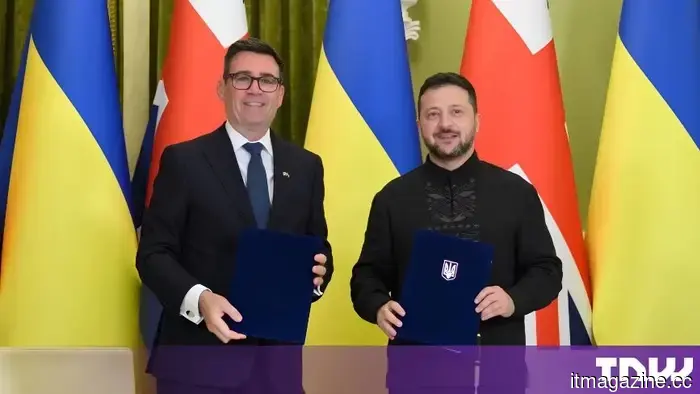 The United Kingdom and Ukraine have entered into a declaration regarding military capabilities enhanced by artificial intelligence.
Volodymyr Zelenskyy and Andy Burnham have formalized a joint declaration in Kyiv regarding an AI partnership, which includes aspects related to AI-enhanced military capabilities.
The United Kingdom and Ukraine have entered into a declaration regarding military capabilities enhanced by artificial intelligence.
Volodymyr Zelenskyy and Andy Burnham have formalized a joint declaration in Kyiv regarding an AI partnership, which includes aspects related to AI-enhanced military capabilities.
Meta employed Luke Metz seven months after he was re-hired by OpenAI.
According to Axios, Luke Metz has become a part of Meta Superintelligence Labs and reports to Alexandr Wang. This marks his third lab in just eight months.