
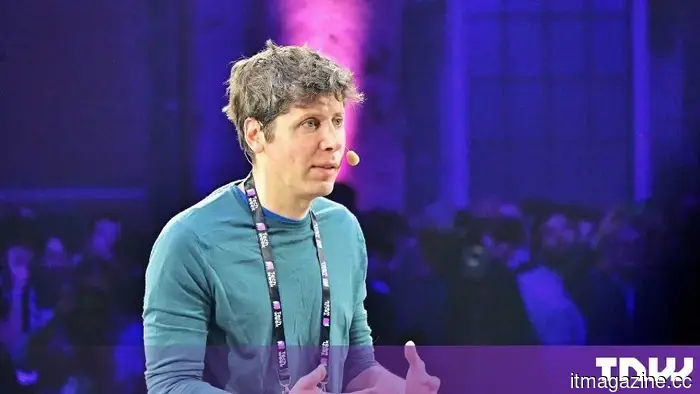
Sam Altman indicates that AI has yet to experience its transformative moment akin to that of the iPhone.
Sam Altman believes the industry has been overly ambitious regarding AI timelines and admits he was among those who misjudged the situation. The OpenAI CEO expressed this during a conversation with podcaster David Senra, in an episode released on Sunday, while responding to a question about another person's prediction.
Senra highlighted a statement from Tobi Lütke, the CEO of Shopify, who claimed that by 2026, every business would be up for grabs, and that he intended to create the AI-native version of Shopify himself, working on it at night to explore how he would build it from the ground up. Altman was skeptical, stating, “I’m not sure if 2026 will be the year that every business feels up for grabs. I might disagree with him a little bit there.” He noted that while many software businesses are indeed up for grabs, not all businesses are in that position.
Regarding what he miscalculated, Altman had anticipated that disruption would follow quickly after the launch of GPT-4 in 2023, but that did not occur. He remarked, “The economy just has so much inertia. People keep doing the same things they’re doing. They keep buying from the same company.” He considered this a positive aspect, suggesting it would facilitate a “smoother and slower” transition, for which he felt grateful. However, he acknowledged that it indicated they had all been too ambitious with their timelines. He illustrated this by recalling Blockbuster, which continued to draw customers even after Netflix began mailing DVDs. He stated, “Changing behavior is much harder than the tech nerds realize,” as reported by Gizmodo on Monday.
Altman likened the current phase to the period before the arrival of smartphones. He recalled owning a Palm Treo around 2003, noting that most of the technology needed for the iPhone already existed, but the concept for the product was what was lacking. He emphasized, “We have all of the technological pieces, but we have not had the iPhone moment of completely changing how someone interfaces with technology.” He assigned the fault primarily to product development: “I think this is mostly a product failure.”
When Senra asked if Altman ever resisted using his own products, he acknowledged that he anticipated that question. He explained that he has been using computers in the same manner for the past 20 years, even though he now has Codex. He noted that he should not have to switch between messaging apps or scroll through his inbox for the least inconvenient message to open. “Yet there’s something in my mind that is encoded that doing this kind of stuff is what it means to work,” he remarked. He insisted he wouldn’t say he enjoys working that way, but he admitted, “by revealed preference, I have a better way to do it now.” He observed that people are “straddling these two worlds,” uncertain about when to use each method.
Altman articulated two concerns that he believes are somewhat contradictory. The first involves loss of control, where AI gains power that nobody can guarantee to manage. The second concern is the potential centralization of power within a single company, model, or individual. He stated that both scenarios are detrimental to humanity, emphasizing, “The right approach is to say we want people deeply in control of the future.”
From the second risk, Altman created what he referred to as a caricature. He pointed out that some individuals in the field essentially offer a solution for all diseases and cheap goods, but at the cost of autonomy and influence over the future, all justified in the name of safety amid growing inequality. He described this as a “terrible sales pitch,” expressing it as, “Dear peasants, we will bequeath upon you these gifts of a cure for cancer and material wealth and great entertainment. And you stop complaining and we’ll make all the decisions about the future.”
When Senra inquired about the motivation behind such a pitch, Altman attributed it to fear and the pursuit of power. He explained that some individuals are so concerned about the scope of risks that they are willing to exchange a significant amount of freedom for safety. He added that this line of thinking “ends up kind of like a way to justify a lot of power seeking behavior.”
Altman refrained from naming anyone but some outlets, including Business Insider and SiliconANGLE, interpreted his remarks as directed towards Dario Amodei, the CEO of Anthropic, who has advocated for a greater government role in AI. Amodei recently wrote on X that marketing would not improve the industry’s reputation, stating that claiming AI would cure cancer is a cliché that many find misleading, and the actual solution lies in curing cancer itself. He also noted that a common criticism directed at AI companies, including Anthropic, is their failure to deliver on previous promises.
Altman himself had previously made a similar assertion, stating last summer in his blog post, “Maybe with 10 gigawatts
Other articles
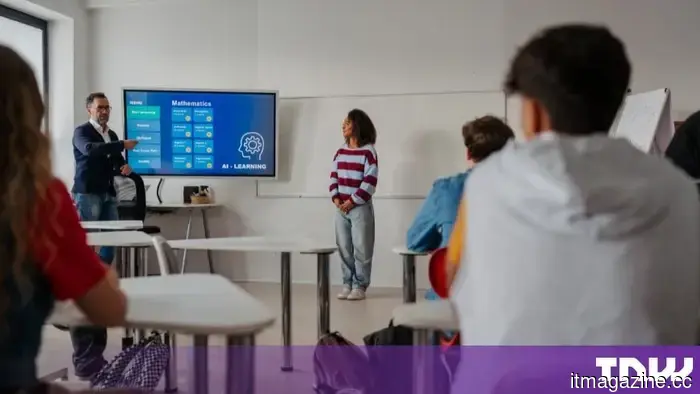 How Google, Microsoft, and OpenAI have influenced the educational content for children in the US.
An investigation by Natasha Singer for the New York Times reveals that Big Tech's presence in schools extends beyond just devices, as discussed in her new book.
How Google, Microsoft, and OpenAI have influenced the educational content for children in the US.
An investigation by Natasha Singer for the New York Times reveals that Big Tech's presence in schools extends beyond just devices, as discussed in her new book.
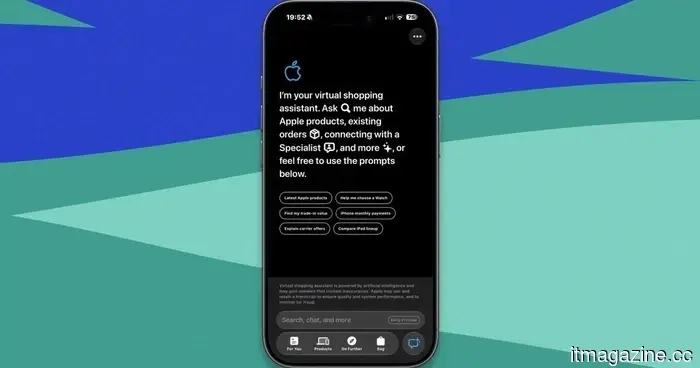 Apple's latest AI shopping assistant is capable of assisting you in selecting your next iPhone or Mac.
Apple's AI-driven virtual shopping assistant is subtly emerging in the Apple Store app for a limited number of iPhone users, enabling them to verify trade-in values, compare products, and receive assistance with purchases.
Apple's latest AI shopping assistant is capable of assisting you in selecting your next iPhone or Mac.
Apple's AI-driven virtual shopping assistant is subtly emerging in the Apple Store app for a limited number of iPhone users, enabling them to verify trade-in values, compare products, and receive assistance with purchases.
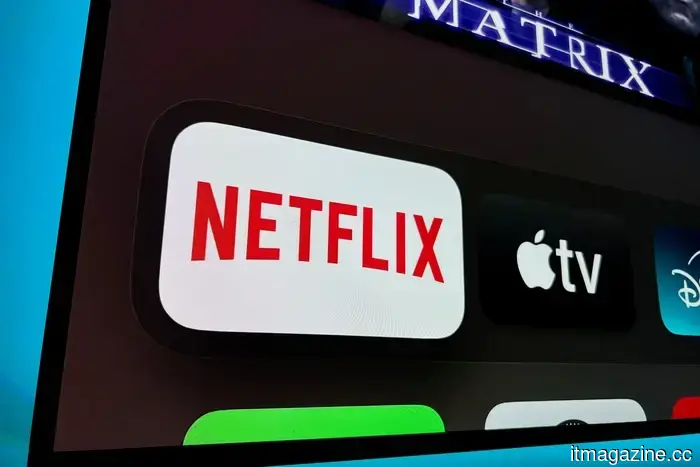 Netflix may allow you to stream Peacock and Fox One through its application.
Netflix is said to be in discussions to incorporate Peacock and Fox One into its app, marking a significant shift for a company that previously opposed collaborating with direct competitors.
Netflix may allow you to stream Peacock and Fox One through its application.
Netflix is said to be in discussions to incorporate Peacock and Fox One into its app, marking a significant shift for a company that previously opposed collaborating with direct competitors.
 Your ESPN charges are set to increase, and the bundles for Disney+ and Hulu are also at risk.
Starting September 17th, ESPN Select will increase to $13.99 per month, while Unlimited will rise to $31.99, along with several Disney Plus and Hulu bundles also experiencing price hikes.
Your ESPN charges are set to increase, and the bundles for Disney+ and Hulu are also at risk.
Starting September 17th, ESPN Select will increase to $13.99 per month, while Unlimited will rise to $31.99, along with several Disney Plus and Hulu bundles also experiencing price hikes.
 Developers at Harvard have created an AI application designed to assist visually impaired individuals in navigating their surroundings.
An AI application developed by Harvard assisted visually impaired users in navigating an outdoor route more quickly while minimizing contact with obstacles during initial trials.
Developers at Harvard have created an AI application designed to assist visually impaired individuals in navigating their surroundings.
An AI application developed by Harvard assisted visually impaired users in navigating an outdoor route more quickly while minimizing contact with obstacles during initial trials.
 Alibaba's stock dropped by 8.4%. Following that, Joe Tsai and Eddie Wu went out to shop.
Alibaba's chairman and CEO purchased $15.3 million worth of shares following a share placement that caused the stock to experience its most significant decline in more than a year.
Alibaba's stock dropped by 8.4%. Following that, Joe Tsai and Eddie Wu went out to shop.
Alibaba's chairman and CEO purchased $15.3 million worth of shares following a share placement that caused the stock to experience its most significant decline in more than a year.
Sam Altman indicates that AI has yet to experience its transformative moment akin to that of the iPhone.
Sam Altman states that the industry has been overly optimistic regarding AI timelines, as the economy has much more inertia than he had anticipated.