

Silicon Valley aims to integrate AI into everything, but it prefers that we remain unaware of its presence.
Despite all the commotion tech companies are generating about AI-generated content, I haven’t noticed significant evidence that they genuinely desire less AI.
Spotify has eliminated tens of millions of low-quality uploads. LinkedIn allows users to report posts that appear to be AI-generated junk, while YouTube has shut down numerous networks of subpar channels. Pinterest and TikTok are granting users more control over the amount of synthetic content they encounter.
When viewed together, it may seem like a backlash against AI. However, I believe it's more akin to a cleanup initiative.
Silicon Valley is in favor of better AI rather than less of it.
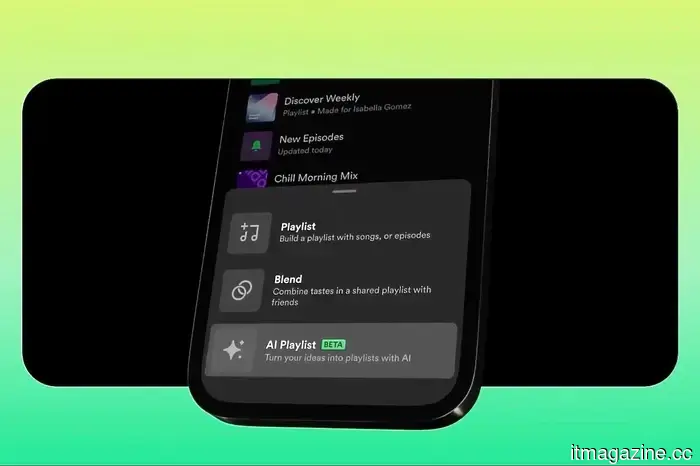
Spotify stands out as the most evident example. The company claims to have removed over 75 million spammy tracks in a single year and recognizes that generative AI has simplified the production of mass uploads, duplicates, and other low-quality content. Nonetheless, Spotify envisions a future where AI plays a role in music. Clearly, eliminating the technology is not the goal.
Google is undertaking a similarly extensive cleanup. Its researchers report that an anti-slop system terminated 50,000 coordinated clusters containing 130,000 channels within six months.
That distinction caught my attention. Silicon Valley doesn’t actually want to reduce AI; it desires AI that doesn’t come with the apparent drawbacks of limitless AI.
The type of AI Silicon Valley seeks is polished enough to go unnoticed. The issues arise when cheap synthetic production becomes so apparent that the façade crumbles.
While the slop is undesirable, the AI itself is not.
Most of the cleanup occurs downstream, after the slop has been produced. Slowing down production would require making mass generation less effortless, which contradicts the core benefits of generative AI.
Spotify is eliminating spam while simultaneously collaborating with major music companies on generative AI initiatives, including licensed covers and remixes. This contradiction reveals more about the direction this is headed than any additional labels could. AI is still welcomed, but the embarrassing excess is what needs to be eliminated.
Dynasty Drama AI
There is clearly financial incentive in all of this, although I doubt profit accounts for every decision. AI is too ingrained in these companies' operations for them to simply walk away from it. They would prefer to keep the system running while figuring out how to prevent the output from making their products intolerable.
Infinite content must still compete for limited attention.
The situation begins to appear stranger once supply is considered.
Deezer claims it was receiving approximately 90,000 fully AI-generated tracks per day at its peak in June, enough to represent more than half of all new uploads. These tracks accounted for only 1% to 3% of listening. Deezer excludes detected AI music from recommendations and editorial playlists, so that statistic isn’t a straightforward gauge of listener preferences. Even with this context, the imbalance is hard to overlook.
More than half of the new supply can emerge without nearly half the audience prepared for it.
Character.AI
This brings up the aspect of AI slop that intrigues me more than the labels and detection methods. I already have an overwhelming amount of music, video, and writing vying for my attention, far beyond what I can realistically consume. AI hasn’t magically added six hours to my day; it’s simply provided everyone else a more affordable means to compete for the hours I already possess.
Content is becoming almost ridiculously plentiful.
Platforms now face the challenge of managing that imbalance after the content has been created. They determine what gets recommended, what gets hidden, and what is ultimately removed, essentially reconstructing scarcity atop a system designed to produce more content than anyone could possibly consume.
I don’t believe Silicon Valley desires an internet with less AI. Rather, it wants an environment where AI becomes so refined, so commonplace, that I can no longer distinguish where it starts and where I end.
Perhaps that’s the ultimate aim for AI slop. It doesn’t vanish; I simply become so accustomed to seeing it that I eventually stop recognizing the difference.


Other articles
 The design of the Xperia 10 VIII has been revealed, and Sony is not making significant alterations.
A recent leak has revealed Sony's forthcoming Xperia 10 VIII, showcasing a design that closely resembles last year's version.
The design of the Xperia 10 VIII has been revealed, and Sony is not making significant alterations.
A recent leak has revealed Sony's forthcoming Xperia 10 VIII, showcasing a design that closely resembles last year's version.
 The design of the Xperia 10 VIII has been revealed, and Sony is making minimal changes.
The leaked design of Sony's forthcoming Xperia 10 VIII resembles that of last year's version closely.
The design of the Xperia 10 VIII has been revealed, and Sony is making minimal changes.
The leaked design of Sony's forthcoming Xperia 10 VIII resembles that of last year's version closely.
 EXCLUSIVE: Joel Edgerton and Jennifer Connelly hint at ‘beautiful chaos’ in the second season of Dark Matter.
Joel Edgerton and Jennifer Connelly share insights on what viewers can anticipate from the second season of Dark Matter, the dynamics of Jason and Daniela’s relationship, and the possibility of a third season.
EXCLUSIVE: Joel Edgerton and Jennifer Connelly hint at ‘beautiful chaos’ in the second season of Dark Matter.
Joel Edgerton and Jennifer Connelly share insights on what viewers can anticipate from the second season of Dark Matter, the dynamics of Jason and Daniela’s relationship, and the possibility of a third season.
 ChatGPT for iPhone now allows users to access recent photos by performing a long press.
The most recent iPhone update for ChatGPT allows users to quickly access and attach their last four photos by long-pressing the plus button.
ChatGPT for iPhone now allows users to access recent photos by performing a long press.
The most recent iPhone update for ChatGPT allows users to quickly access and attach their last four photos by long-pressing the plus button.
 Employers are discreetly bringing back individuals who were replaced by AI, offering them lower salaries to return.
Forrester reports that 55% of employers regret their decisions to reduce staff due to AI and anticipates that half of those layoffs will likely be discreetly reversed, moved offshore, or compensated at lower wages.
Employers are discreetly bringing back individuals who were replaced by AI, offering them lower salaries to return.
Forrester reports that 55% of employers regret their decisions to reduce staff due to AI and anticipates that half of those layoffs will likely be discreetly reversed, moved offshore, or compensated at lower wages.
 AMD's upcoming Medusa APUs are preparing for their release, and Linux has just revealed some details.
AMD has released RDNA 4m firmware for Linux prior to the launch of its Ryzen AI 500 "Medusa Point," providing additional insights into its upcoming Zen 6 APUs.
AMD's upcoming Medusa APUs are preparing for their release, and Linux has just revealed some details.
AMD has released RDNA 4m firmware for Linux prior to the launch of its Ryzen AI 500 "Medusa Point," providing additional insights into its upcoming Zen 6 APUs.
Silicon Valley aims to integrate AI into everything, but it prefers that we remain unaware of its presence.
Despite all the chatter from tech companies regarding AI clutter, I haven't come across substantial proof that they truly desire to reduce AI usage. Spotify has eliminated tens of millions of spammy uploads. LinkedIn allows users to flag posts that appear to be AI-generated noise, while YouTube has removed networks of subpar channels. Pinterest and TikTok are also taking similar actions…