
Employers are discreetly bringing back individuals who were replaced by AI, offering them lower salaries to return.
Forrester reveals that 55% of employers regret dismissing employees due to AI, predicting that half of the layoffs attributed to AI will likely be reversed quietly. When jobs return, they may be relocated offshore or offered at substantially lower wages. Additionally, a new directive in Europe mandates consultation prior to making such decisions, with monetary penalties for non-compliance.
Businesses that reduced their workforce for AI reasons are reconsidering their actions. Forrester indicates that many employers regret these layoffs, forecasting that half of AI-related job losses will be quietly undone. However, this reversal may not be as beneficial as it seems; according to Forrester, returning jobs are often relocated offshore or offered at much lower wages, burdening the affected workers rather than the companies.
Public concern regarding AI’s impact on employment persists, as evidenced by a Reuters Ipsos poll revealing that 53% of Americans fear AI could displace a worker in their household. Similarly, TNW has posed the question of AI's effect on jobs in Europe. In the workplace, the concern mirrors this anxiety; a report from Software Finder in 2026 found that 53% of employees are apprehensive about AI tools making their roles less essential.
Jackie Swanson from Gartner captures the disconnect, stating, “Every organization has an AI adoption roadmap, yet nearly none have a transparent strategy regarding its impact on their workforce, their pace, and their future leadership pipeline.”
The remedies companies are pursuing are mainly voluntary initiatives. For instance, Ironclad's CTO has conducted internal training sessions, Torani has managed to avoid layoffs for 103 years, and Superhuman allows teams to select their own tools. "We do not implement a top-down AI mandate," comments Kenny Mendes, Superhuman's chief people officer, explaining that teams closer to the issue choose their own tools, preventing the perception of change as mere cost-cutting.
In Europe, this approach does not reflect a management philosophy; there is a legal obligation to inform and consult employees before any decisions that impact their work. This issue is particularly pertinent in a region still debating whether regulations can safeguard jobs without hindering innovation.
This legal obligation is poised for enhancement. Directive 2025/2450, which updates the rules regarding European Works Councils, must be implemented by January 1, 2028. It mandates timely consultations that allow for comprehensive evaluations before decisions are finalized.
Furthermore, this directive imposes financial repercussions. Member states are required to enforce effective and discouraging financial penalties based on company turnover during a time when, for example, Meta has laid off 8,000 workers while redirecting billions toward AI infrastructure.
Thus, the discussion differs significantly between the two continents. In the U.S., the focus is on whether to inform workers about AI's impact on their jobs, whereas Europe is addressing when, how, and the costs of making mistakes in this regard.
Other articles
 ASUS' less powerful Googlebook might still come with a hefty price tag.
A leaked listing for the ASUS Googlebook CX9406 indicates that even a Core Ultra 5 variant equipped with 16GB of RAM might carry a higher price tag.
ASUS' less powerful Googlebook might still come with a hefty price tag.
A leaked listing for the ASUS Googlebook CX9406 indicates that even a Core Ultra 5 variant equipped with 16GB of RAM might carry a higher price tag.
 EXCLUSIVE: Joel Edgerton and Jennifer Connelly hint at ‘beautiful chaos’ in the second season of Dark Matter.
Joel Edgerton and Jennifer Connelly share insights on what viewers can anticipate from the second season of Dark Matter, the dynamics of Jason and Daniela’s relationship, and the possibility of a third season.
EXCLUSIVE: Joel Edgerton and Jennifer Connelly hint at ‘beautiful chaos’ in the second season of Dark Matter.
Joel Edgerton and Jennifer Connelly share insights on what viewers can anticipate from the second season of Dark Matter, the dynamics of Jason and Daniela’s relationship, and the possibility of a third season.
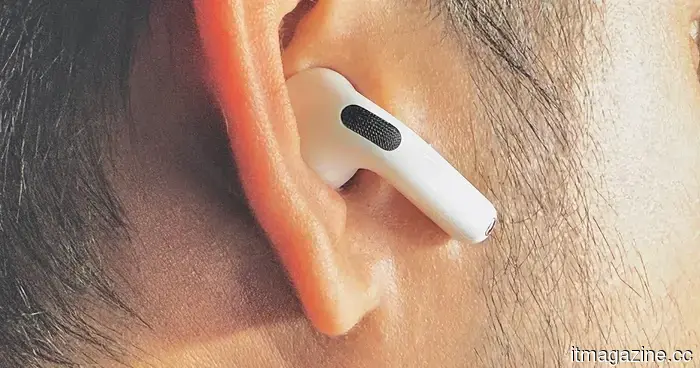 The speculated camera-equipped AirPods from Apple may introduce exciting AI functionalities along with several privacy issues.
The speculated AirPods from Apple, which might feature built-in cameras, are expected to incorporate small sensors for AI and Visual Intelligence, yet privacy issues could pose significant challenges for the technology.
The speculated camera-equipped AirPods from Apple may introduce exciting AI functionalities along with several privacy issues.
The speculated AirPods from Apple, which might feature built-in cameras, are expected to incorporate small sensors for AI and Visual Intelligence, yet privacy issues could pose significant challenges for the technology.
 The redesign of Samsung's Galaxy S27 Ultra is strongly reminiscent of the iPhone.
Samsung's upcoming Ultra flagship might finally remove its well-known camera rings, but the new design bears a striking resemblance to Apple's.
The redesign of Samsung's Galaxy S27 Ultra is strongly reminiscent of the iPhone.
Samsung's upcoming Ultra flagship might finally remove its well-known camera rings, but the new design bears a striking resemblance to Apple's.
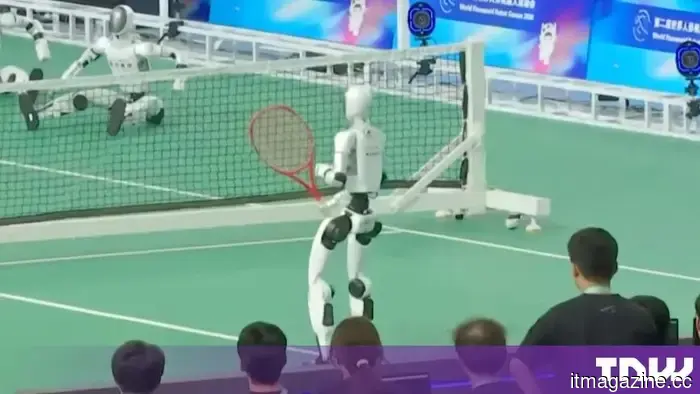 Galbot Robots finish 100 back-to-back rallies with a tennis champion.
Galbot asserts that its robot achieved 100 rallies against a tennis champion without any teleoperation involved. This statement comes from the company itself, and the robot has not been given a name.
Galbot Robots finish 100 back-to-back rallies with a tennis champion.
Galbot asserts that its robot achieved 100 rallies against a tennis champion without any teleoperation involved. This statement comes from the company itself, and the robot has not been given a name.
 ChatGPT for iPhone now allows users to access recent photos by performing a long press.
The most recent iPhone update for ChatGPT allows users to quickly access and attach their last four photos by long-pressing the plus button.
ChatGPT for iPhone now allows users to access recent photos by performing a long press.
The most recent iPhone update for ChatGPT allows users to quickly access and attach their last four photos by long-pressing the plus button.
Employers are discreetly bringing back individuals who were replaced by AI, offering them lower salaries to return.
Forrester reports that 55% of employers regret their decisions to reduce staff due to AI and anticipates that half of those layoffs will likely be discreetly reversed, moved offshore, or compensated at lower wages.