

AMD's upcoming Medusa APUs are poised for release, and Linux has just revealed the details.
The latest RDNA 4m firmware has arrived in the Linux ecosystem ahead of the launch of AMD's Ryzen AI 500-series.
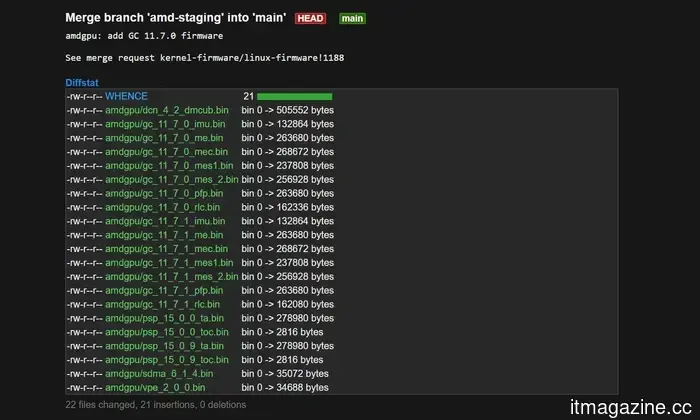
AMD's next-generation Ryzen AI 500 “Medusa Point” APUs are getting closer to release, with Linux being the source of the information. As highlighted by Phoronix, AMD has released the firmware necessary for its forthcoming RDNA 4m integrated graphics, signaling that the Zen 6-based mobile processors are nearing their introduction.
RDNA 4m presents an intriguing hybrid.
This new firmware is intended for AMD’s GFX 11.7 graphics IP, referred to as RDNA 4m. It occupies a unique position between the existing RDNA 3.5 architecture and the complete RDNA 4. While AMD's desktop RDNA 4 GPUs utilize the newer GFX 12 family, RDNA 4m remains within the GFX 11 series.
The “m” is generally understood to denote mobile, with RDNA 4m seemingly tailored specifically for APUs. Previous Linux and LLVM developments indicate it incorporates some features reminiscent of RDNA 4, such as FP8/BF8 conversion and WMMA instructions. This could allow Medusa Point to gain enhanced AI and graphics functionalities without needing a total graphics architecture update.
The new firmware accommodates GFX 11.7.0 and 11.7.1, along with security, display, and memory-management components, hinting that AMD is preparing a substantial portion of the software stack for these upcoming chips. This is particularly noteworthy considering earlier leaks of a 10-core Zen 6 Medusa Point APU in Geekbench, which demonstrated promising performance improvements over current Ryzen mobile processors. AMD has confirmed the Medusa code name for its next-generation Zen 6 client platform, although precise specifications and launch details remain undisclosed.
The APU refresh is getting exciting.
The primary question now is how much performance AMD can extract from the RDNA 4m design. While it is not a complete RDNA 4 GPU, the additional instruction support could enhance AMD’s integrated graphics capabilities while maintaining the APU's efficiency.
For now, the release of the firmware ahead of the hardware launch is a positive sign that Medusa Point is advancing from conceptual plans to actual products. Should AMD successfully combine the CPU advancements of Zen 6 with a more powerful iGPU and contemporary AI features, its next Ryzen generation could lead to some compelling laptops.






Other articles
 The Blood of Dawnwalker won’t put a strain on your old gaming PC, but your PS5 could face some difficulties.
The PC requirements for The Blood of Dawnwalker are quite reasonable, but console gamers will be restricted to 30fps or 40fps, even on the PS5 Pro.
The Blood of Dawnwalker won’t put a strain on your old gaming PC, but your PS5 could face some difficulties.
The PC requirements for The Blood of Dawnwalker are quite reasonable, but console gamers will be restricted to 30fps or 40fps, even on the PS5 Pro.
 Employers are discreetly bringing back individuals who were replaced by AI, offering them lower salaries to return.
Forrester reports that 55% of employers regret their decisions to reduce staff due to AI and anticipates that half of those layoffs will likely be discreetly reversed, moved offshore, or compensated at lower wages.
Employers are discreetly bringing back individuals who were replaced by AI, offering them lower salaries to return.
Forrester reports that 55% of employers regret their decisions to reduce staff due to AI and anticipates that half of those layoffs will likely be discreetly reversed, moved offshore, or compensated at lower wages.
 Silicon Valley aims to integrate AI into everything, but it prefers that we remain unaware of its presence.
Despite all the chatter from tech companies regarding AI clutter, I haven't come across substantial proof that they truly desire to reduce AI usage. Spotify has eliminated tens of millions of spammy uploads. LinkedIn allows users to flag posts that appear to be AI-generated noise, while YouTube has removed networks of subpar channels. Pinterest and TikTok are also taking similar actions…
Silicon Valley aims to integrate AI into everything, but it prefers that we remain unaware of its presence.
Despite all the chatter from tech companies regarding AI clutter, I haven't come across substantial proof that they truly desire to reduce AI usage. Spotify has eliminated tens of millions of spammy uploads. LinkedIn allows users to flag posts that appear to be AI-generated noise, while YouTube has removed networks of subpar channels. Pinterest and TikTok are also taking similar actions…
 Windows 11 now features an app dedicated entirely to promoting Bing.
Microsoft has developed a Windows 11 application known as Microsoft Recommended Search Settings, which promotes Bing as the default search engine in Chrome, Firefox, and various other browsers.
Windows 11 now features an app dedicated entirely to promoting Bing.
Microsoft has developed a Windows 11 application known as Microsoft Recommended Search Settings, which promotes Bing as the default search engine in Chrome, Firefox, and various other browsers.
 The speculated camera-equipped AirPods from Apple may introduce exciting AI functionalities along with several privacy issues.
The speculated AirPods from Apple, which might feature built-in cameras, are expected to incorporate small sensors for AI and Visual Intelligence, yet privacy issues could pose significant challenges for the technology.
The speculated camera-equipped AirPods from Apple may introduce exciting AI functionalities along with several privacy issues.
The speculated AirPods from Apple, which might feature built-in cameras, are expected to incorporate small sensors for AI and Visual Intelligence, yet privacy issues could pose significant challenges for the technology.
 The design of the Xperia 10 VIII has been revealed, and Sony is not making significant alterations.
A recent leak has revealed Sony's forthcoming Xperia 10 VIII, showcasing a design that closely resembles last year's version.
The design of the Xperia 10 VIII has been revealed, and Sony is not making significant alterations.
A recent leak has revealed Sony's forthcoming Xperia 10 VIII, showcasing a design that closely resembles last year's version.
AMD's upcoming Medusa APUs are poised for release, and Linux has just revealed the details.
AMD has released RDNA 4 firmware for Linux prior to the launch of its Ryzen AI 500 “Medusa Point,” providing further details about its upcoming Zen 6 APUs.