
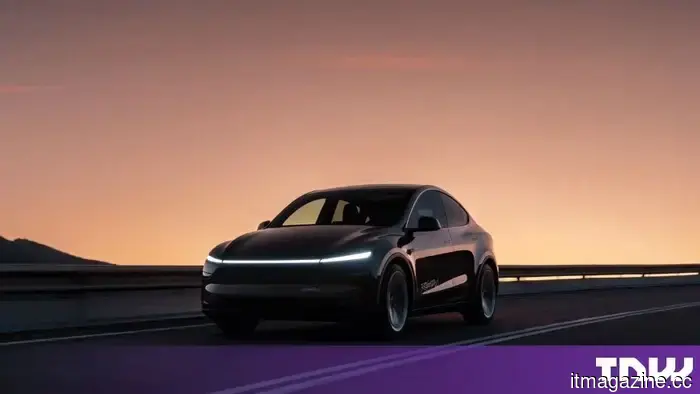
Tracking data indicates that Tesla's robotaxis in Austin are now completely autonomous.
Tesla's robotaxi service in Austin seems to have transitioned to operating completely driverlessly. In the last two weeks, all 170 rides recorded by an independent monitoring project were conducted without a human safety monitor present, using 54 different vehicles. Just two days prior, a passenger captured video of one of these cars driving directly through a set of plastic bollards.
Details on the tracking and its sources
The rides were logged by a crowdsourced initiative called Robotaxi Tracker. Its creator, Ethan McKanna, informed The Verge that all 170 observed rides during the two-week period were unsupervised. He mentioned, "Austin has apparently halted supervised rides for the past few weeks," noting that vehicles previously categorized as supervised are now operating without supervision.
An important point to highlight is that McKanna spent this summer interning with Tesla's Robotaxi team, according to The Verge. While this doesn't discredit his data, and Tesla does not provide similar information, it's pertinent for readers considering an independent count of Tesla vehicles to be aware of the source.
The tracking method is also significant. The tracker primarily relies on app users who log their own rides automatically, along with additional crowdsourced and public information. It reflects what observers have recorded, rather than the entire fleet.
Data improvements contributing to the change
The apparent scale of the shift is dramatic but partly due to data enhancements. Just last week, Robotaxi Tracker indicated only 28 active unsupervised vehicles across six markets in Texas and Florida. McKanna has since identified almost double that amount in Austin alone.
He clarified that some metrics on the site had not been up-to-date, leading him to revise the information sources and uncover more unsupervised vehicles than previously reported. He is currently updating the site with these new figures.
Essentially, two developments took place simultaneously: Tesla broadened its unsupervised operations, while the tracking tool improved in its ability to capture data. The Verge suggests that the shift in Austin is credible, supported by riders sharing experiences on platforms like Reddit and X, and the tracker provides one of the few insights available since Tesla does not release fleet data and frequently does not respond to media inquiries.
This expansion isn't limited to Austin. McKanna noted that about 30 driverless Teslas have been active in Dallas and Houston over the last week, contrasting earlier this summer when the unsupervised fleet appeared to be stagnating or even decreasing.
Understanding "unsupervised"
The term "unsupervised" carries significant weight. An onboard safety monitor is someone present in the vehicle who can take control if needed, while a remote operator, who remains in an office, can provide advice or authorize actions via a data link. Eliminating the onboard monitor does not mean the remote operator's oversight is removed.
It's unclear to those outside Tesla whether a remote operator was involved during the bollard incident. Tesla does not disclose how often remote staff intervene or the number of vehicles one operator oversees. An empty driver's seat may lead an onlooker to classify a ride as unsupervised, regardless of what occurs from the remote end.
The bollards have been in place since 2024
Electrek covered the incident on August 18, where a rider in Austin recorded their vehicle struggling to navigate a curb extension marked off with plastic posts. The car moved forward, reversed, cautiously advanced again, then drove through the bollards and continued on.
The recording includes a noticeable thud, accompanied by the passenger exclaiming, "it hit them, it hit them." There was no safety operator present, and it's unclear if a remote operator authorized the action.
Reddit users subsequently made a helpful contribution by identifying the exact location of the incident using the Texas Orthopedics building seen in the footage. Google Maps’ Street View shows that the posts have been present since at least February 2024.
This detail suggests an issue with mapping rather than sensor functionality, as noted by TechRadar. Tesla has chosen not to use the proprietary high-definition maps that Waymo relies on and opted out of using lidar for cost reasons. The vehicle must recognize fixed obstacles through onboard computations in real-time, and it failed to do so in this instance.
Tesla's message to investors
Ashok Elluswamy, Tesla's vice president of AI, defended the program during the company's second-quarter earnings call, stating that Tesla has recorded over 380,000 robotaxi miles with "zero notable incidents." The company brands its safety record as flawless, though it has not specified what constitutes a notable incident.
In comparison, TechRadar points out that Waymo has accumulated approximately 220 million unsupervised ride-hailing miles, making Tesla's 380,000 about a fifth of one percent of that total.
Reports indicate that the Austin fleet has also decreased, with around 17 cars currently in operation, down from roughly 25 in the spring, all within a much smaller geofenced area than Waymo’s. As Tesla does
Other articles
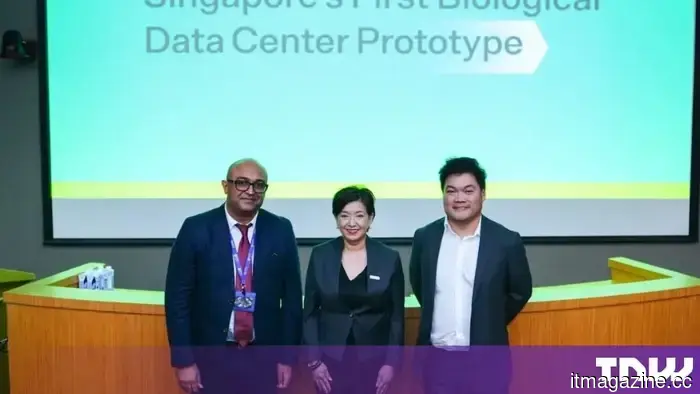 A data center rack utilizing living neurons is now functioning in Singapore.
In Singapore, NUS, DayOne, and Cortical Labs have established a 20-unit rack of biological computers. However, the assertion of its efficiency lacks specific numerical support.
A data center rack utilizing living neurons is now functioning in Singapore.
In Singapore, NUS, DayOne, and Cortical Labs have established a 20-unit rack of biological computers. However, the assertion of its efficiency lacks specific numerical support.
 Data indicates that Tesla's robotaxis in Austin are now completely autonomous.
All 170 Tesla robotaxi rides monitored in Austin over a two-week period operated without supervision. Just two days prior, a passenger recorded one navigating past bollards.
Data indicates that Tesla's robotaxis in Austin are now completely autonomous.
All 170 Tesla robotaxi rides monitored in Austin over a two-week period operated without supervision. Just two days prior, a passenger recorded one navigating past bollards.
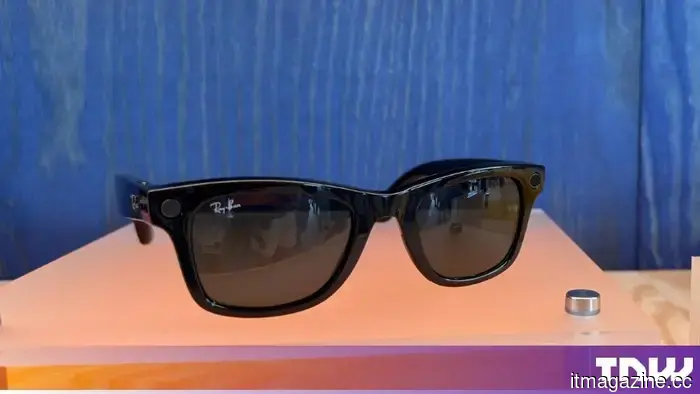 Cinemas, educational institutions, and ICE are all prohibiting Meta smart glasses.
Cinemas, US educational institutions, and ICE are all imposing limitations on Meta smart glasses, each for reasons that are unrelated. The regulation in cinemas goes back to 2014.
Cinemas, educational institutions, and ICE are all prohibiting Meta smart glasses.
Cinemas, US educational institutions, and ICE are all imposing limitations on Meta smart glasses, each for reasons that are unrelated. The regulation in cinemas goes back to 2014.
 Alibaba's profit dropped by 75% as its quarterly expenditures on AI reached $10 billion.
Alibaba's expenditure on AI reached $9.98 billion in the June quarter, while profits declined by 75%. However, the cloud division, for which it incurs costs, achieved a segment profit increase of 133%.
Alibaba's profit dropped by 75% as its quarterly expenditures on AI reached $10 billion.
Alibaba's expenditure on AI reached $9.98 billion in the June quarter, while profits declined by 75%. However, the cloud division, for which it incurs costs, achieved a segment profit increase of 133%.
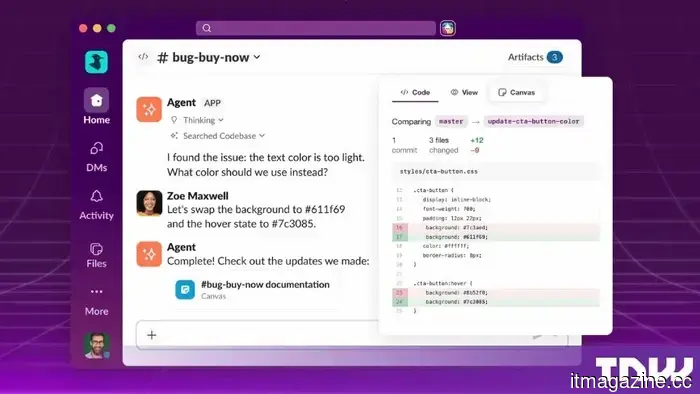 Slack unveils Slack Code, a platform where teams and AI agents collaborate.
Slack Code enables teams and AI agents to collaborate on writing, reviewing, and deploying code within a single channel. Founding partners include Claude, ChatGPT, Devin, and Copilot.
Slack unveils Slack Code, a platform where teams and AI agents collaborate.
Slack Code enables teams and AI agents to collaborate on writing, reviewing, and deploying code within a single channel. Founding partners include Claude, ChatGPT, Devin, and Copilot.
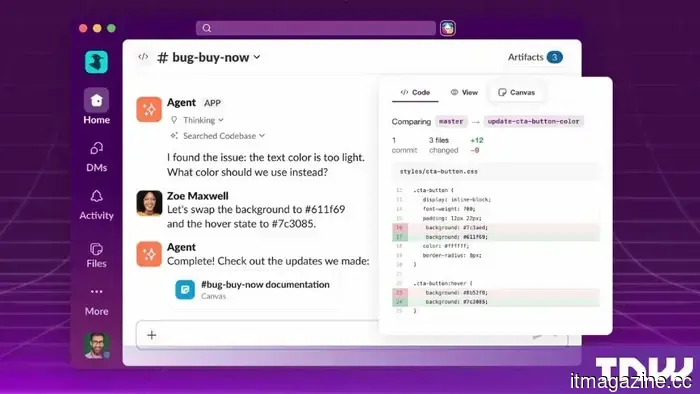 Slack introduces Slack Code, a platform for teams and AI agents to collaborate.
Slack Code enables teams and AI agents to write, review, and deploy code within a single channel. Claude, ChatGPT, Devin, and Copilot are the founding partners of this initiative.
Slack introduces Slack Code, a platform for teams and AI agents to collaborate.
Slack Code enables teams and AI agents to write, review, and deploy code within a single channel. Claude, ChatGPT, Devin, and Copilot are the founding partners of this initiative.
Tracking data indicates that Tesla's robotaxis in Austin are now completely autonomous.
Throughout a two-week period, all 170 Tesla robotaxi trips monitored in Austin operated without supervision. Just two days prior, a passenger captured footage of one navigating through bollards.