

A data center rack utilizing living neurons has recently begun operation in Singapore.
NUS Medicine, data center operator DayOne, and Melbourne’s Cortical Labs have introduced a prototype of a biological data center in Singapore, featuring a 20-unit rack of computers powered by neurons. However, the efficiency claims related to this project lack any published data to back them up.
On August 6, the system, which includes computers operating on living human neurons, was activated in Singapore and showcased to around 80 attendees. The hardware consists of 20 CL1 units, touted by the partners as the first independently operated biologically integrated server rack in existence. The neurons utilized are cultivated from stem cells at the NUS Life Sciences Institute.
The premise of this technology is based on electricity consumption. Biological computing is presented as a method to enhance AI capabilities while consuming significantly less power than traditional silicon servers. However, the announcement did not provide any specific metrics to verify these efficiency claims. According to Cortical Labs' own published specifications, a single CL1 unit consumes between 850 and 1,000 watts, meaning the entire rack could use up to 20 kilowatts.
This power usage is quite typical, as a standard data center rack operates within a similar range. The primary difference lies in the fact that energy is allocated to sustain the neurons rather than for computation, which addresses a separate challenge compared to those faced by startups in other areas.
The efficiency appears to stem from the neurons themselves, rather than the surrounding infrastructure. For instance, Switzerland's FinalSpark, which operates a remote platform of 16 brain organoids in Vevey, claims that its biological processors require approximately a million times less energy than digital chips.
These assertions emphasize the cells as the computing entities. In contrast, the incubators, pumps, and temperature control systems essential for the cells’ survival contribute significantly to the electricity costs.
Meanwhile, Europe is pursuing similar aims using silicon technology. The Netherlands is developing a neuromorphic computing hub focused on chips that replicate neuron functions without the need for sustenance.
Cortical Labs is keen on attracting customers over publishing research findings. According to founder Hon Weng Chong, this prototype transitions the focus from research to practical applications, highlighting areas like drug discovery, humanoid robotics, cybersecurity, and fraud detection.
One limitation is biological in nature. The life support system for the CL1 units maintains neuron viability for up to six months, requiring a maintenance plan that traditional silicon racks do not need.
The critical metric that would clarify the efficiency is energy consumption per useful task, which has yet to be disclosed. In the meantime, investors continue to funnel resources into a brain-inspired technology that operates solely on electricity.
Other articles
 To experiment with Android 17's new feature aimed at reducing mindless scrolling, you'll require a Pixel 11.
Google's latest Pause Point feature introduces a 10-second delay before launching apps you’ve flagged as distracting, although this Digital Wellbeing tool is currently exclusive to the Pixel 11 series.
To experiment with Android 17's new feature aimed at reducing mindless scrolling, you'll require a Pixel 11.
Google's latest Pause Point feature introduces a 10-second delay before launching apps you’ve flagged as distracting, although this Digital Wellbeing tool is currently exclusive to the Pixel 11 series.
 Octopus Charge aggregates 210,000 US chargers into a single app, excluding Tesla, Ionna, and Electrify America.
Octopus Energy has introduced Octopus Charge in North America, featuring 210,000 chargers. In Europe, its counterpart boasts 1.5 million chargers, largely due to regulatory factors.
Octopus Charge aggregates 210,000 US chargers into a single app, excluding Tesla, Ionna, and Electrify America.
Octopus Energy has introduced Octopus Charge in North America, featuring 210,000 chargers. In Europe, its counterpart boasts 1.5 million chargers, largely due to regulatory factors.
 Two senators have set a deadline of 1 September for TikTok to clarify its safety evaluation.
Two senators set a deadline of 1 September for TikTok to respond to 13 inquiries regarding the safety experiment conducted on 15 million users in the United States.
Two senators have set a deadline of 1 September for TikTok to clarify its safety evaluation.
Two senators set a deadline of 1 September for TikTok to respond to 13 inquiries regarding the safety experiment conducted on 15 million users in the United States.
 Cinemas, schools, and ICE are all prohibiting the use of Meta smart glasses.
Cinemas, schools in the US, and ICE are all placing limitations on Meta smart glasses, each for reasons that are unrelated. The rule concerning cinemas has been in place since 2014.
Cinemas, schools, and ICE are all prohibiting the use of Meta smart glasses.
Cinemas, schools in the US, and ICE are all placing limitations on Meta smart glasses, each for reasons that are unrelated. The rule concerning cinemas has been in place since 2014.
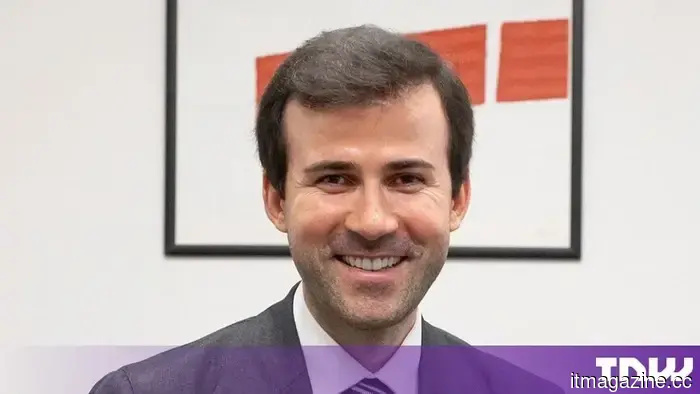 Milan's Domyn secures over $1 billion in what is Europe's largest funding round for AI, primarily through debt financing.
Domyn, located in Milan, has secured approximately $1.1 billion, with about 90% of that being debt, to enhance the Colosseum supercomputer it developed in collaboration with Nvidia in southern Italy.
Milan's Domyn secures over $1 billion in what is Europe's largest funding round for AI, primarily through debt financing.
Domyn, located in Milan, has secured approximately $1.1 billion, with about 90% of that being debt, to enhance the Colosseum supercomputer it developed in collaboration with Nvidia in southern Italy.
 Two senators have set a deadline of September 1 for TikTok to clarify its safety testing procedures.
Two senators have set a deadline of 1 September for TikTok to respond to 13 questions regarding the safety experiment conducted on 15 million users in the US.
Two senators have set a deadline of September 1 for TikTok to clarify its safety testing procedures.
Two senators have set a deadline of 1 September for TikTok to respond to 13 questions regarding the safety experiment conducted on 15 million users in the US.
A data center rack utilizing living neurons has recently begun operation in Singapore.
In Singapore, NUS, DayOne, and Cortical Labs have developed a 20-unit rack of biological computers. However, the assertion regarding its efficiency is made without any accompanying figures.