
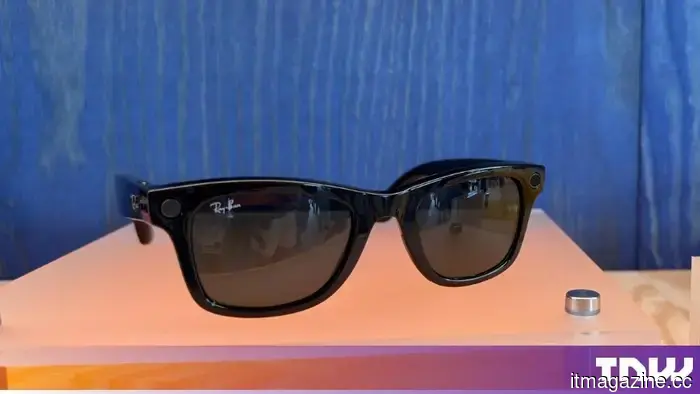
Cinemas, schools, and ICE are all prohibiting the use of Meta smart glasses.
Cinemas became the latest organization to oppose Meta smart glasses on Thursday. The UK Cinema Association announced that several operators are implementing policies to limit the use of camera-equipped eyewear. It cited two primary concerns: film piracy and customer privacy.
On its own, this reflects a trade association managing a risk. However, in the context of recent events, it signifies something broader. American school districts, a federal immigration agency, a hacker conference, NBA arenas, and a British pub chain have all arrived at similar conclusions regarding the same product, although their motivations differ significantly.
The association noted that operators are "aware of the privacy and film piracy issues" associated with this technology and many now have policies "to prohibit and/or restrict the wearing of camera-enabled smart glasses, especially in their venues." So far, it has not heard of any outright bans from its members. The association represents more than 90% of cinema operators in the UK, both in terms of numbers and market share.
The issue of accessibility adds complexity to the situation, which the association acknowledged. Smart glasses can provide personalized subtitles and assist viewers with visual or hearing impairments.
The cinema policy has been around for twelve years. The association did not highlight that it had already established this rule previously; it remains listed on the trade body's website as a key issue, first penned in 2014 and updated in January 2023.
Cinemas are advised to request that customers refrain from bringing image-recording devices into theaters at all, regardless of whether a film is being screened. Staff should ask anyone wearing such devices to remove them and may ask them to leave if they do not comply.
This guideline was originally crafted for Google Glass when the association was known as the Cinema Exhibitors’ Association. Its chief executive, Phil Clapp, has held the position since October 2007, meaning the individual who established the rule is still in charge of the organization that invokes it.
Clapp shared his rationale with The Register in June 2014 when Google Glass was introduced in the UK at a price of £1,000. He stated, “We believe that it is generally more difficult to detect when they are and are not recording, so our approach is a precautionary one.”
The policy has remained unchanged. Google Glass never progressed beyond beta testing, and Google eventually pulled it from consumer sales. Meta launched its glasses in 2021, retailing them through high street opticians for £359, making them one of their best-selling products.
The issue in schools is particularly pressing. A recent report by Futurism’s Maggie Harrison Dupré detailed numerous videos filmed inside American middle and high schools using smart glasses, almost exclusively Meta's, and shared on TikTok and Instagram. The footage was predominantly recorded by a teenage boy and included troubling behavior directed at girls.
Both platforms failed to detect this content until Futurism alerted them. Following this, Meta removed most of the videos, and TikTok deleted those brought to its attention.
TNW reported a similar trend, highlighting that Instagram blocked relevant search terms while still promoting the videos through its algorithm.
One specific detail illustrates why schools cannot address this as a phone issue: a student filmed himself placing his smartphone into a pouch designated for confiscating devices while still wearing the smart glasses.
“These are way more discreet than I thought they would be,” commented a teacher after catching a student filming.
Andy Liddell from the EdTech Law Center in Austin told Futurism that a classroom is not a public space. “Traditionally, classrooms have been private areas that not everyone has access to, and therefore, there is an expectation of privacy,” he said. “In reality, schools are the last places where these glasses should be used.”
Districts in Florida, California, and Nevada have implemented explicit bans. Meta stated that schools are best positioned to know their students and respects their authority to establish rules, while also noting that some students with disabilities benefit from this technology.
Immigration and Customs Enforcement (ICE) prohibited employees from wearing Meta smart glasses at work this week, classifying them as body-worn cameras.
The devices “could unintentionally capture, record, or transmit sensitive information, potentially jeopardizing privacy and legal protections,” Acting Director David Venturella stated in a Tuesday memo reported by the New York Times. This ban applies to all federal staff, not just law enforcement.
An ICE spokesperson noted to The Register, “This isn’t new; nothing has changed.” They added that personally owned body-worn cameras have always been prohibited.
Two relevant facts coexist here: In April, the Department of Homeland Security sought $7.5 million to develop its own smart glasses prototype, which could facilitate biometric identification of undocumented individuals. That same month, the American Civil Liberties Union sent a letter to Meta, signed by 77 organizations, urging the company not to incorporate facial recognition in consumer eyewear.
Meta removed facial recognition code from its glasses app in June, just a day
Otros artículos
 Milan's Domyn secures over $1 billion in the largest AI funding round in Europe, primarily through debt.
Domyn, based in Milan, has secured approximately $1.1 billion, with around 90% of that amount being debt, to enhance the Colosseum supercomputer it developed in collaboration with Nvidia in southern Italy.
Milan's Domyn secures over $1 billion in the largest AI funding round in Europe, primarily through debt.
Domyn, based in Milan, has secured approximately $1.1 billion, with around 90% of that amount being debt, to enhance the Colosseum supercomputer it developed in collaboration with Nvidia in southern Italy.
 Two senators have set a deadline of September 1 for TikTok to clarify its safety evaluations.
Two senators set a deadline of 1 September for TikTok to respond to 13 inquiries regarding the safety experiment conducted on 15 million users in the US.
Two senators have set a deadline of September 1 for TikTok to clarify its safety evaluations.
Two senators set a deadline of 1 September for TikTok to respond to 13 inquiries regarding the safety experiment conducted on 15 million users in the US.
 Waymo developed its own chip for robotaxis and released its list of suppliers.
Waymo released details about its robotaxi computing architecture, which includes a custom 5nm chip and its seven suppliers. Nvidia and AMD remain included in the list.
Waymo developed its own chip for robotaxis and released its list of suppliers.
Waymo released details about its robotaxi computing architecture, which includes a custom 5nm chip and its seven suppliers. Nvidia and AMD remain included in the list.
 Baidu's Apollo Go has launched in Dubai through Uber, operating without a safety driver.
Uber introduced Baidu's Apollo Go in Dubai without a safety driver, just one day after launching its first European autonomous vehicle rides in Zagreb with a safety driver present.
Baidu's Apollo Go has launched in Dubai through Uber, operating without a safety driver.
Uber introduced Baidu's Apollo Go in Dubai without a safety driver, just one day after launching its first European autonomous vehicle rides in Zagreb with a safety driver present.
 Android 17 prefers to throttle one problematic app instead of affecting the performance of your whole phone.
Android 17 implements stricter memory limits for individual apps, which can slow down or stop apps that consume excessive resources. This gives Google a new method to safeguard the overall performance of the phone, preventing a single memory-intensive app from causing broader issues.
Android 17 prefers to throttle one problematic app instead of affecting the performance of your whole phone.
Android 17 implements stricter memory limits for individual apps, which can slow down or stop apps that consume excessive resources. This gives Google a new method to safeguard the overall performance of the phone, preventing a single memory-intensive app from causing broader issues.
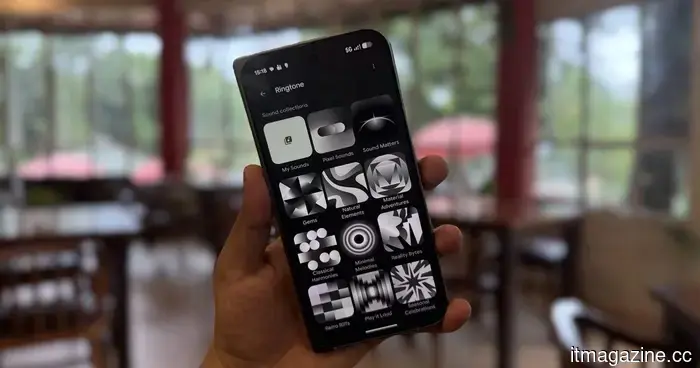 The Google Pixel 11 will allow you to tailor the vibration settings of your phone.
Google's concealed vibration options are finally available. The Pixel 11 series allows you to choose distinct vibrations for ringtones, notifications, and even individual contacts.
The Google Pixel 11 will allow you to tailor the vibration settings of your phone.
Google's concealed vibration options are finally available. The Pixel 11 series allows you to choose distinct vibrations for ringtones, notifications, and even individual contacts.
Cinemas, schools, and ICE are all prohibiting the use of Meta smart glasses.
Cinemas, schools in the US, and ICE are all placing limitations on Meta smart glasses, each for reasons that are unrelated. The rule concerning cinemas has been in place since 2014.