
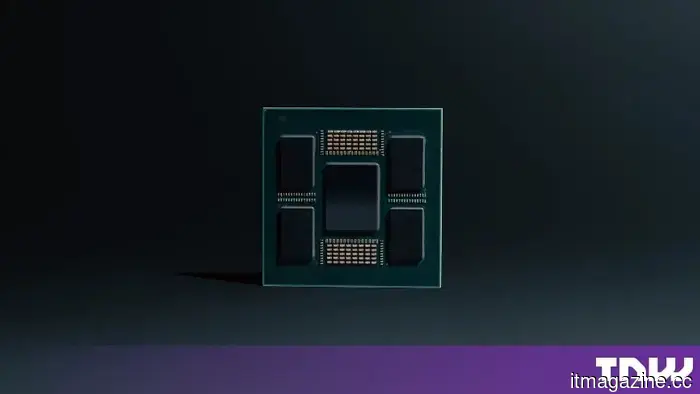
Waymo developed its own chip specifically for robotaxis and made its list of suppliers public.
Waymo has revealed details about the components of its robotaxis. In a blog post on Thursday, the company outlined the structure of its onboard computer, introduced a custom-made 5-nanometer chip of its design, and identified the seven suppliers involved in building the system. This is described as the first look into what’s inside the trunk of their vehicles, which is a significant disclosure for a company that typically shares very little about its hardware.
Regarding the functionality of the chip, it's important to clarify the specifics since coverage varies. The chip is an application-specific integrated circuit (ASIC) built on a 5nm process. Waymo characterizes it as managing “the massive influx of raw data before it reaches our core ML brain.” It processes information from raw lidar, radar, and camera streams, including temporal denoising to enhance perception in low-light conditions, and feeds it into a separate inference engine that operates sensor-fusion models. Essentially, it acts as a front end that prepares data for the driving system rather than making decisions about the vehicle's actions.
This distinction is crucial for understanding the performance claims. Waymo states that “these ASICs alone deliver over 1,000 TOPS of ML performance dedicated to front-end processing and ML models.” Bloomberg noted that in this respect, Waymo's performance is comparable to Nvidia’s latest autonomous driving systems. However, this comparison is between a single component performing a specific task and complete driving platforms; it is not a claim made by Waymo.
Additionally, Waymo has not abandoned partnerships with Nvidia or AMD; both are listed as suppliers alongside Micron, Samsung, Sandisk, Socionext, and TSMC. The company describes its system as a “balanced, heterogeneous system” that combines its machine learning chip with the best available CPUs, GPUs, and accelerators. The custom chip enhances capability but does not replace existing commercial components.
Waymo also hints that the ASIC is “just one of several exciting custom components we’re developing,” indicating that more proprietary silicon is on the horizon, though specifics have not been shared.
Waymo has built its system around three constraints that it labels as responsive, ruggedized, and redundant. The first relates to latency—defined by the term “pixels-to-actuation,” which refers to the time gap from when a photon hits a sensor to when the vehicle responds. Over the past eight years, raw computing power has increased by a factor of 20 to reduce this latency.
The second constraint is physical; the computer must endure the vibrations, shocks, and temperature variations experienced by vehicles, as it operates in environments ranging from cold Midwest winters to hot Phoenix summers. Waymo integrates the computer with the vehicle’s liquid cooling system and has designed it to operate quietly while leaving enough space for luggage.
The third constraint is particularly noteworthy: the system is engineered like two independent engines. They typically function as a single unit running parallel workloads, but if one experiences a fault, the other takes over. This redundancy is built into the hardware, as there is no human backup.
In terms of scale, Waymo references over 200 million miles of fully autonomous driving experience informing its design. The company operates around 4,000 vehicles across more than 10 cities and completes about 500,000 paid trips weekly, according to The Verge. All these figures come from Waymo itself, and the company asserts that its technology decreases crashes and injuries compared to human drivers based on its own safety data. However, no external organization has verified this information.
The system is capable of processing data from 13 high-resolution cameras simultaneously, matching the specifications of the Ojai, a purpose-built four-seater equipped also with four lidar sensors. Zeekr, a division of the Chinese automotive company Geely, manufactures the Ojai. Recently, it was reported by Bloomberg that the vehicle is set to be fitted with Waymo’s custom chip, although specifics regarding quantity and timeline remain undisclosed.
Political dynamics are at play as well; Washington has tightened regulations on Chinese automotive hardware throughout the year, and a supplier identified by the Pentagon as a military entity still has Chinese lidar technology in American robotaxis. Waymo designing the AI while Geely constructs the vehicle’s body is a strategic response to this scrutiny, although neither company has publicly framed it this way.
A day prior to the chip announcement, Waymo made the Ojai available to all riders in Los Angeles, Phoenix, and San Francisco, as reported by Engadget, having previously limited access to invitations only.
Waymo is not acting in isolation; its parent company has been developing silicon for years to lower AI infrastructure costs, and Marvell recently granted Google a $12.2 billion share option in a custom chip agreement.
One point of interest is Waymo's choice to utilize a 5nm process, which is considered mature compared to more cutting-edge technologies. BYD has developed a 4nm driving chip for a vehicle priced at $10,000. While
Other articles
 The Google Pixel 11 will allow you to tailor the vibration settings of your phone.
Google's concealed vibration options are finally available. The Pixel 11 series allows you to choose distinct vibrations for ringtones, notifications, and even individual contacts.
The Google Pixel 11 will allow you to tailor the vibration settings of your phone.
Google's concealed vibration options are finally available. The Pixel 11 series allows you to choose distinct vibrations for ringtones, notifications, and even individual contacts.
 Data indicates that Tesla's robotaxis in Austin are now completely autonomous.
All 170 Tesla robotaxi rides monitored in Austin over a two-week period operated without supervision. Just two days prior, a passenger recorded one navigating past bollards.
Data indicates that Tesla's robotaxis in Austin are now completely autonomous.
All 170 Tesla robotaxi rides monitored in Austin over a two-week period operated without supervision. Just two days prior, a passenger recorded one navigating past bollards.
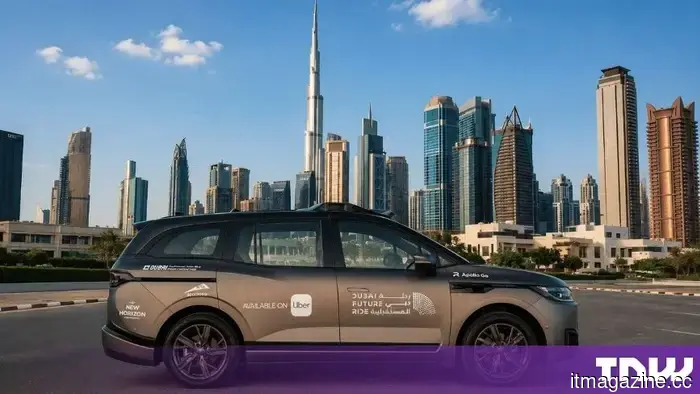 Baidu's Apollo Go has launched on Uber in Dubai, and operates without a safety driver.
Uber introduced Baidu's Apollo Go in Dubai without a safety driver, just one day following the launch of its first European autonomous vehicle rides in Zagreb, where a safety driver was present.
Baidu's Apollo Go has launched on Uber in Dubai, and operates without a safety driver.
Uber introduced Baidu's Apollo Go in Dubai without a safety driver, just one day following the launch of its first European autonomous vehicle rides in Zagreb, where a safety driver was present.
 Two senators have set a deadline of September 1 for TikTok to clarify its safety evaluations.
Two senators set a deadline of 1 September for TikTok to respond to 13 inquiries regarding the safety experiment conducted on 15 million users in the US.
Two senators have set a deadline of September 1 for TikTok to clarify its safety evaluations.
Two senators set a deadline of 1 September for TikTok to respond to 13 inquiries regarding the safety experiment conducted on 15 million users in the US.
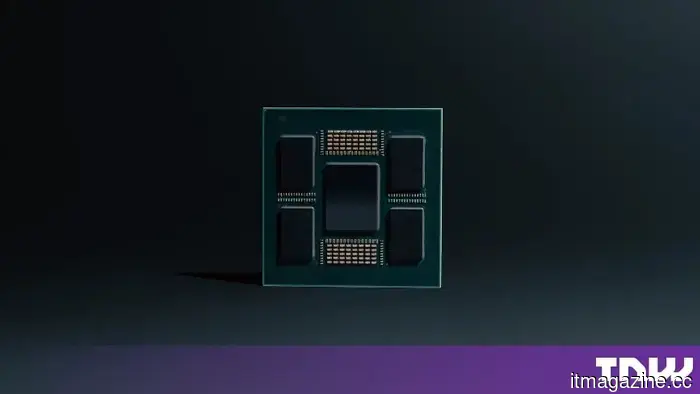 Waymo developed its own chip for robotaxis and released its list of suppliers.
Waymo released details about its robotaxi computing architecture, which includes a custom 5nm chip and its seven suppliers. Nvidia and AMD remain included in the list.
Waymo developed its own chip for robotaxis and released its list of suppliers.
Waymo released details about its robotaxi computing architecture, which includes a custom 5nm chip and its seven suppliers. Nvidia and AMD remain included in the list.
 Android 17 prefers to slow down a single problematic app instead of affecting the performance of your entire phone.
Android 17 implements tougher memory limits for individual apps, which can either slow down or shut down apps that are using excessive memory. This provides Google with a fresh method to safeguard overall phone performance before a single memory-intensive app leads to broader issues.
Android 17 prefers to slow down a single problematic app instead of affecting the performance of your entire phone.
Android 17 implements tougher memory limits for individual apps, which can either slow down or shut down apps that are using excessive memory. This provides Google with a fresh method to safeguard overall phone performance before a single memory-intensive app leads to broader issues.
Waymo developed its own chip specifically for robotaxis and made its list of suppliers public.
Waymo has released details about its robotaxi computing architecture, which includes a custom 5nm chip and identifies its seven suppliers. Nvidia and AMD remain included in this list.