
Octopus Charge aggregates 210,000 US chargers into a single app, excluding Tesla, Ionna, and Electrify America.
Octopus Energy has introduced Octopus Charge in the United States, Canada, and Mexico, aggregating over 210,000 chargers from more than 20 networks without any markup on energy prices. Its European counterpart encompasses 1.5 million chargers across over 40 nations.
A British energy firm has centralized more than 210,000 chargers in North America under a single login. The new Octopus Charge app from Octopus Energy services the U.S., Canada, and Mexico, providing a unified payment method for every network it encompasses.
The commercial advantage is that it incurs no additional costs. Octopus states that it passes through each operator's per-kWh rate unchanged, meaning that a station charging $0.50 will also appear as $0.50 in the app.
A notable statistic comes from Europe. Octopus Electroverse, the original launched in 2020, connects approximately 1.5 million chargers across over 1,500 networks in more than 40 countries.
In contrast, the American version has roughly two dozen networks. This disparity is not a flaw in technology, but rather reflects two different markets, with one having resolved charging confusion through regulation.
In Europe, access is mandated by law instead of being a commercial favor. According to EU regulations effective April 2024, new public charging stations must accept card or contactless payments, and prices must be clearly displayed before charging starts.
There are no similar regulations in North America, allowing the largest operators to opt out. Notably, Tesla Superchargers, Ionna, and Electrify America are absent from the app, which are essential for an American road trip.
However, what is included is still significant. Octopus lists over 20 partners, including EVgo, ChargePoint, Blink, bp pulse, Shell Recharge, FLO, and Circle K.
Automakers are pursuing a similar strategy but with a more limited scope. General Motors aggregates networks within its own brand applications, but only for General Motors vehicles, whereas Octopus Charge is compatible with all electric vehicles.
The company emphasizes this as a way to reduce friction rather than building the market. According to Sebastian Blake, head of product at Octopus Energy US, the goal is to enable drivers to "spend less time managing charging and more time enjoying the drive."
Meanwhile, Europe is consolidating from the opposite direction. Electroverse registered its millionth driver in July, and smaller operators continue to secure funding to expand European networks that connect to the same roaming infrastructure.
This comparison is worth remembering the next time European charging systems are criticized. A driver in Rotterdam needs only one app and a bank card, while a driver in Texas still requires multiple solutions.
Other articles
 To experiment with Android 17's new feature aimed at reducing mindless scrolling, you'll require a Pixel 11.
Google's latest Pause Point feature introduces a 10-second delay before launching apps you’ve flagged as distracting, although this Digital Wellbeing tool is currently exclusive to the Pixel 11 series.
 Alibaba's profits declined by 75% as its quarterly expenditures on AI reached $10 billion.
Alibaba's expenditure on AI reached $9.98 billion in the June quarter, while profits decreased by 75%. Meanwhile, the cloud division, which incurs costs, achieved a segment profit increase of 133%.
 A data center rack powered by living neurons is now functional in Singapore.
In Singapore, NUS, DayOne, and Cortical Labs have developed a 20-unit rack of biological computers. However, the assertion of its efficiency is made without any accompanying figures.
 A data center rack utilizing living neurons has recently begun operation in Singapore.
In Singapore, NUS, DayOne, and Cortical Labs have developed a 20-unit rack of biological computers. However, the assertion regarding its efficiency is made without any accompanying figures.
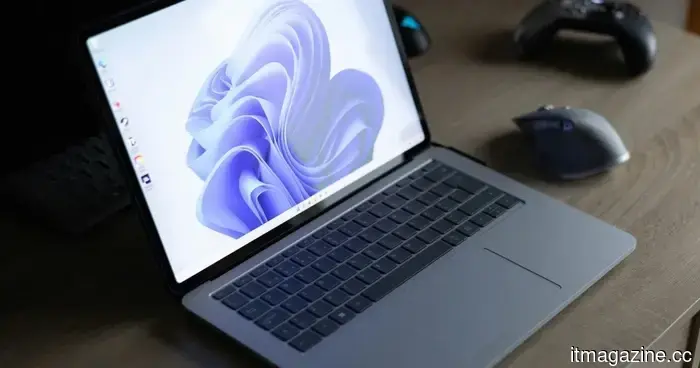 Windows 11 is eliminating the Drag Tray feature.
Microsoft is eliminating the Drag Tray feature in Windows 11 following user feedback that the file-sharing overlay was disrupting routine drag-and-drop operations.
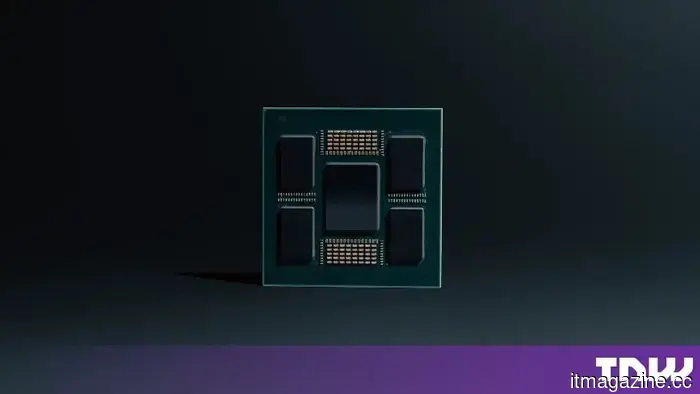 Waymo developed its own chip for robotaxis and released its list of suppliers.
Waymo released details about its robotaxi computing architecture, which includes a custom 5nm chip and its seven suppliers. Nvidia and AMD remain included in the list.
Octopus Charge aggregates 210,000 US chargers into a single app, excluding Tesla, Ionna, and Electrify America.
Octopus Energy has introduced Octopus Charge in North America, featuring 210,000 chargers. In Europe, its counterpart boasts 1.5 million chargers, largely due to regulatory factors.