
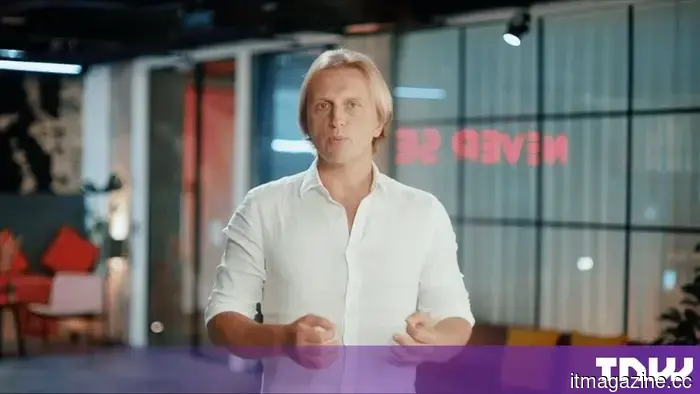
Nik Storonsky of Revolut has successfully raised a $500 million fund for his algorithm-driven venture firm QuantumLight.
Nik Storonsky, the founder of Revolut, has finalized a $500 million second fund for QuantumLight, the algorithmic venture-capital firm he co-founded, which allows software to dictate investment decisions instead of relying on partners. This new fund is twice the size of QuantumLight’s inaugural $250 million fund from the previous year, marking a rapid growth period for a firm that is still demonstrating the effectiveness of data over human selection.
Storonsky, whose wealth has increased with Revolut and who is allegedly due for a large share benefit, is the most prominent supporter of the firm. QuantumLight takes a direct stand against the exclusive practices of traditional venture capital. Rather than relying on a team of renowned partners using intuition and personal networks, the firm employs a systematic, data-centric approach that evaluates companies on a large scale and makes quantitative investment decisions, resembling a quantitative hedge fund more than a typical Sand Hill Road partnership.
This method aligns with Nik Storonsky’s reputation as an unyielding optimizer in the fintech sector. He has turned Revolut into Europe’s most valuable private tech firm, based on a culture that prioritizes aggressive objectives and data over feelings. Last year, QuantumLight released a hiring manual outlining the management techniques that contributed to that success, providing straightforward advice that resembles an operational guide for fast-growing companies.
QuantumLight applies the same belief—that systematic decision-making is generally superior to gut feelings—to its selection of promising investments. Doubling the fund's size in just under a year signals a show of confidence, though the specific source of this confidence is intriguing. QuantumLight has not disclosed its external investors, and Storonsky's substantial wealth allows him the resources to fuel his projects independently.
The oversubscribed fund close indicates that limited partners are also buying into the concept, betting that algorithmic sourcing can identify growth-stage companies often missed by conventional funds, and that the model merits increased investment after just one year. QuantumLight's first fund is merely a year old, too young to have generated exits that would demonstrate if the algorithm truly outperforms the market, as venture returns typically require nearly a decade to evaluate.
Many firms have previously claimed they could “quant-ify” venture capital, yet the best returns in this field still mainly come from a small number of outlier investments that are notoriously difficult to predict, especially since they often seem unreasonable at the time of investment. Nonetheless, the timing is appropriate. As AI transforms every knowledge-based sector, capital allocators are not exempt, and a number of funds now assert that they use machine learning to source deals, evaluate founders, and time markets.
QuantumLight is among the most dedicated and credibly funded proponents of this approach, making its track record a crucial test case for determining whether software can genuinely industrialize a profession that has traditionally valued taste and relationships over data analytics.
Additionally, there is the issue of a CEO’s focus. Storonsky is currently guiding Revolut through a critical phase, having recently obtained a French banking license and expanding into business banking, with an IPO expected in a couple of years that is likely to occur in the U.S., all while pursuing a second venture in capital investment. Founders are seldom focused solely on one business, but this divided attention may become a consideration for Revolut’s future public-market investors.
For now, $500 million is a significant amount to test a serious proposition: that the qualities traditionally associated with venture capitalists, such as judgment, intuition, and a discerning eye, can be substituted or even improved upon by algorithms. If Nik Storonsky is correct, QuantumLight will be seen as insightful. Conversely, if he is mistaken, it will serve as a costly reminder that some investments cannot be simplified to a formula. In any case, the experiment has just expanded in scale.
Other articles
 The Pixel 11 provides me with three compelling reasons to switch from my iPhone 17, and I'm worried they might convince me.
The Pixel 11 features a specialized telephoto lens, enhanced AI capabilities, and a significantly larger battery, providing it with an interesting advantage over the iPhone 17.
The Pixel 11 provides me with three compelling reasons to switch from my iPhone 17, and I'm worried they might convince me.
The Pixel 11 features a specialized telephoto lens, enhanced AI capabilities, and a significantly larger battery, providing it with an interesting advantage over the iPhone 17.
 The concept of Meta's facial recognition smart glasses has reemerged in a recent patent.
A recently published Meta patent outlines how its smart glasses might utilize AI facial recognition to recognize individuals and incorporate that information into media creation.
The concept of Meta's facial recognition smart glasses has reemerged in a recent patent.
A recently published Meta patent outlines how its smart glasses might utilize AI facial recognition to recognize individuals and incorporate that information into media creation.
 Damaging your Galaxy Z Fold 8 Ultra screen may result in a repair cost of $639, so it's important to treat it with care.
Repairing a cracked inner screen on the Z Fold 8 Ultra will cost you $639, as stated by Samsung's official repair pricing.
Damaging your Galaxy Z Fold 8 Ultra screen may result in a repair cost of $639, so it's important to treat it with care.
Repairing a cracked inner screen on the Z Fold 8 Ultra will cost you $639, as stated by Samsung's official repair pricing.
 CISA mandates a three-day patch following an active attack on a vulnerability in the Ray AI framework.
CISA has included CVE-2025-62593, a code-injection vulnerability found in the open-source Ray AI framework, in its Known Exploited Vulnerabilities catalog.
CISA mandates a three-day patch following an active attack on a vulnerability in the Ray AI framework.
CISA has included CVE-2025-62593, a code-injection vulnerability found in the open-source Ray AI framework, in its Known Exploited Vulnerabilities catalog.
 Beyond Venture Capital: The Growing Influence of Family Offices as Key Investors in AI
Family offices are emerging as significant players in AI investment, supporting a wide range of initiatives including advanced models, physical AI, as well as infrastructure and industrial applications.
Beyond Venture Capital: The Growing Influence of Family Offices as Key Investors in AI
Family offices are emerging as significant players in AI investment, supporting a wide range of initiatives including advanced models, physical AI, as well as infrastructure and industrial applications.
 The most amusing and practical Siri commands for iOS and macOS.
Siri has become even more intelligent with iOS 27 and macOS Golden Gate. Explore the most entertaining and helpful Siri commands for the iPhone, Mac, HomePod, and Apple Watch.
The most amusing and practical Siri commands for iOS and macOS.
Siri has become even more intelligent with iOS 27 and macOS Golden Gate. Explore the most entertaining and helpful Siri commands for the iPhone, Mac, HomePod, and Apple Watch.
Nik Storonsky of Revolut has successfully raised a $500 million fund for his algorithm-driven venture firm QuantumLight.
QuantumLight, the data-focused venture capital firm co-founded by Revolut CEO Nik Storonsky, has successfully raised an oversubscribed second fund totaling $500 million, which is double the amount of its initial fund launched in 2025.