

E-Paper Performs Best When There's Little Activity
E-paper is distinctive because its advantages become apparent in situations where a display can remain static. While phone screens are engineered for constant refreshing, E-paper is content to maintain the same image until a new one is requested. This characteristic makes it ideal for reading and other activities where movement is not particularly beneficial.
The Page Is Constructed Capsule by Capsule
The display consists of millions of tiny capsules suspended under the surface, each containing charged black-and-white particles in liquid. Electrical fields rearrange these particles, bringing the appropriate color to the forefront to form text and images.
The screen retains that image without needing continuous power. This bistable function means energy is utilized primarily when the display changes, contributing to the long battery life commonly associated with e-readers and e-paper devices.
E-paper reflects ambient light instead of emitting light directly through the display, making it easier to view outdoors. However, in total darkness, the screen requires a built-in front light or another light source.
Its Major Limitation Shapes Its Purpose
E-paper updates slowly since the particles within the display physically shift whenever the image changes. Fast animations can appear choppy, ghosting might occur during transitions, and smooth video playback is not a highlight of this technology. For many users, these issues are not significant.
A novel remains unchanged until the reader flips the page, and a handwritten note alters only when someone writes on it. Similarly, a shelf label in a store can display the same price for hours or days.
This is why e-paper has expanded beyond e-readers. Retailers utilize it for electronic shelf labels, transit systems implement it for low-power signage, and digital paper tablets adapt the same technology for writing and reviewing documents.
Source Unknown
Digital Paper Tablets Are Transforming the Category
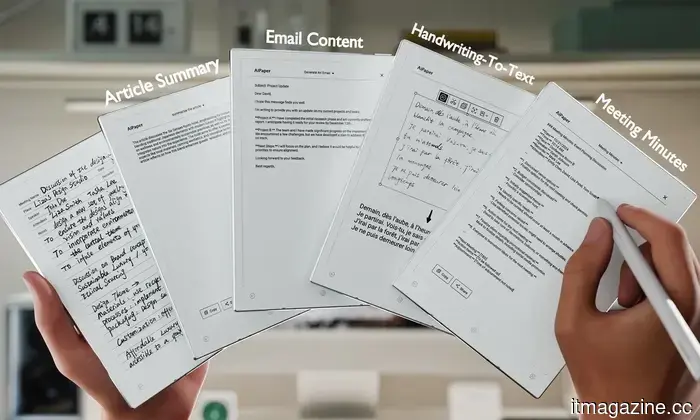
The latest e-paper tablets exist in a niche between traditional notebooks and regular tablets. Many focus primarily on writing, reading, and annotating, with low-latency stylus input to enhance the handwriting experience.
Some products offer greater software versatility. Viwoods paper tablets merge an e-paper display with Android capabilities, enabling the device to manage documents, notes, and compatible applications all in one.
This distinction raises a broader question for the category. E-paper hardware naturally supports slower, static tasks, whereas modern software continually aims for wider functionality.
Instead of struggling against the display’s low refresh rate to mimic a smartphone, Viwoods accepts its static nature. By directing the hardware towards writing, reading, and document organization instead of rapid movements, Viwoods transforms what could be a technical drawback into its key productivity advantage: a distraction-free digital space that mimics real paper.
Source Unknown
Enhanced Features Can Modify the Experience
The charm of e-paper has always partly stemmed from what it lacks. It’s hard to waste an hour on autoplay videos on a display that doesn’t emphasize movement. As manufacturers introduce features like search, cloud syncing, handwriting recognition, OCR, and AI tools, digital paper tablets become more versatile, and they also edge closer to conventional computing behaviors.
Viwoods embodies this trend with features centered on document management and digital workflows, while other manufacturers keep their systems more limited. However, neither approach alters the fundamental trade-off inherent to e-paper. The display remains most effective at retaining information, allowing handwritten input, and conserving energy.
Source Unknown
E-Paper Excels at Staying Focused
Most contemporary screens are designed for versatile use. In contrast, e-paper thrives for nearly the opposite reason. Its slow refresh rate renders videos unsuitable, and its reliance on reflected light gives it a printed page quality that traditional displays can't replicate entirely. Its bistable structure also allows static information to remain visible with minimal energy consumption.
Though the technology may continue to acquire software features, its essence is rooted in something straightforward: a screen crafted to function like a page.
Digital Trends collaborates with external contributors, and all content provided by contributors undergoes review by the Digital Trends editorial team.


Other articles
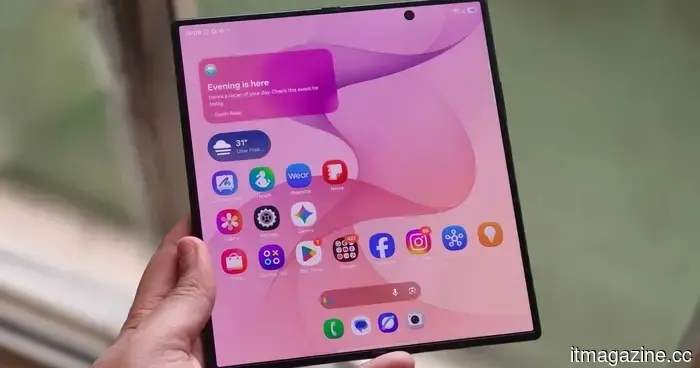 Breaking the screen of your Galaxy Z Fold 8 Ultra could set you back $639, so be sure to treat it with care.
According to Samsung's official repair pricing, fixing a cracked inner screen on the Z Fold 8 Ultra will cost you $639.
Breaking the screen of your Galaxy Z Fold 8 Ultra could set you back $639, so be sure to treat it with care.
According to Samsung's official repair pricing, fixing a cracked inner screen on the Z Fold 8 Ultra will cost you $639.
 Apple inadvertently disclosed its AirPods that come with a camera.
A concealed demo video in macOS Tahoe 26.7 exhibits AirPods with cameras in operation, and they could be released as early as September.
Apple inadvertently disclosed its AirPods that come with a camera.
A concealed demo video in macOS Tahoe 26.7 exhibits AirPods with cameras in operation, and they could be released as early as September.
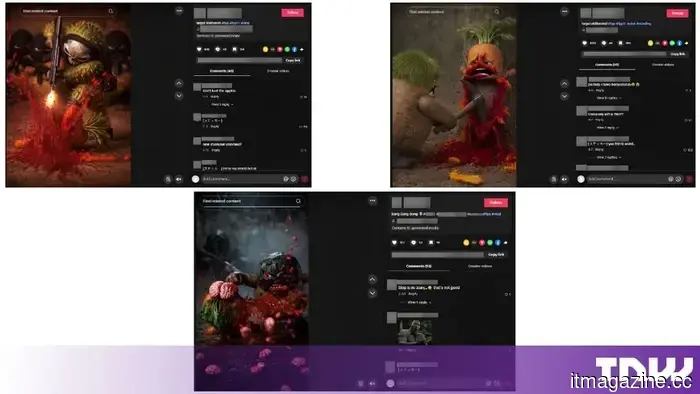 An analysis connects violent AI content, referred to as 'slop,' to 'brain rot' and aggression in children.
A commonly circulated assertion that AI ‘slop’ leads to cognitive decline and aggressive behavior in children originates from a single, non-peer-reviewed GNET study that focused on online observations.
An analysis connects violent AI content, referred to as 'slop,' to 'brain rot' and aggression in children.
A commonly circulated assertion that AI ‘slop’ leads to cognitive decline and aggressive behavior in children originates from a single, non-peer-reviewed GNET study that focused on online observations.
 Beyond Venture Capital: The Growing Influence of Family Offices as Key Investors in AI
Family offices are emerging as significant players in AI investment, supporting a wide range of initiatives including advanced models, physical AI, as well as infrastructure and industrial applications.
Beyond Venture Capital: The Growing Influence of Family Offices as Key Investors in AI
Family offices are emerging as significant players in AI investment, supporting a wide range of initiatives including advanced models, physical AI, as well as infrastructure and industrial applications.
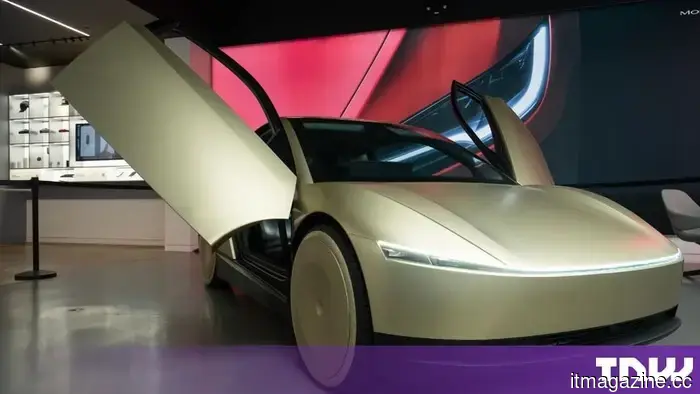 Tesla's Cybercab is set to launch, beginning by offering rides to its own employees.
Reports indicate that Tesla is getting ready to launch its Cybercab robotaxi on public streets in Austin as early as this month, initially offering rides to employees before integrating the vehicles into its current service.
Tesla's Cybercab is set to launch, beginning by offering rides to its own employees.
Reports indicate that Tesla is getting ready to launch its Cybercab robotaxi on public streets in Austin as early as this month, initially offering rides to employees before integrating the vehicles into its current service.
 Driver’s licenses in Apple Wallet will soon be available in North Carolina, but there is a caveat.
North Carolina is set to introduce digital driver's licenses, with support for Apple Wallet anticipated in early 2027 following an initial launch via the state's NC Wallet app.
Driver’s licenses in Apple Wallet will soon be available in North Carolina, but there is a caveat.
North Carolina is set to introduce digital driver's licenses, with support for Apple Wallet anticipated in early 2027 following an initial launch via the state's NC Wallet app.
E-Paper Performs Best When There's Little Activity
E-paper is distinctive because its advantages become apparent when a screen can remain static. Unlike phone displays, which are designed for continuous refreshing, E-paper is content to maintain the same image until a new one is requested. This quality makes it ideal for reading and other activities where movement doesn't enhance the experience. The Page […]