
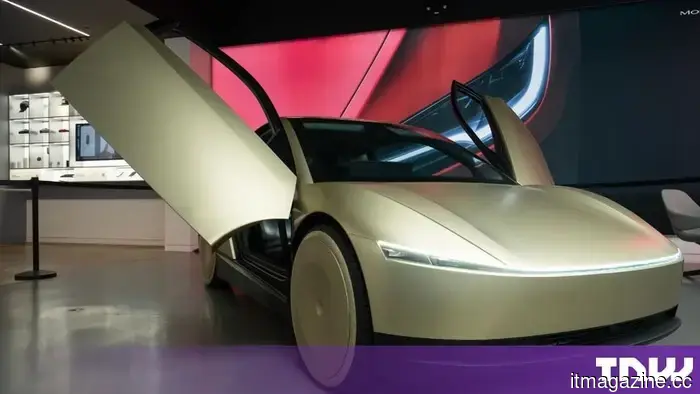
Tesla's Cybercab is set to launch, beginning by offering rides to its own employees.
Tesla is getting ready to launch its Cybercab, a specially designed two-seat robotaxi that lacks a steering wheel and pedals, on public streets in Austin as early as this month, as reported by The Information. However, as with previous Tesla launch dates, there is a stipulation: the initial riders will be Tesla employees rather than the general public.
According to reports, the strategy is to start by providing rides to staff on public roads and subsequently integrate the Cybercabs into the company’s current robotaxi service in Austin a few days later. The internal goal is said to be the end of August, but insiders have warned that this timeline might still face delays.
This approach mirrors Tesla's cautious strategy before launching its first commercial robotaxi hub in the city last year, which seems prudent. It remains a significant distance from the fully autonomous future that Elon Musk has been promoting since about 2016.
To prepare, Tesla has been conducting test drives around its Austin campus since July, transporting employees on private routes. Additionally, last week the company held training sessions with local fire, rescue, and police departments so that first responders can understand how the vehicles behave in emergency situations. Testing of the production version on public roads commenced back in June.
The fact that Tesla is in production reveals a lot, as it has been manufacturing Cybercabs at Gigafactory Texas since February, and by July, over 100 of the vehicles were seen in factory lots. Essentially, the company is mass-producing a vehicle that it is not yet legally allowed to sell or permit customers to drive due to the lack of necessary controls and permissions in most areas.
This represents a significant gamble on software that still needs to demonstrate its effectiveness, meaning that the launch is dependent on the readiness of the driving system rather than the factory, which appears to be operational.
Therein lies the discrepancy between the announcement and reality. Tesla claims its robotaxis have already accumulated around 380,000 driverless miles across its hubs, a figure that Musk has noted positively. In contrast, Waymo, a competitor that Tesla seldom names, surpassed 220 million miles of rider-only driverless travel some time ago.
Currently, Tesla's unsupervised fleet in Austin is reported to have dwindled to about 17 cars, down from nearly 25 in the spring, and its robotaxis are still restricted to specifically mapped geofences in a few cities, including Austin and several markets in Florida, with human safety monitors always present.
This is a service that is expanding slowly and methodically, regardless of how the launch is presented, and the Cybercab doesn’t significantly alter that equation; it simply offers a more polished appearance.
This does not imply that the Cybercab is a failure. A vehicle without a steering wheel is indeed a more daring concept than a modified Model Y, and regulators are gradually becoming more accepting of this design, as exemplified by Amazon’s Zoox, which received the first U.S. approval to charge for rides in a wheel-free robotaxi.
However, there is a reason why the first riders are company employees. Trials with employees present lower risks, are easier to manage, and prevent potential embarrassment for the company, allowing Tesla to announce a launch without actually providing the driverless public service it has been promising for nearly a decade.
We have witnessed similar scenarios in the past. The Cybercab was introduced with significant fanfare in 2024, and Tesla's robotaxi narrative tends to produce meticulously organized instances that appear to signify a breakthrough but end up being just practice.
A staff shuttle in one city is indeed a step forward; it simply does not equate to a robotaxi available for hailing, and it would be wise to clearly distinguish between the two until Tesla itself stops merging them.
Other articles
 What is the actual CO2 emissions from US data centres in terms of the equivalent of cars?
A recent study from Cornell estimates that AI servers in the US could produce between 24 and 44 million tonnes of CO2 annually by 2030. This emissions level is equivalent to that of 5 to 10 million cars, not 24 million, and this estimate is based on assumptions that merit further examination.
What is the actual CO2 emissions from US data centres in terms of the equivalent of cars?
A recent study from Cornell estimates that AI servers in the US could produce between 24 and 44 million tonnes of CO2 annually by 2030. This emissions level is equivalent to that of 5 to 10 million cars, not 24 million, and this estimate is based on assumptions that merit further examination.
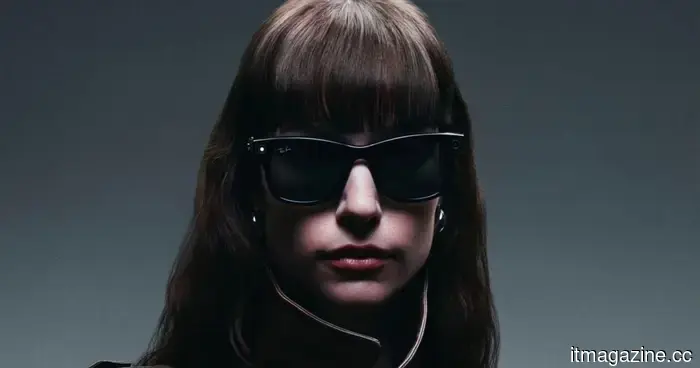 The concept of Meta's facial recognition smart glasses has reemerged in a recent patent.
A recently published Meta patent outlines how its smart glasses might utilize AI facial recognition to recognize individuals and incorporate that information into media creation.
The concept of Meta's facial recognition smart glasses has reemerged in a recent patent.
A recently published Meta patent outlines how its smart glasses might utilize AI facial recognition to recognize individuals and incorporate that information into media creation.
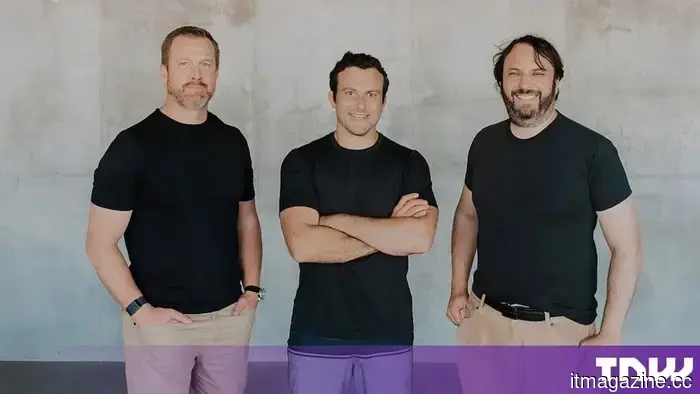 Smack Technologies secures $61 million as the Pentagon's urgency transforms into a battlefield-AI business model.
Smack Technologies has secured a $61 million Series B funding, marking its second round of 2026, driven by the Pentagon's initiative to accelerate AI development, transforming military urgency into a viable start-up business model.
Smack Technologies secures $61 million as the Pentagon's urgency transforms into a battlefield-AI business model.
Smack Technologies has secured a $61 million Series B funding, marking its second round of 2026, driven by the Pentagon's initiative to accelerate AI development, transforming military urgency into a viable start-up business model.
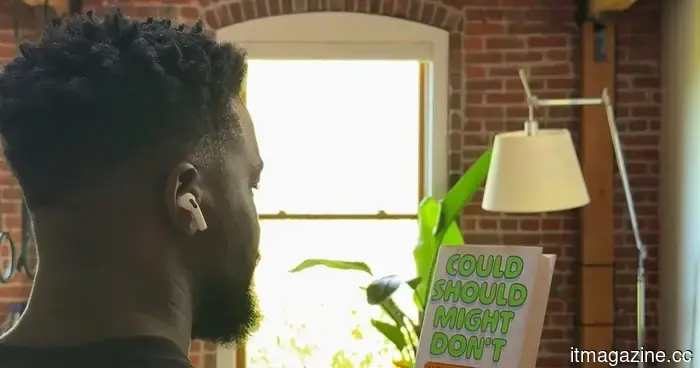 Apple inadvertently disclosed its AirPods that come with a camera.
A concealed demo video in macOS Tahoe 26.7 exhibits AirPods with cameras in operation, and they could be released as early as September.
Apple inadvertently disclosed its AirPods that come with a camera.
A concealed demo video in macOS Tahoe 26.7 exhibits AirPods with cameras in operation, and they could be released as early as September.
 An AirTag found in a rare book pointed to an Amazon book scanning facility located in Las Vegas.
A bookseller concealed an AirTag within a rare book. 404 Media traced it to a book scanning warehouse operated by Amazon, where employees removed bindings to digitize the pages.
An AirTag found in a rare book pointed to an Amazon book scanning facility located in Las Vegas.
A bookseller concealed an AirTag within a rare book. 404 Media traced it to a book scanning warehouse operated by Amazon, where employees removed bindings to digitize the pages.
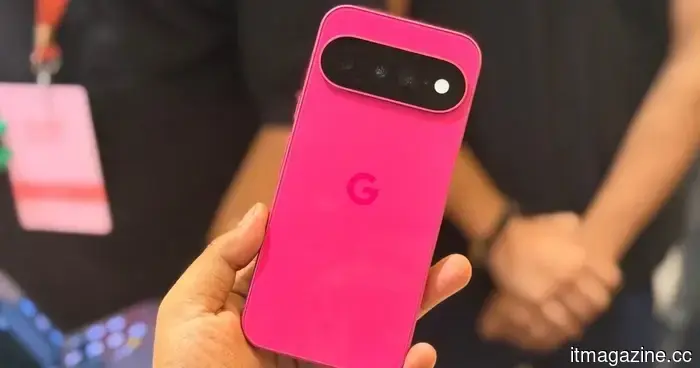 The Pixel 11 provides me with three compelling reasons to switch from my iPhone 17, and I'm worried they might convince me.
The Pixel 11 features a specialized telephoto lens, enhanced AI capabilities, and a significantly larger battery, providing it with an interesting advantage over the iPhone 17.
The Pixel 11 provides me with three compelling reasons to switch from my iPhone 17, and I'm worried they might convince me.
The Pixel 11 features a specialized telephoto lens, enhanced AI capabilities, and a significantly larger battery, providing it with an interesting advantage over the iPhone 17.
Tesla's Cybercab is set to launch, beginning by offering rides to its own employees.
Reports indicate that Tesla is getting ready to launch its Cybercab robotaxi on public streets in Austin as early as this month, initially offering rides to employees before integrating the vehicles into its current service.