
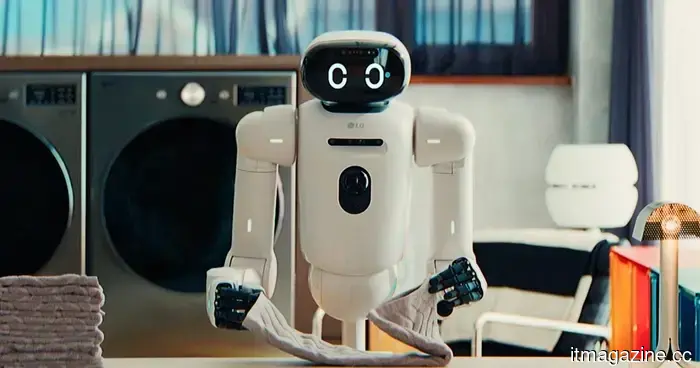
The US is attempting to remove foreign robots, but the domestic supply chain may not be ready at this time.
Creating a robot supply chain from the ground up requires years that Washington is currently unwilling to allocate.
The FCC has a history of utilizing its Covered List to push Chinese technology out of American markets, with robots now being the latest focus. Foreign-made humanoid robots, quadrupeds, and even robot vacuums must now be predominantly manufactured in the U.S. to be sold domestically (as reported by Rest of World).
What are the specifics of the new regulation?
Last month, the FCC included “advanced robotic devices” in its Covered List, the same national security list that has previously restricted products from Chinese firms such as Huawei and ZTE. New models of foreign humanoids, quadrupeds, robot vacuums, and even lawn mowers are now prohibited from entering the U.S. market.
Only products assembled in the U.S. that source at least 65% of their component value domestically are eligible. This requirement will increase to 75% by 2029. While the policy does not explicitly target any specific country, it is broadly perceived as an effort to reduce Chinese imports.
The positive aspect is that products currently available for sale are not impacted. Robots imported solely for research and development purposes (not for commercial distribution) remain exempt from this regulation for the time being.
How are startups responding to this?
Startup founders indicate that reaching the 65% local sourcing requirement is nearly unachievable at present. Many motors, sensors, and actuators are either prohibitively expensive, take too long to procure, or are, unfortunately, simply unavailable within the U.S. The situation has escalated to the point where employees have reportedly transported parts from China in their luggage to keep prototypes moving forward.
Michael Perry from Persona AI stated succinctly: “You need to provide the carrot as well as the stick.” Nevertheless, not everyone is concerned; Agility Robotics from Oregon and San Francisco's Nori Robotics are both in favor of the rule, asserting that it will ultimately protect them from less expensive Chinese competitors.
That said, the regulation undeniably complicates sourcing in the near term. China's dominance in robotics manufacturing is not coincidental. Decades of state investment, a robust engineering workforce, and a surge in electric vehicle production have established the kind of supply chain for sensors, batteries, and actuators that robots also depend on.
The outcome: Chinese-made humanoids are projected to account for nearly 90% of all sales globally by 2025, according to research firm Omdia.
For over five years, Shikhar has continuously simplified developments in consumer technology and shared them…
Viture Pro 2 review: Affordable glasses I preferred more for work than leisure
These are some of the lightest and brightest XR glasses available at this price point.
Quick summary
Two years ago, I had the opportunity to test the Viture Pro smart glasses. I was taken by the stylish design and impressive display quality, though a few minor issues prevented them from being an immediate recommendation for XR enthusiasts. The retail price of $459 made it difficult to endorse for anyone who isn’t a dedicated fan or lacks extra cash. However, the successor presents a markedly different product.
Your Mac might have a screen sharing issue, and hackers are already aware of it
A patch is effective only after installation.
If you’ve been delaying that macOS update highlighted in your notifications, this week is the time to proceed and complete the installation.
Apple discreetly addressed a significant screen sharing vulnerability in macOS earlier this month. Normally, this would indicate that the issue has been resolved, yet new information reveals that hackers have already infiltrated unpatched Macs, taken them over, and utilized them for cryptocurrency mining prior to the release of the fix.
Acer has just released a MacBook Neo competitor featuring an improved display, memory, and ports
The latest Windows contender against MacBook Neo boasts more RAM, additional storage, and a 120Hz display.
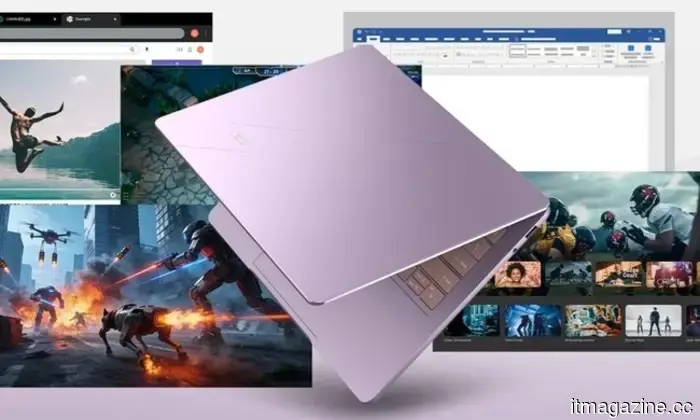
Apple's MacBook Neo has rapidly become a benchmark that affordable Windows laptops aspire to meet. Acer's latest Go Air has seemingly responded by addressing some of the hardware features that Apple overlooked.
Acer has introduced a new Go Air model in China, equipped with Intel’s newly launched Core 5 320 processor. It includes 12GB of LPDDR5 memory and a 512GB SSD, priced at CNY 5,499, which translates to about $815. There has been no announcement regarding the global release of this configuration, although it closely resembles the Acer Swift 14 that was presented at Computex 2026.




Other articles
 The concept of Meta's facial recognition smart glasses has reemerged in a recent patent.
A recently published Meta patent outlines how its smart glasses might utilize AI facial recognition to recognize individuals and incorporate that information into media creation.
The concept of Meta's facial recognition smart glasses has reemerged in a recent patent.
A recently published Meta patent outlines how its smart glasses might utilize AI facial recognition to recognize individuals and incorporate that information into media creation.
 What is the actual CO2 emissions from US data centres in terms of the equivalent of cars?
A recent study from Cornell estimates that AI servers in the US could produce between 24 and 44 million tonnes of CO2 annually by 2030. This emissions level is equivalent to that of 5 to 10 million cars, not 24 million, and this estimate is based on assumptions that merit further examination.
What is the actual CO2 emissions from US data centres in terms of the equivalent of cars?
A recent study from Cornell estimates that AI servers in the US could produce between 24 and 44 million tonnes of CO2 annually by 2030. This emissions level is equivalent to that of 5 to 10 million cars, not 24 million, and this estimate is based on assumptions that merit further examination.
 An analysis connects violent AI content, referred to as 'slop,' to 'brain rot' and aggression in children.
A commonly circulated assertion that AI ‘slop’ leads to cognitive decline and aggressive behavior in children originates from a single, non-peer-reviewed GNET study that focused on online observations.
An analysis connects violent AI content, referred to as 'slop,' to 'brain rot' and aggression in children.
A commonly circulated assertion that AI ‘slop’ leads to cognitive decline and aggressive behavior in children originates from a single, non-peer-reviewed GNET study that focused on online observations.
 Apple inadvertently disclosed its AirPods that come with a camera.
A concealed demo video in macOS Tahoe 26.7 exhibits AirPods with cameras in operation, and they could be released as early as September.
Apple inadvertently disclosed its AirPods that come with a camera.
A concealed demo video in macOS Tahoe 26.7 exhibits AirPods with cameras in operation, and they could be released as early as September.
 Driver’s licenses in Apple Wallet will soon be available in North Carolina, but there is a caveat.
North Carolina is set to introduce digital driver's licenses, with support for Apple Wallet anticipated in early 2027 following an initial launch via the state's NC Wallet app.
Driver’s licenses in Apple Wallet will soon be available in North Carolina, but there is a caveat.
North Carolina is set to introduce digital driver's licenses, with support for Apple Wallet anticipated in early 2027 following an initial launch via the state's NC Wallet app.
 Beyond Venture Capital: The Growing Influence of Family Offices as Key Investors in AI
Family offices are emerging as significant players in AI investment, supporting a wide range of initiatives including advanced models, physical AI, as well as infrastructure and industrial applications.
Beyond Venture Capital: The Growing Influence of Family Offices as Key Investors in AI
Family offices are emerging as significant players in AI investment, supporting a wide range of initiatives including advanced models, physical AI, as well as infrastructure and industrial applications.
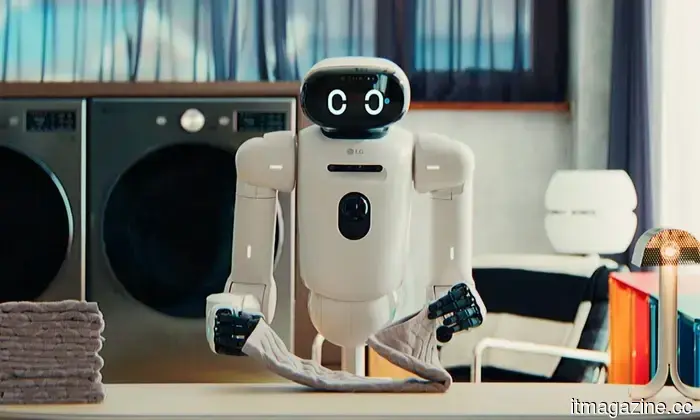
The US is attempting to remove foreign robots, but the domestic supply chain may not be ready at this time.
The FCC has recently prohibited foreign-manufactured robots that do not meet a 65% domestic component requirement.