
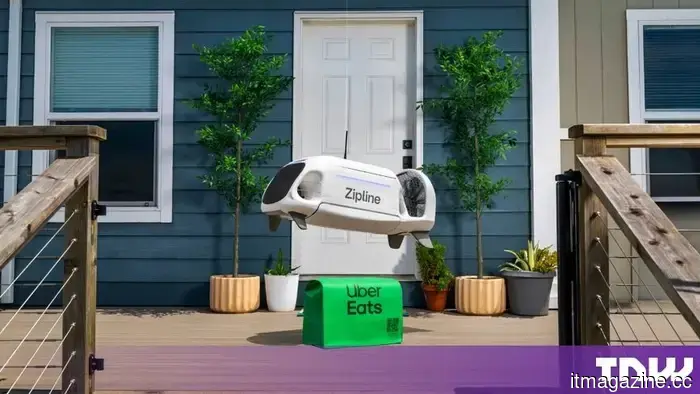
Uber is collaborating with the drone-delivery company Zipline and aims for one million drone deliveries each day.
Uber, the prominent ride-hailing company, announced on Monday that it is partnering with Zipline, a firm specializing in autonomous drone delivery, to transport Uber Eats orders to customers throughout the United States, along with an undisclosed strategic investment. This move represents a significant endorsement of a company that has spent the last year transitioning from hospital deliveries to suburban lunch services. It provides Uber with a means to deliver food without the need for drivers, vehicles, or parking struggles.
The launch is expected to begin in late 2026 in Zipline’s established markets in the U.S., including Houston, Phoenix, and certain areas in Texas and Ohio, before expanding to many more cities. Both companies assert that their goals are ambitious: achieving one million drone deliveries daily by the end of 2029, totaling over 365 million each year.
Dara Khosrowshahi, Uber’s CEO, portrayed this initiative in industry-friendly terms, pledging “a faster, more sustainable way for people to obtain what they need.” Meanwhile, Zipline’s co-founder, Keller Cliffton, emphasized a more grandiose perspective, stating that “teleportation isn’t science fiction anymore.”
Zipline’s drones travel to their delivery locations, hover at a height, and lower a small device on a long tether; this device navigates itself down to place the package at a doorway or driveway before being pulled back up. The company claims that an order can be delivered within five to ten minutes and that it currently achieves a delivery every twenty seconds somewhere in the world, having accumulated over 135 million autonomous miles and about 2.5 million deliveries to date.
This impressive record is a significant factor in why Uber is investing. Zipline was valued at $7.6 billion after securing $800 million in funding earlier this year, and its clientele already includes major brands like Walmart, Panera, Chipotle, and Wendy’s. By adding Uber Eats, which connects millions of customers with local eateries daily, Zipline gains something it has previously lacked: an established market of eager customers and the businesses that cater to them.
However, whether this initiative will be implemented on time remains uncertain. Drone deliveries have consistently been rumored to be five years away for over a decade, with many failed attempts leading the way, and TNW has been questioning the whereabouts of promised deliveries since at least 2022. Zipline faces strong competition from numerous well-funded rivals, such as Alphabet’s Wing and the Irish startup Manna, which is constructing a factory in Tulsa to compete in the market.
The main challenge lies in regulatory hurdles, as scaling beyond visual-range flights over densely populated areas requires the US Federal Aviation Administration's cautious approvals. There is also the concern of whether people would welcome a robotic aircraft flying over their yards during lunch hours. Zipline emphasizes the quiet operation and accuracy of its drones, clearly recognizing that social acceptance may be more challenging than technical issues.
This agreement aligns with Uber’s broader trend of outsourcing its automated initiatives rather than developing them internally, similar to its approach with robotaxis. This is the same company encouraging customers toward doorstep returns and courier pickups as it seeks profit in every aspect of last-mile delivery.
Currently, the prospects are enticing, but the challenges are all too familiar. Zipline and Uber possess the technology, funding, and a genuinely valuable offering: hot food delivered within minutes without a vehicle waiting at the curb. While navigating the skies may be straightforward, the complexities of regulation, community response, and economic factors on the ground continue to pose significant obstacles for drone delivery.
Other articles
 Alphabet embarks on its AI debt journey in Australia with its inaugural Australian dollar bond.
Alphabet is planning to issue its first Australian dollar bond, marking its debut ‘Kangaroo’ deal of approximately US$3.6 billion (around A$5 billion) to support its AI development efforts.
Alphabet embarks on its AI debt journey in Australia with its inaugural Australian dollar bond.
Alphabet is planning to issue its first Australian dollar bond, marking its debut ‘Kangaroo’ deal of approximately US$3.6 billion (around A$5 billion) to support its AI development efforts.
 ByteDance has entered into a copyright agreement with Hollywood's MPA to regulate its Seedance AI video tool.
ByteDance has entered into a copyright agreement with the Motion Picture Association to implement safeguards for its Seedance and Seedream AI generators.
ByteDance has entered into a copyright agreement with Hollywood's MPA to regulate its Seedance AI video tool.
ByteDance has entered into a copyright agreement with the Motion Picture Association to implement safeguards for its Seedance and Seedream AI generators.
 Deutsche Telekom acquires Macquarie’s Polish fiber and television assets in a €1 billion investment aimed at convergence.
Deutsche Telekom is acquiring Fiberhost and INEA from Macquarie for approximately €1 billion and integrating them into T-Mobile Polska. This move reflects a strategy that aims to secure a competitive advantage in Poland's market by combining mobile, broadband, and television services.
Deutsche Telekom acquires Macquarie’s Polish fiber and television assets in a €1 billion investment aimed at convergence.
Deutsche Telekom is acquiring Fiberhost and INEA from Macquarie for approximately €1 billion and integrating them into T-Mobile Polska. This move reflects a strategy that aims to secure a competitive advantage in Poland's market by combining mobile, broadband, and television services.
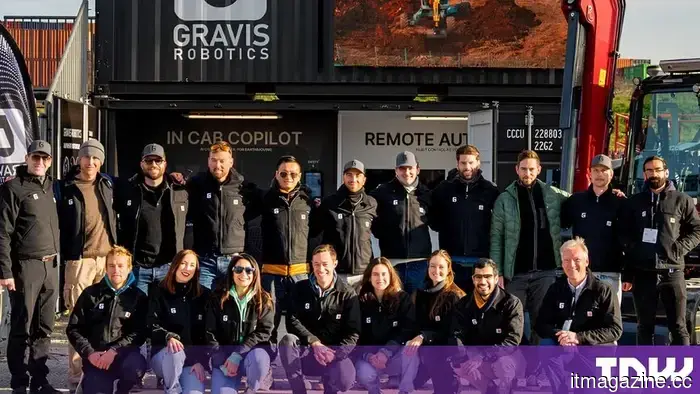 Gravis Robotics has secured $200 million in a Series A funding round, which was led by SoftBank.
Gravis Robotics, a spinout from ETH Zurich, has secured a $200 million Series A funding round, led by SoftBank. This fundraising is touted as the largest ever in the construction robotics sector and aims to implement self-driving software on excavators from companies like Caterpillar and Volvo.
Gravis Robotics has secured $200 million in a Series A funding round, which was led by SoftBank.
Gravis Robotics, a spinout from ETH Zurich, has secured a $200 million Series A funding round, led by SoftBank. This fundraising is touted as the largest ever in the construction robotics sector and aims to implement self-driving software on excavators from companies like Caterpillar and Volvo.
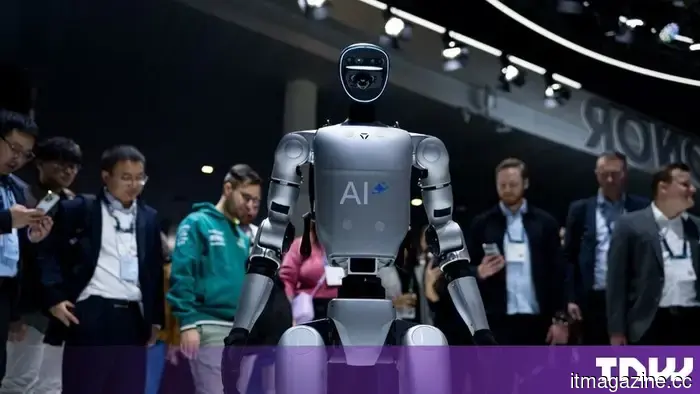 Unitree, the leading humanoid robot company in China, is set to be listed in Shanghai on August 19 following unprecedented demand.
Unitree Robotics is set to launch on Shanghai’s STAR Market on August 19, with an estimated valuation of nearly $9 billion after raising approximately 6.1 billion yuan.
Unitree, the leading humanoid robot company in China, is set to be listed in Shanghai on August 19 following unprecedented demand.
Unitree Robotics is set to launch on Shanghai’s STAR Market on August 19, with an estimated valuation of nearly $9 billion after raising approximately 6.1 billion yuan.
 Nvidia is not supporting OpenAI's lease; it is supporting the structures.
Nvidia limited its OpenAI support to $105 billion and finalized the deal in Ohio. This guarantee pertains to the value of the data centers, rather than OpenAI's rental costs.
Nvidia is not supporting OpenAI's lease; it is supporting the structures.
Nvidia limited its OpenAI support to $105 billion and finalized the deal in Ohio. This guarantee pertains to the value of the data centers, rather than OpenAI's rental costs.
Uber is collaborating with the drone-delivery company Zipline and aims for one million drone deliveries each day.
Uber is collaborating with the drone delivery company Zipline and acquiring a strategic investment to transport Uber Eats orders throughout the United States, aiming for a goal of one million deliveries daily by the end of 2029.