
ByteDance has entered into a copyright agreement with Hollywood's MPA to regulate its Seedance AI video tool.
The owner of TikTok has reached an agreement with the Motion Picture Association (MPA), the trade organization representing the major US studios, aimed at enhancing copyright protections for its AI image and video generation tools. This deal effectively resolves a standoff that started when studios accused the company of creating a system for widespread copyright infringement.
The pact pertains to Seedance, ByteDance’s video generation model, and Seedream, its image generation counterpart, which power AI features in TikTok, the CapCut editor, and the Dreamina app. ByteDance claims that newer versions of the models now include stronger intellectual property protections, though neither party has clearly defined what these protections entail. Both have committed to ongoing collaboration as technology advances.
This agreement comes after a particularly contentious dispute. In February, following the release of Seedance 2.0, the MPA sent a cease-and-desist letter, explicitly stating that the tool served as an engine of "systemic infringement," suggesting that copyright violations were more of a design feature than an issue. Individual studios, including Disney, Netflix, Warner Bros, Paramount, and Sony, had previously issued their own warnings, with Disney highlighting viral clips featuring characters from Marvel and Star Wars, while Japan initiated a separate inquiry into anime look-alikes.
Importantly, the MPA's complaint had two main aspects: one focused on outputs—specifically, that Seedance would readily produce recognizable copyrighted characters and celebrity likenesses upon request. The other, more complex issue concerned inputs, asserting that ByteDance had trained the model on studio content initially without permission. This recent agreement primarily addresses the first concern rather than the second.
This distinction is significant, as implementing output filters is the simpler task. Adding safeguards to prevent the model from generating images of Iron Man is an engineering challenge that can be resolved; however, it does not address whether the film libraries were used to teach the model what Iron Man looks like in the first place.
The question regarding training data is central to the ongoing AI copyright conflicts, with studios demanding image generators disclose their learning sources alongside a wave of publisher lawsuits. A simple agreement with ByteDance does not settle this issue. Nevertheless, this deal represents a notable victory for an industry that has been primarily reactive for the past two years.
Hollywood has observed OpenAI withdrawing its Sora app amidst legal scrutiny, seen the Oscars prohibit AI actors and AI-generated scripts, and generally struggled to set terms for a rapidly advancing technology. Securing written commitments from ByteDance—a Chinese firm with an audience that studios both desire and fear—provides leverage they will want to utilize.
Furthermore, this makes ByteDance one of the first major AI video developers to establish a formal understanding with Hollywood rather than confronting it in court, a precedent the MPA will likely present to other rival generators.
However, there are significant caveats. The details of the agreement remain undisclosed, making it difficult to evaluate the effectiveness of the guardrails and permitting potential subtle adjustments; enforcing compliance across TikTok, CapCut, and Dreamina at such a large scale is a challenging task.
Moreover, a voluntary agreement does not equate to a licensing contract, meaning the studios are not clearly compensated for whatever their catalogs may have already imparted to these models. It is a truce rather than a resolution.
What this agreement signifies is a shift in strategy. Instead of seeking to litigate ByteDance into submission—a prospect uncertain given the company's location outside of U.S. jurisdiction—Hollywood has opted to negotiate guidelines that it can reference immediately. Whether this evolves into the licensing framework the studios ultimately seek, or simply provides a temporary respite until a new model is introduced, remains an unresolved question. Seedance will continue to evolve, and legal representatives on all sides will remain active.
Other articles
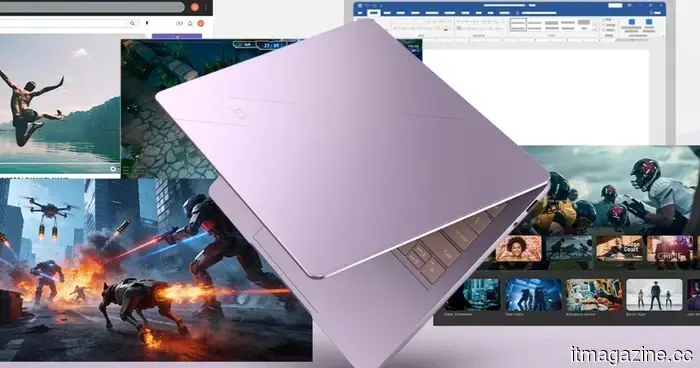 Acer has just released a competitor to the MacBook Neo that features an improved display, enhanced memory, and additional ports.
Acer's newest Go Air combines Intel's Core i5 320 processor with a 120Hz display, 12GB of RAM, 512GB of storage, and dual Thunderbolt 4 ports, positioning it as a strong rival to Apple's MacBook Neo.
Acer has just released a competitor to the MacBook Neo that features an improved display, enhanced memory, and additional ports.
Acer's newest Go Air combines Intel's Core i5 320 processor with a 120Hz display, 12GB of RAM, 512GB of storage, and dual Thunderbolt 4 ports, positioning it as a strong rival to Apple's MacBook Neo.
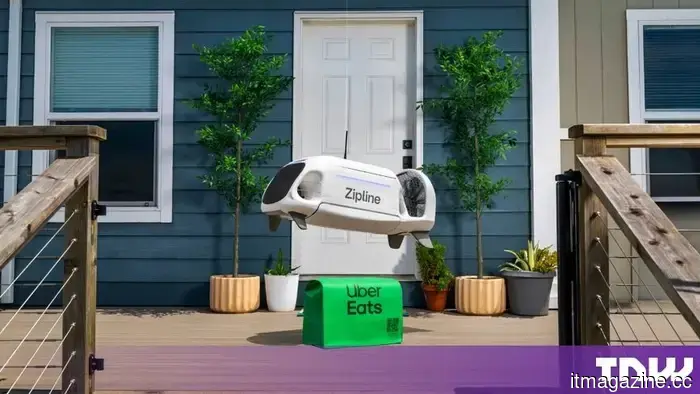 Uber is collaborating with the drone-delivery company Zipline and aims for one million drone deliveries each day.
Uber is collaborating with the drone delivery company Zipline and acquiring a strategic investment to transport Uber Eats orders throughout the United States, aiming for a goal of one million deliveries daily by the end of 2029.
Uber is collaborating with the drone-delivery company Zipline and aims for one million drone deliveries each day.
Uber is collaborating with the drone delivery company Zipline and acquiring a strategic investment to transport Uber Eats orders throughout the United States, aiming for a goal of one million deliveries daily by the end of 2029.
 Synchrony aims to integrate your Amazon and Walmart store cards into ChatGPT.
Synchrony is collaborating with OpenAI to enable shoppers to make payments using store cards within ChatGPT, but one of its executives stated that the integration process could take as long as a year.
Synchrony aims to integrate your Amazon and Walmart store cards into ChatGPT.
Synchrony is collaborating with OpenAI to enable shoppers to make payments using store cards within ChatGPT, but one of its executives stated that the integration process could take as long as a year.
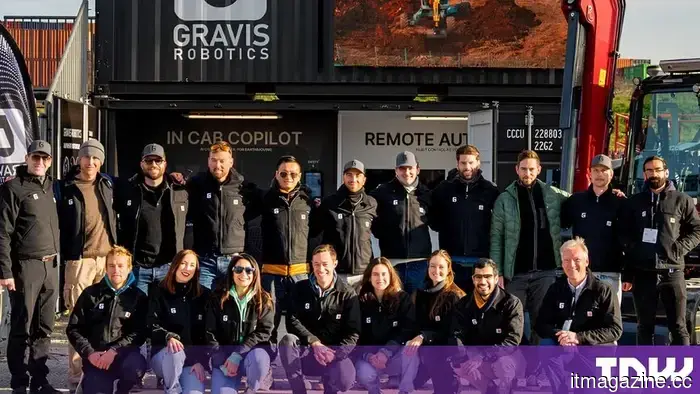 Gravis Robotics has secured $200 million in a Series A funding round, which was led by SoftBank.
Gravis Robotics, a spinout from ETH Zurich, has secured a $200 million Series A funding round, led by SoftBank. This fundraising is touted as the largest ever in the construction robotics sector and aims to implement self-driving software on excavators from companies like Caterpillar and Volvo.
Gravis Robotics has secured $200 million in a Series A funding round, which was led by SoftBank.
Gravis Robotics, a spinout from ETH Zurich, has secured a $200 million Series A funding round, led by SoftBank. This fundraising is touted as the largest ever in the construction robotics sector and aims to implement self-driving software on excavators from companies like Caterpillar and Volvo.
 Nvidia is not supporting OpenAI's lease; it is supporting the structures.
Nvidia limited its OpenAI support to $105 billion and finalized the deal in Ohio. This guarantee pertains to the value of the data centers, rather than OpenAI's rental costs.
Nvidia is not supporting OpenAI's lease; it is supporting the structures.
Nvidia limited its OpenAI support to $105 billion and finalized the deal in Ohio. This guarantee pertains to the value of the data centers, rather than OpenAI's rental costs.
 Deutsche Telekom acquires Macquarie’s Polish fiber and television assets in a €1 billion investment aimed at convergence.
Deutsche Telekom is acquiring Fiberhost and INEA from Macquarie for approximately €1 billion and integrating them into T-Mobile Polska. This move reflects a strategy that aims to secure a competitive advantage in Poland's market by combining mobile, broadband, and television services.
Deutsche Telekom acquires Macquarie’s Polish fiber and television assets in a €1 billion investment aimed at convergence.
Deutsche Telekom is acquiring Fiberhost and INEA from Macquarie for approximately €1 billion and integrating them into T-Mobile Polska. This move reflects a strategy that aims to secure a competitive advantage in Poland's market by combining mobile, broadband, and television services.
ByteDance has entered into a copyright agreement with Hollywood's MPA to regulate its Seedance AI video tool.
ByteDance has entered into a copyright agreement with the Motion Picture Association to implement safeguards for its Seedance and Seedream AI generators.