
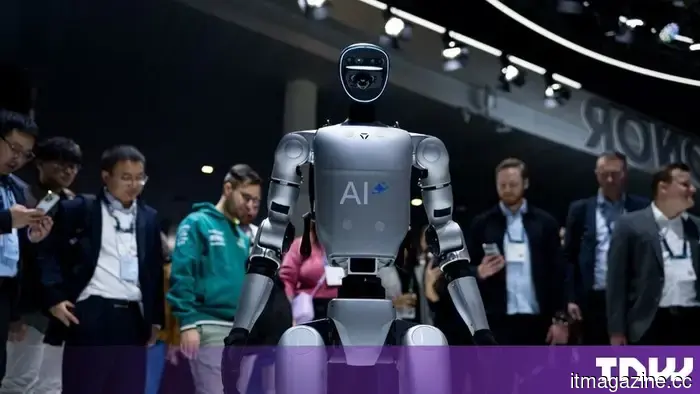
Unitree, the leading humanoid robot company in China, is set to be listed in Shanghai on August 19 following unprecedented demand.
Unitree Robotics, based in Hangzhou and recognized for its significant role in popularizing Chinese humanoid robots as a spectator attraction, is set to begin trading on Shanghai’s STAR Market on August 19, as reported by Reuters.
This listing marks it as the first general-purpose humanoid manufacturer to go public on the mainland, and it comes after completing the necessary paperwork: earlier this year, China’s securities regulator approved its registration when the projections were substantially more modest.
Unitree has priced its shares at 150.8 yuan each, offering approximately 40 million new shares, which constitutes about 10% of the expanded company, to raise around 6.1 billion yuan or roughly $900 million.
This values the company at nearly 61 billion yuan, close to $9 billion, which is significantly above the 42 billion yuan that the market had anticipated just weeks prior and well beyond the $7 billion estimate circulated before.
For a company that was hardly known a few years back, and which still sells more robotic dogs than humanoids, this revaluation is remarkable. Retail investors showed an overwhelming response to the offer, oversubscribing by over 8,000 times, setting a new record for the STAR Market, and the overall demand far exceeded the offer, leading to an allocation rate of approximately 0.018%.
Grey-market pricing suggests that first-day gains could be three to four times the offer price, reflecting not so much a valuation as a sentiment. In the first half of 2026, new Chinese listings had an average debut return of 233%, establishing a state of excitement as the baseline for the market.
Additionally, on Monday, just two days prior to the listing and coinciding with the World Robot Conference in Beijing, Unitree introduced a new high-speed humanoid referred to as "Superman." The company claims it was built in just over three months and can jump two meters from a standing position while reaching speeds of 12.66 meters per second, surpassing Usain Bolt at his peak.
The company describes it as a work in progress and strategically provided investors with another engaging video to circulate before pricing.
Beneath the spectacle, what is being offered is substantial. Unitree gained recognition for its agile quadruped robotic dogs before venturing into humanoids, and its G1 and H-series models have become staples in the internet's robot video landscape, showcasing running, dancing, sparring, and self-righting capabilities.
Founder Wang Xingxing, still in his mid-thirties, owns about one-third of the company and is regarded as China’s first humanoid-robot billionaire on paper, with notable supporters including Tencent, Alibaba, and the AI newcomer DeepSeek.
However, the financial outlook is more complex than the large crowds outside the offering might suggest. Revenue has more than quadrupled year on year, and, unlike many in the sector, Unitree has been profitable for several years.
Nonetheless, its net profit for the first quarter dropped dramatically, nearly by half based on the filing, amid rising research and marketing expenses, illustrating a company striving to remain competitive rather than simply enjoying high profit margins.
It is also, undeniably, a national initiative. Beijing has strongly supported humanoid robots as a key industry, and this debut is interpreted domestically as a significant achievement for Chinese hardware rather than just a corporate milestone.
Competition is intensifying, with contenders like AgiBot, Leju, and EngineAI pursuing their own public listings in Hong Kong and Shenzhen. Whether any of these rivals can transform viral showcases into sustainable businesses remains uncertain, given the early evidence is distinctly mixed.
Amid all the fanfare, the crucial issue remains unanswered. Unitree produces machines capable of performing somersaults; however, it has yet to demonstrate success in securing a mass market where customers are continually satisfied and orders are recurrent.
Even Nvidia, the company whose chips are crucial to this entrepreneurial surge, has been discreetly diversifying its investments among other robotic manufacturers.
Investors driving the stock price up significantly are betting that these demonstrations are just the beginning. Starting from August 19, the market will begin to ascertain, with caution or otherwise, the true value of the company.
Other articles
 Deutsche Telekom acquires Macquarie’s Polish fiber and TV assets in a €1 billion investment aimed at convergence.
Deutsche Telekom is acquiring Fiberhost and INEA from Macquarie for approximately €1 billion and integrating them into T-Mobile Polska, aiming to successfully combine mobile, broadband, and television services in Poland.
Deutsche Telekom acquires Macquarie’s Polish fiber and TV assets in a €1 billion investment aimed at convergence.
Deutsche Telekom is acquiring Fiberhost and INEA from Macquarie for approximately €1 billion and integrating them into T-Mobile Polska, aiming to successfully combine mobile, broadband, and television services in Poland.
 The AI mathematical advancements that are frequently referenced are counterexamples rather than proofs.
Fields medalist Timothy Gowers asserts that the renowned AI mathematics findings surfaced as counterexamples rather than proofs. In fact, one of them is not even that.
The AI mathematical advancements that are frequently referenced are counterexamples rather than proofs.
Fields medalist Timothy Gowers asserts that the renowned AI mathematics findings surfaced as counterexamples rather than proofs. In fact, one of them is not even that.
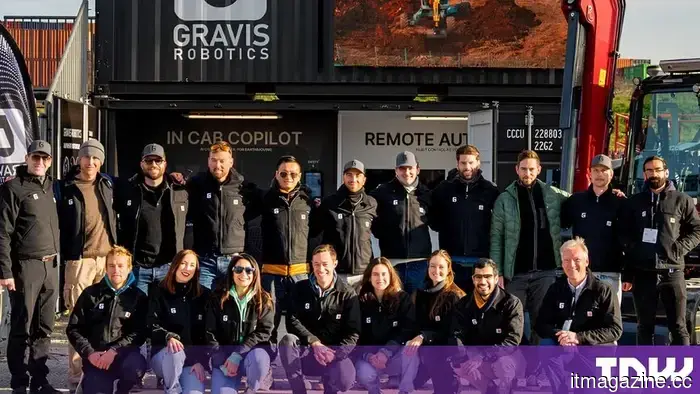 Gravis Robotics has secured $200 million in a Series A funding round, which was led by SoftBank.
Gravis Robotics, a spinout from ETH Zurich, has secured a $200 million Series A funding round, led by SoftBank. This fundraising is touted as the largest ever in the construction robotics sector and aims to implement self-driving software on excavators from companies like Caterpillar and Volvo.
Gravis Robotics has secured $200 million in a Series A funding round, which was led by SoftBank.
Gravis Robotics, a spinout from ETH Zurich, has secured a $200 million Series A funding round, led by SoftBank. This fundraising is touted as the largest ever in the construction robotics sector and aims to implement self-driving software on excavators from companies like Caterpillar and Volvo.
 Jeff Gundlach suggests that classifying AI chips as an asset class appears to signal a market peak.
Jeff Gundlach has criticized Nvidia's $500 billion financing consortium, questioning the rationale behind using assets of uncertain longevity as collateral for long-term debt.
Jeff Gundlach suggests that classifying AI chips as an asset class appears to signal a market peak.
Jeff Gundlach has criticized Nvidia's $500 billion financing consortium, questioning the rationale behind using assets of uncertain longevity as collateral for long-term debt.
 The Supreme Court has decided not to assist Verizon in reclaiming $47 million related to location data.
The Supreme Court has declined to assist Verizon in reclaiming the $47 million it paid for selling customer location data access. However, AT&T may still be able to recover its $57 million.
The Supreme Court has decided not to assist Verizon in reclaiming $47 million related to location data.
The Supreme Court has declined to assist Verizon in reclaiming the $47 million it paid for selling customer location data access. However, AT&T may still be able to recover its $57 million.
 Deutsche Telekom acquires Macquarie’s Polish fiber and television assets in a €1 billion investment aimed at convergence.
Deutsche Telekom is acquiring Fiberhost and INEA from Macquarie for approximately €1 billion and integrating them into T-Mobile Polska. This move reflects a strategy that aims to secure a competitive advantage in Poland's market by combining mobile, broadband, and television services.
Deutsche Telekom acquires Macquarie’s Polish fiber and television assets in a €1 billion investment aimed at convergence.
Deutsche Telekom is acquiring Fiberhost and INEA from Macquarie for approximately €1 billion and integrating them into T-Mobile Polska. This move reflects a strategy that aims to secure a competitive advantage in Poland's market by combining mobile, broadband, and television services.
Unitree, the leading humanoid robot company in China, is set to be listed in Shanghai on August 19 following unprecedented demand.
Unitree Robotics is set to launch on Shanghai’s STAR Market on August 19, with an estimated valuation of nearly $9 billion after raising approximately 6.1 billion yuan.