
Deutsche Telekom acquires Macquarie’s Polish fiber and television assets in a €1 billion investment aimed at convergence.
Deutsche Telekom has reached an agreement to acquire two prominent fiber companies in Poland, Fiberhost and INEA, from the Australian investment group Macquarie, in a deal valued at approximately €1 billion. This move is strategically timed to support Poland's efforts to consolidate mobile, broadband, and television services into a single monthly bill.
On Monday, the German operator confirmed that its local division, T-Mobile Polska, would integrate both firms once they receive regulatory approval, effectively transforming one of Europe's fastest-growing broadband sectors into a more concentrated market.
Poland, which was primarily seen as a promising yet uneven startup environment, has emerged as a significant success story in the fiber sector within Europe. By the end of 2025, over 80% of Polish homes are expected to have access to fiber lines, comfortably surpassing the European average, and the nation now possesses the type of dense, modern infrastructure that a large incumbent would prefer to own outright rather than lease.
The assets in question are considerable. Fiberhost operates an open-access network that reaches approximately 1.4 million homes across eight of Poland's sixteen regions, with a focus on rural areas and extending to various towns, villages, and schools that commercial operators have traditionally overlooked.
INEA, a regional leader in the Wielkopolska region near Poznań, serves over 300,000 retail broadband and television customers and has a wholesale network that covers nearly four million households, possessing local brand recognition that transforms service provision into a viable business.
Macquarie invested in both companies in 2018, restructured them in 2021 to bifurcate infrastructure and retail operations, and is now looking to sell at a high point in the infrastructure cycle—a classic buy-restructure-sell strategy that has established it as one of the most active owners of essential modern infrastructure.
Deutsche Telekom's intent is convergence, a commonly used term in the industry that denotes the strategy of offering all services at once. T-Mobile Polska already operates a well-respected mobile network but has fallen behind competitors in fixed lines; thus, acquiring fiber infrastructure allows it to compete with Orange Polska and Play, both of which already provide bundled mobile and broadband services.
Dominique Leroy, the group’s board member for Europe, expressed this in reassuring terms, noting that combining "strong mobile and fiber capabilities" will create "an even better foundation for simple, reliable services." This reflects the prevailing mindset among European telecom leaders as they advocate for consolidation, arguing that only larger scales can sustain the continent's networks.
This argument has become a central theme in European telecommunications, with executives asserting that the market is too fragmented to compete effectively with major American and Asian firms. However, this claim isn't always convincing, as Europe's history with grand infrastructure deals has yielded notable failures, including costly satellite mergers. Nevertheless, fiber is among the more secure bets within the sector, and Poland’s offerings are among the best on the continent.
The deal must receive approval from Poland's competition authority, which previously took nearly a year to approve Deutsche Telekom's acquisition of the wholesale fiber operator Nexera. Antitrust regulators generally scrutinize any transaction that consolidates both the network and customer base under one incumbent.
Deutsche Telekom anticipates completing the transaction by the end of 2026, depending on regulatory timelines. For Polish households, the immediate impact will be negligible, as the physical fiber infrastructure does not change ownership with the acquisition.
The longer-term issue is who will be responsible for selling the bundled services and how much genuine competition remains once the infrastructure, services, and marketing actions are all under one corporate umbrella. Deutsche Telekom believes that, in an increasingly connected Europe, owning the fiber infrastructure is the most reliable method to secure customer relationships.
Other articles
 Instagram has restricted the search terms, but its algorithm still delivers the videos.
Instagram committed to eliminating harassment videos featuring Meta glasses. A month later, many are still available, and Reels now suggests them without any prompting.
Instagram has restricted the search terms, but its algorithm still delivers the videos.
Instagram committed to eliminating harassment videos featuring Meta glasses. A month later, many are still available, and Reels now suggests them without any prompting.
 Unitree, the leading humanoid robot company in China, is set to be listed in Shanghai on August 19 following unprecedented demand.
Unitree Robotics is set to launch on Shanghai’s STAR Market on August 19, with an estimated valuation of nearly $9 billion after raising approximately 6.1 billion yuan.
Unitree, the leading humanoid robot company in China, is set to be listed in Shanghai on August 19 following unprecedented demand.
Unitree Robotics is set to launch on Shanghai’s STAR Market on August 19, with an estimated valuation of nearly $9 billion after raising approximately 6.1 billion yuan.
 Synchrony aims to integrate your Amazon and Walmart store cards into ChatGPT.
Synchrony is collaborating with OpenAI to enable shoppers to make payments using store cards within ChatGPT, but one of its executives stated that the integration process could take as long as a year.
Synchrony aims to integrate your Amazon and Walmart store cards into ChatGPT.
Synchrony is collaborating with OpenAI to enable shoppers to make payments using store cards within ChatGPT, but one of its executives stated that the integration process could take as long as a year.
 Deutsche Telekom acquires Macquarie’s Polish fiber and TV assets in a €1 billion investment aimed at convergence.
Deutsche Telekom is acquiring Fiberhost and INEA from Macquarie for approximately €1 billion and integrating them into T-Mobile Polska, aiming to successfully combine mobile, broadband, and television services in Poland.
Deutsche Telekom acquires Macquarie’s Polish fiber and TV assets in a €1 billion investment aimed at convergence.
Deutsche Telekom is acquiring Fiberhost and INEA from Macquarie for approximately €1 billion and integrating them into T-Mobile Polska, aiming to successfully combine mobile, broadband, and television services in Poland.
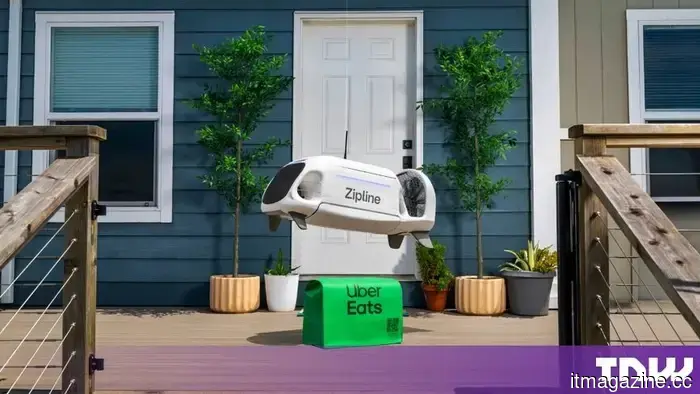 Uber is collaborating with the drone-delivery company Zipline and aims for one million drone deliveries each day.
Uber is collaborating with the drone delivery company Zipline and acquiring a strategic investment to transport Uber Eats orders throughout the United States, aiming for a goal of one million deliveries daily by the end of 2029.
Uber is collaborating with the drone-delivery company Zipline and aims for one million drone deliveries each day.
Uber is collaborating with the drone delivery company Zipline and acquiring a strategic investment to transport Uber Eats orders throughout the United States, aiming for a goal of one million deliveries daily by the end of 2029.
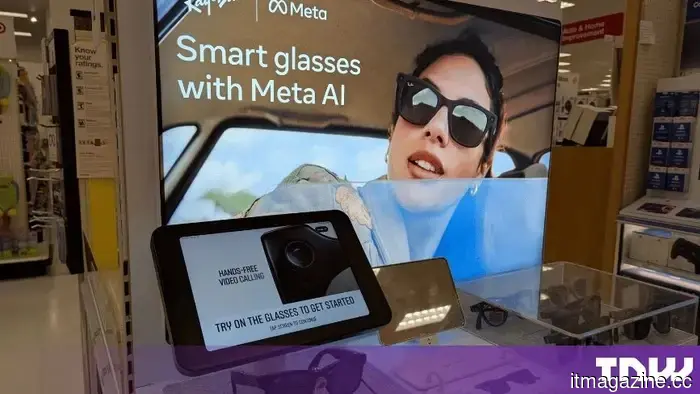 Instagram has restricted the search terms, but its algorithm continues to display the videos regardless.
Instagram pledged to eliminate videos featuring harassment related to Meta glasses. However, after a month, many of these videos remain online, and Reels has started recommending them without any prompt.
Instagram has restricted the search terms, but its algorithm continues to display the videos regardless.
Instagram pledged to eliminate videos featuring harassment related to Meta glasses. However, after a month, many of these videos remain online, and Reels has started recommending them without any prompt.
Deutsche Telekom acquires Macquarie’s Polish fiber and television assets in a €1 billion investment aimed at convergence.
Deutsche Telekom is acquiring Fiberhost and INEA from Macquarie for approximately €1 billion and integrating them into T-Mobile Polska. This move reflects a strategy that aims to secure a competitive advantage in Poland's market by combining mobile, broadband, and television services.