
Alphabet embarks on its AI debt journey in Australia with its inaugural Australian dollar bond.
Alphabet is getting ready to issue its first bond in Australian dollars, a seemingly simple financial move that reflects much about how funding for AI development is being managed.
As reported by Reuters, the Google parent company has enlisted ANZ, Deutsche Bank, RBC Capital Markets, and TD Securities to arrange its inaugural “Kangaroo” bond, a term used for foreign borrowers issuing bonds in Australian dollars.
The structure is straightforward but significant. Alphabet is considering four tranches with maturities of three, five, ten, and twenty years, with the shorter two available as either fixed or floating rates, while the longer two will be fixed only. This maturity timeline indicates a borrower planning to return frequently rather than just making a one-time issuance, spreading out its debt obligations to avoid a lump sum due at once. Pricing guidance may come as early as Tuesday, with the actual deal expected a day later.
The rationale behind this move is clear. Just weeks prior, Alphabet raised US$25 billion in a biannual dollar bond to support its AI growth and added approximately $85 billion through an equity raise in June.
The Australian market offers a similar opportunity with a different focus: the company increased its capital-expenditure forecast for 2026 by $15 billion, bringing the total to between $195 billion and $205 billion, actively seeking all possible sources of capital.
Why pursue a market that is much smaller than New York's?
Partly because it is accessible and gaining popularity. Kangaroo bond issuance reached a record A$60 billion this year, approximately 40% higher than in 2025, as major global borrowers look for investors beyond the dollar.
Alphabet has been doing just that, having arranged a debut yen bond earlier in the same fundraising effort. Diversifying borrowing across various currencies expands the investor base and can reduce costs when market conditions are favorable.
There is also a symbolic aspect. “Not only is this Alphabet’s first-ever bond in Australian dollars, but it’s also the first AI hyperscaler to tap into the Australian dollar market,” remarked Chamath De Silva of BetaShares, noting that this deal would exceed the approximately $2.25 billion Apple issued in Australia over a decade ago.
Australia's pension funds, equipped with mandatory retirement savings but always in need of high-quality investment options, provide a natural home for top-rated borrower securities.
However, there is always a complication: the borrowing reflects the underlying economic conditions. Alphabet experienced its first negative quarterly free cash flow as a public company in the second quarter, posting around a $5.9 billion deficit, as costs for chips, data centers, and energy outpaced even its substantial cash generation.
This trend is observable across the industry, where Big Tech's AI expenditures are catching up with available cash flows. The sector is projected to spend over $730 billion this year, largely on artificial intelligence.
Consequently, many of the cash-rich companies are becoming some of the most enthusiastic borrowers, with Big Tech's AI-related debt exceeding $350 billion as they seek lenders in Europe and Asia, a remarkable shift for companies that previously viewed debt as a sign of weakness.
While the Australian bond issuance represents a minor element of this larger narrative, it is still significant. When a company with ample cash begins to raise funds in a new currency, it prompts intriguing questions. The critical point is not whether investors will participate—they certainly will—but rather what their interest reveals about a competitive spending race that remains unchecked.
Other articles
 ByteDance has entered into a copyright agreement with Hollywood's MPA to regulate its Seedance AI video tool.
ByteDance has entered into a copyright agreement with the Motion Picture Association to implement safeguards for its Seedance and Seedream AI generators.
ByteDance has entered into a copyright agreement with Hollywood's MPA to regulate its Seedance AI video tool.
ByteDance has entered into a copyright agreement with the Motion Picture Association to implement safeguards for its Seedance and Seedream AI generators.
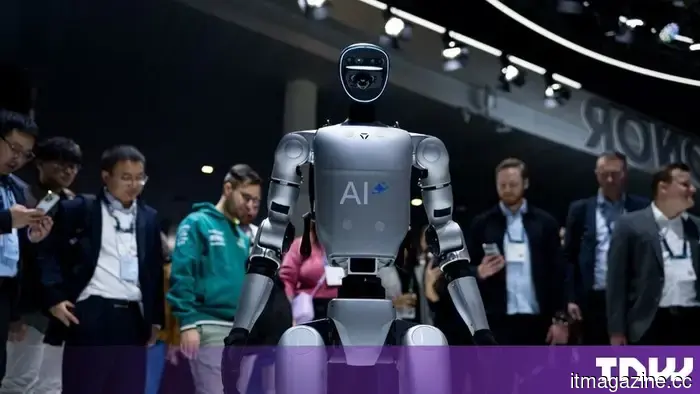 Unitree, the leading humanoid robot company in China, is set to be listed in Shanghai on August 19 following unprecedented demand.
Unitree Robotics is set to launch on Shanghai’s STAR Market on August 19, with an estimated valuation of nearly $9 billion after raising approximately 6.1 billion yuan.
Unitree, the leading humanoid robot company in China, is set to be listed in Shanghai on August 19 following unprecedented demand.
Unitree Robotics is set to launch on Shanghai’s STAR Market on August 19, with an estimated valuation of nearly $9 billion after raising approximately 6.1 billion yuan.
 Samsung's major Call of Duty agreement includes early access to Modern Warfare 4.
Samsung has joined forces with Activision for Modern Warfare 4, introducing HDR10+ Gaming and 32:9 compatibility, in addition to offering beta codes, Gaming Hub events, and early access to Gamescom.
Samsung's major Call of Duty agreement includes early access to Modern Warfare 4.
Samsung has joined forces with Activision for Modern Warfare 4, introducing HDR10+ Gaming and 32:9 compatibility, in addition to offering beta codes, Gaming Hub events, and early access to Gamescom.
 The AI mathematical advancements that are frequently referenced are counterexamples rather than proofs.
Fields medalist Timothy Gowers asserts that the renowned AI mathematics findings surfaced as counterexamples rather than proofs. In fact, one of them is not even that.
The AI mathematical advancements that are frequently referenced are counterexamples rather than proofs.
Fields medalist Timothy Gowers asserts that the renowned AI mathematics findings surfaced as counterexamples rather than proofs. In fact, one of them is not even that.
 Deutsche Telekom acquires Macquarie’s Polish fiber and TV assets in a €1 billion investment aimed at convergence.
Deutsche Telekom is acquiring Fiberhost and INEA from Macquarie for approximately €1 billion and integrating them into T-Mobile Polska, aiming to successfully combine mobile, broadband, and television services in Poland.
Deutsche Telekom acquires Macquarie’s Polish fiber and TV assets in a €1 billion investment aimed at convergence.
Deutsche Telekom is acquiring Fiberhost and INEA from Macquarie for approximately €1 billion and integrating them into T-Mobile Polska, aiming to successfully combine mobile, broadband, and television services in Poland.
 Azerbaijan aims to establish itself as a technology hub, having seen its startups secure $2.6 million in funding last year.
Baku is introducing financial resources, tax incentives, and regulations for crowdfunding to develop a technology sector that extends beyond oil. The aspirations are genuine, but the investment figures are minimal and competitors in the region are considerably ahead.
Azerbaijan aims to establish itself as a technology hub, having seen its startups secure $2.6 million in funding last year.
Baku is introducing financial resources, tax incentives, and regulations for crowdfunding to develop a technology sector that extends beyond oil. The aspirations are genuine, but the investment figures are minimal and competitors in the region are considerably ahead.
Alphabet embarks on its AI debt journey in Australia with its inaugural Australian dollar bond.
Alphabet is planning to issue its first Australian dollar bond, marking its debut ‘Kangaroo’ deal of approximately US$3.6 billion (around A$5 billion) to support its AI development efforts.